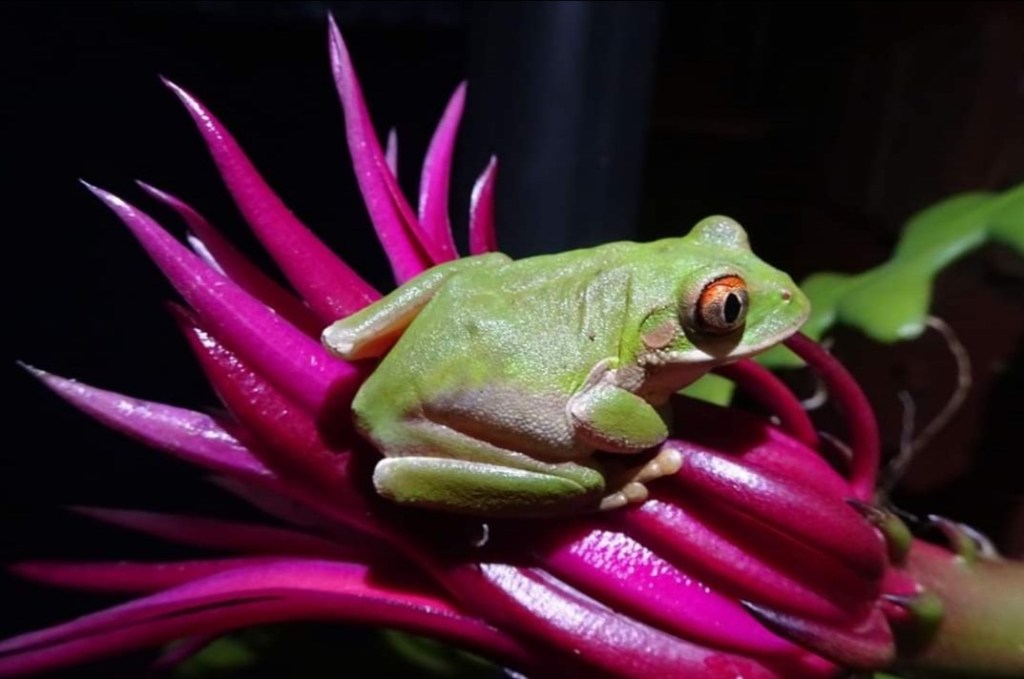
The idea of being wrapped in the enveloping nights silence is a misnomer in the village of St Lucia. With 36 different species of frogs the St Lucia nights are a cacophony of squawks, croaks, cheeps and barks to describe only a few of the sounds from our amphibious chorus line. Many visitors, and city dwellers are unaware of how raucous frogs can be, especially during mating season. It is always a special experience to be out in the bush in the iSimangaliso Wetland Park on one of ShakaBarker chameleon night drives, and arrive at a vlei filled with frogs. There is this momentary silence as the frogs adjust to the presence of the vehicle before they start up with their call and response discord. All this racket, and serenading as disconcerting as it can be, is in reality a wonderful sign of a very healthy frog population.
Frogs have hopped from the fairytales into the forefront of science and the fact that our area has a healthy frog population is wonderful news for the St. Lucia wetlands. Ecologists and environmental scientists use a wide range of plants and animals as “indicator species” to get an idea about the ecosystems health of streams and forests. Some of these species are tolerant of pollution, such as certain bacteria, or algae so their presence indicates the presence of pollutants like sewage. Other species are intolerant of pollution, or environmental disturbance so their absence can indicate problems. One group of organisms most sensitive to environmental change seems to be amphibians, which includes frogs, toads and salamanders.
One thing that makes frogs, toads and salamanders such sensitive environmental indicators is their skin. Amphibians are still partially tied to the water, spending at least part of their life cycle as eggs and juveniles in an aquatic environment. Not until they develop into adults do amphibians possess lungs allowing them to leave the water. Even as adults, most amphibians have to keep their skin moist by staying near water or damp areas, since they breathe partially, or entirely through their skin. Because their skin is so porous and absorbs gases, like oxygen, and liquids, like water, amphibians at all stages of life are sensitive to environmental changes, especially many types of pollution that may be in the atmosphere, water or soil.
What does all this have to do with the health of your garden? Whatever affects amphibians also may affect people. Because Amphibians are so sensitive to pollutants, and because they are so much smaller than humans, they will likely show signs of problems in your garden before it affects you. They can serve the same function that canaries used to serve for coal miners years ago: Being more sensitive to poisonous gases than the humans, when the canary became sick or died, the miners knew something was wrong.
If there is an abundant habitat for amphibians, and there is a healthy population of them in the ecosystem, it is a good indicator that you have a healthy environment. Frogs are in reality, a barometer for the health of our local ecosystem. iSimangaliso is considered one of the ultimate pollution free areas in South Africa, and our vigorous frog population is very outspoken about this fact.
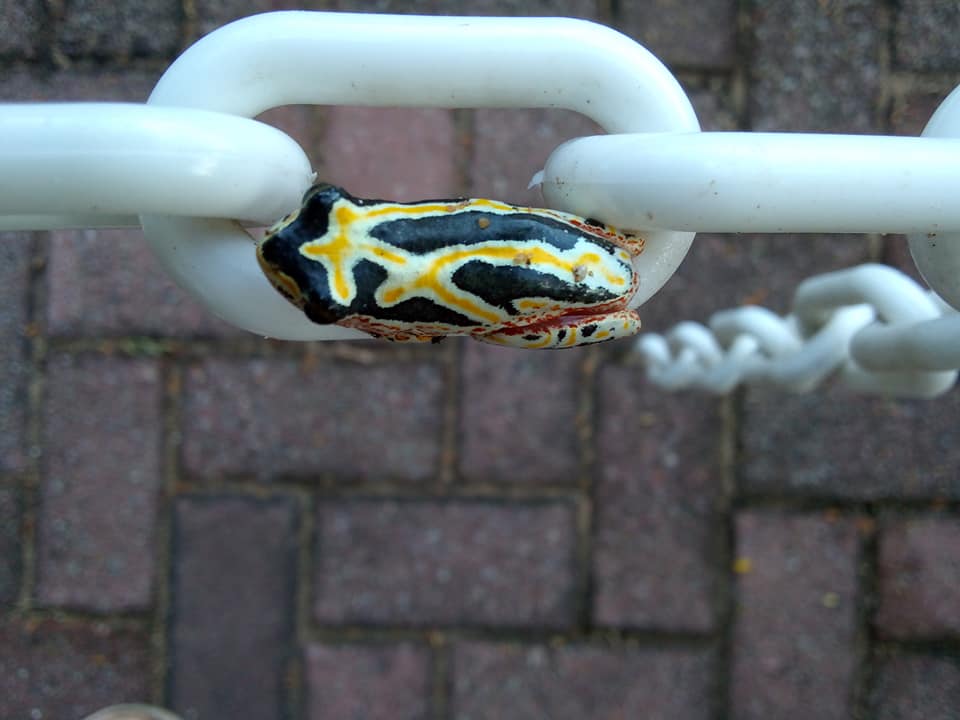
The food chain would crumble without the presence of frogs in our ecosystem. They are not just good barometers, they also provide a valuable food source for birds, lizards, snakes, monkeys, and more. Frogs also help keep insects from spreading diseases, as well as assisting in keeping the insect population down under control. From their sticky toes to their eyes that seem to pop, frogs have hopped into a central place in fairytales and science alike. Children are perpetually delighted by Kermit the Frog and scientists are still unlocking the secrets of these mysterious green amphibians. If you have ever caught a frog, you have probably been mesmerised by their almost otherworldly appearance.
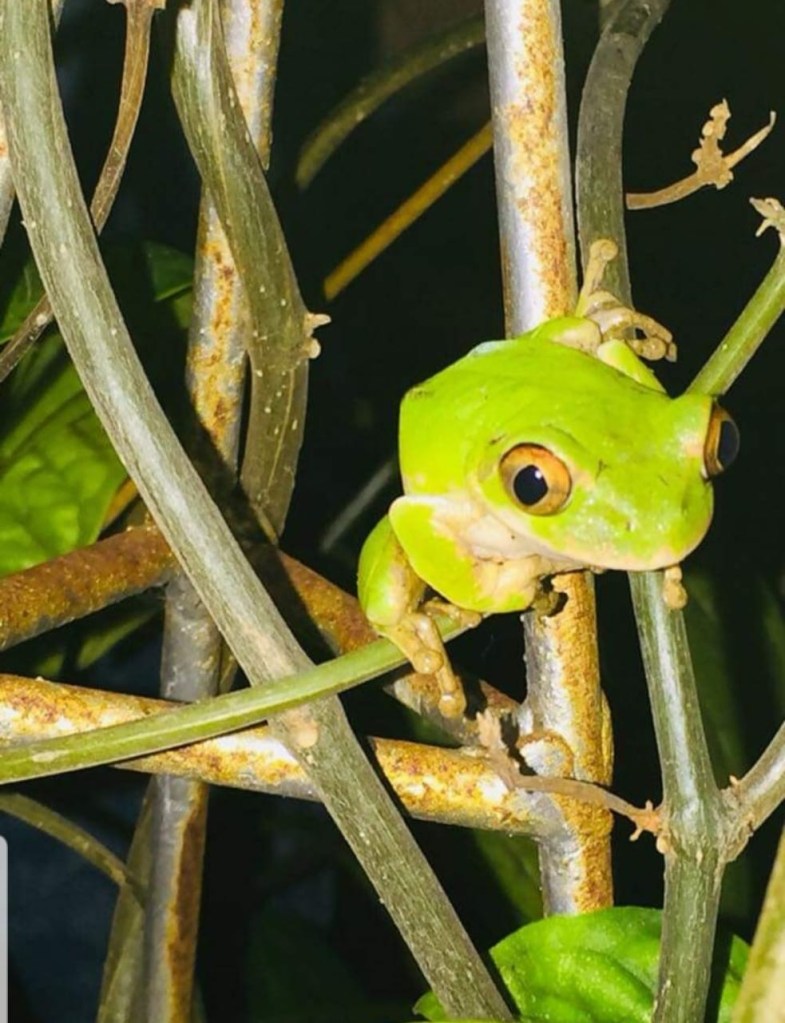
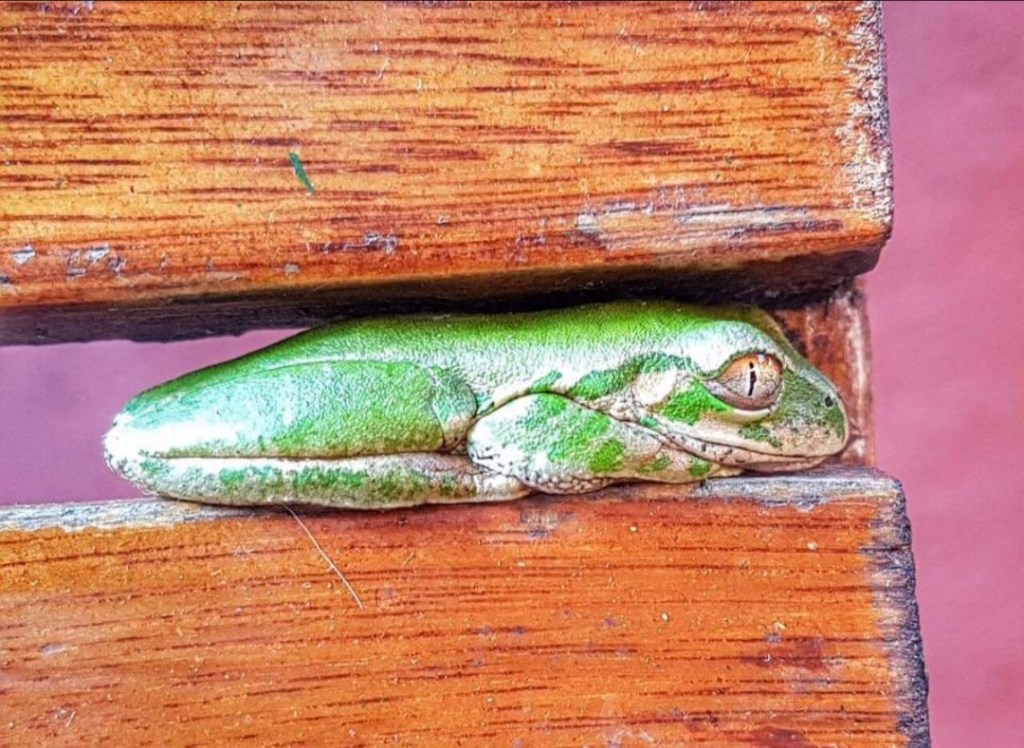
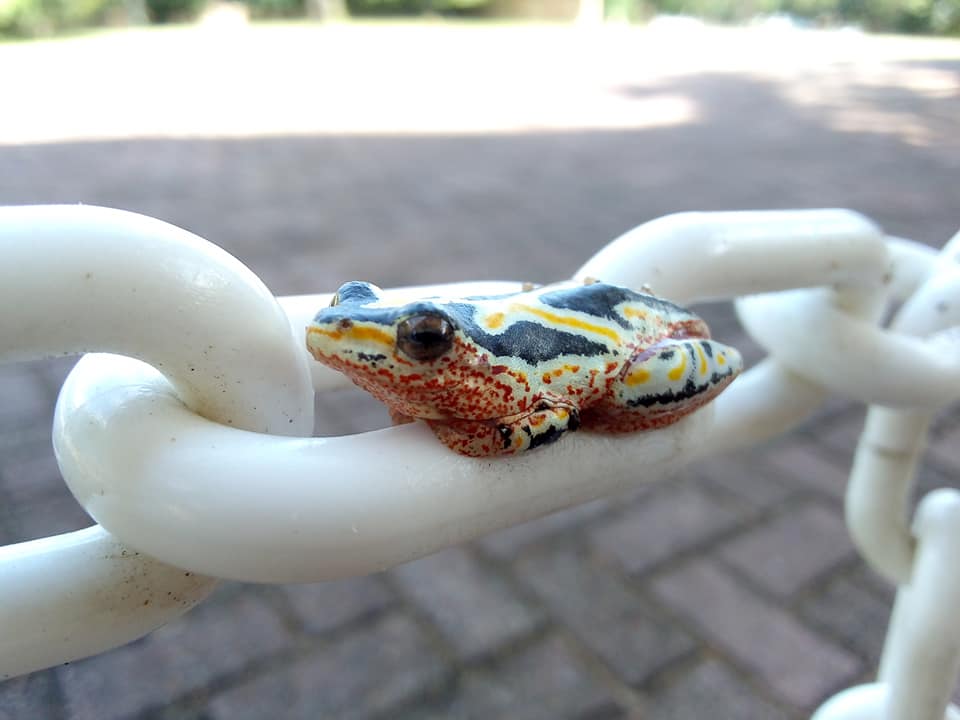
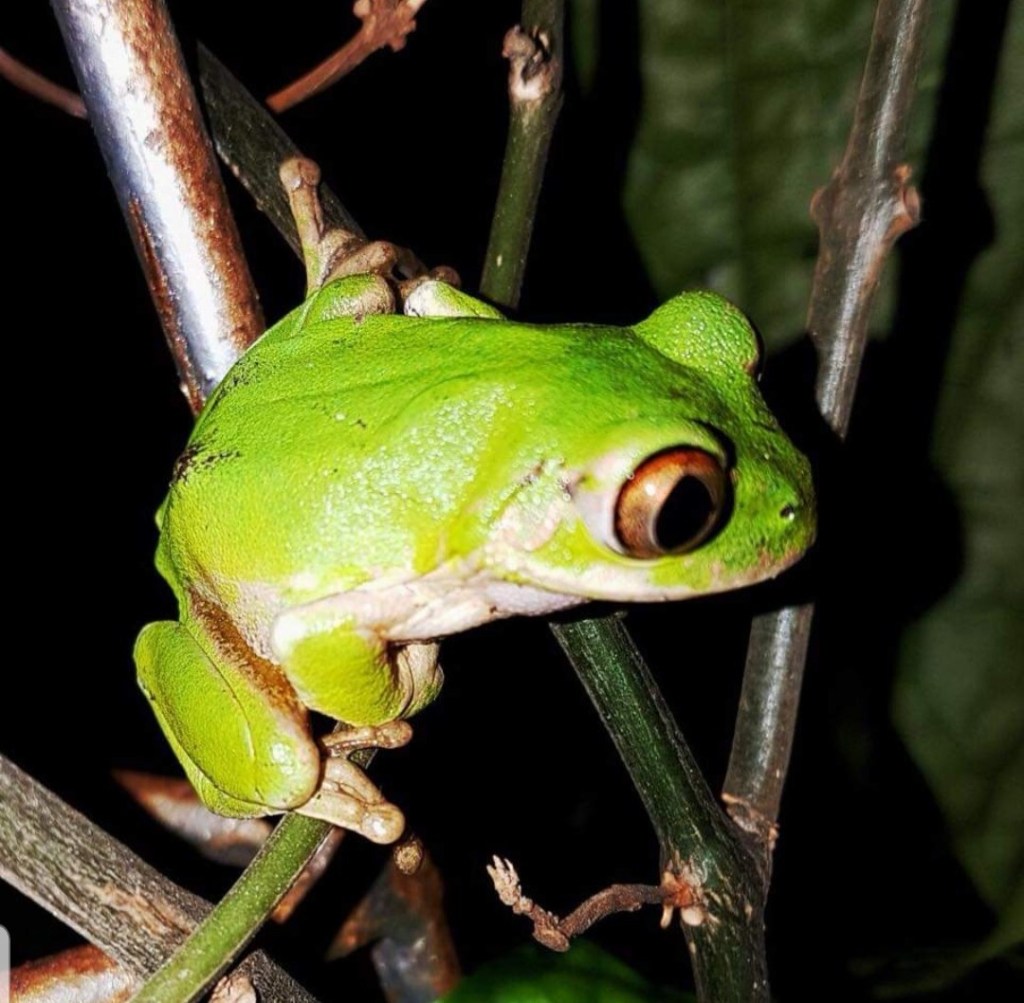
These amazing frog photos were taken in the gardens in and around the village of St. Lucia. So when you visit us at the St. Lucia Eco Lodge, and hear the frogs calling in our water feature, or on a night drive with one of our guides into the iSimangaliso Park, remember they are extraordinary animals that add not only diversity, but also beauty to our Earth, and are a vital part of a healthy, and functioning ecosystem.
It is one time mosquitoes get put to good use. Frogs eat mozzies and make music.
 Tourism Tails