One of the best ways to “discover” a country is through its cuisine. Food is an entry point to a local culture. It is a both informative and delightful way to learn about the culture and the people. One of the benefits of travelling is it exposes us to different cultures and gives us the opportunity to explore the tastes of foreign lands and their people. Food and drink are as much representations of culture as are the arts, architecture, dress, or human behavior and vernacular. Most of us experience this for the first time when we travel: what people eat in foreign countries can be quite different and sometimes very strange in comparrison to food from our home menu.
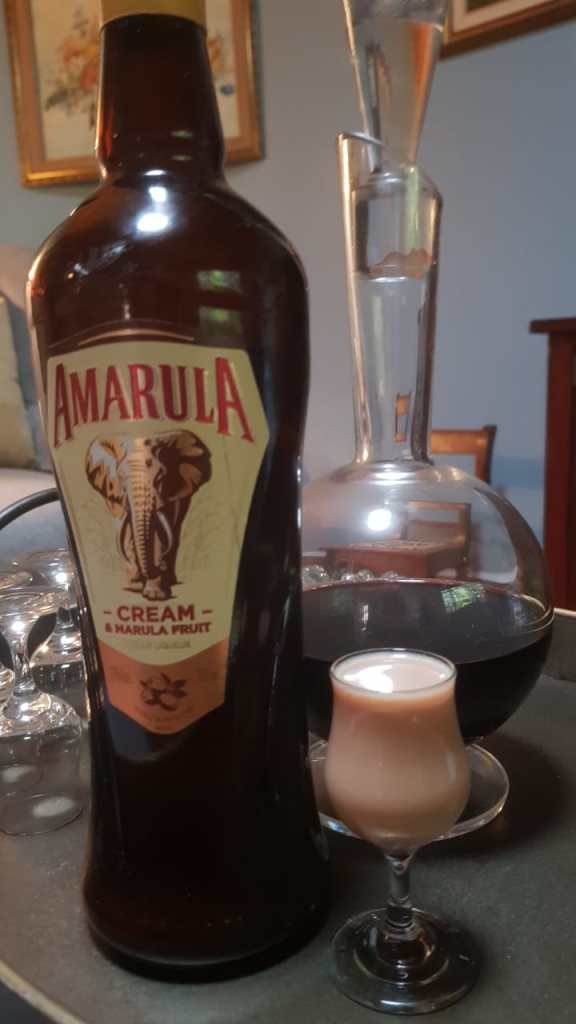
If you set foot on South African soil, don’t leave before you’ve enjoyed a traditional al fresco braai, as much for the barbecued food as for the cultural experience. Follow it up with a popular melktert (custard-filled pastry) and if you fancy a little snifter to finish then a sweet and creamy glass of Amarula (liqueur) will definitely do the trick.
Due in part to its history of settlement and colonization as well as its location on the coast, South-African cuisine has many influences including Dutch, French, Malaysian, and indigenous cultures. Here are some traditional South-African dishes that reflect the country’s diverse culture and palate.
Biltong
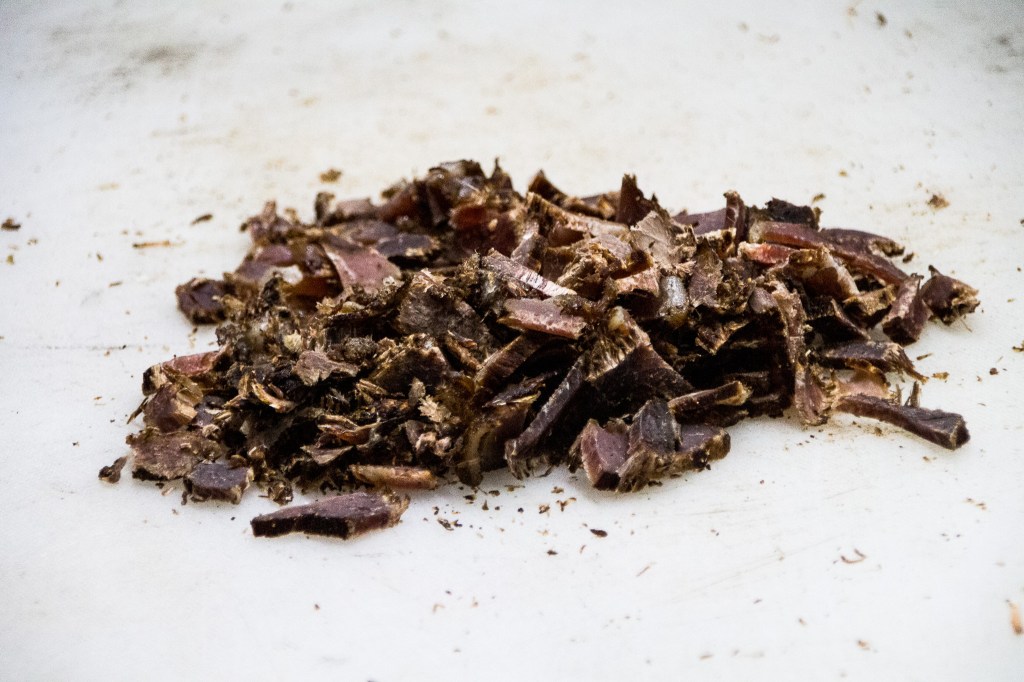
Probably the most-loved South-African snack, biltong is a dried, cured, and spiced meat. Beef biltong is a favourite, but venison biltong is also very popular. Served as a snack at just about any social gathering, many potjiekos and soup recipes also include it as an ingredient.
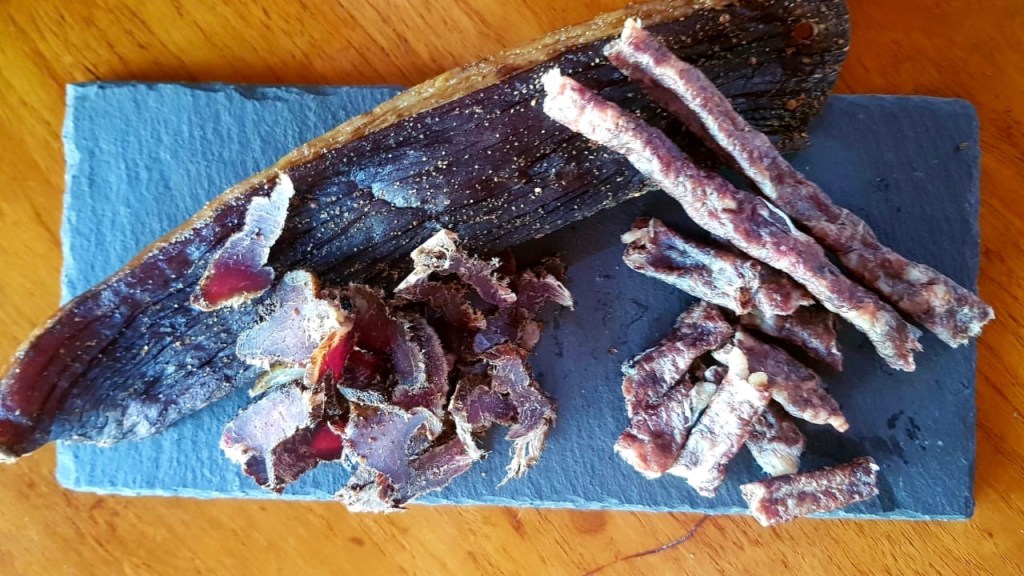
Droëwors
Droëwors (literally meaning “dry sausage”) is a South African snack food, based on the traditional, coriander-seed spiced boerewors sausage. It is usually made from a thin sausage rather than a thick sausage, as the thinner sausage dries more quickly and is thus less likely to spoil before it can be preserved.
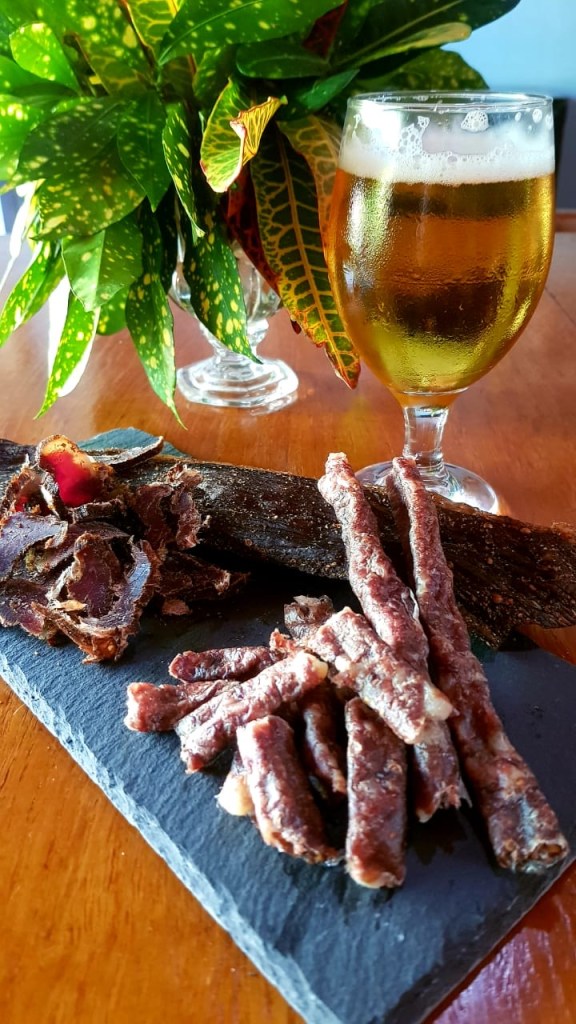
Boerewors
Boerewors (translated as “farmer’s sausage”), is a type of sausage made from beef mince, (it must have at least 90% meat to qualify as boerewors). The mince mixture contains spices such as coriander, cloves, and nutmeg, and has a very distinct taste. It is guaranteed to be one of the meats served at a traditional South African braai.

Skilpadjies
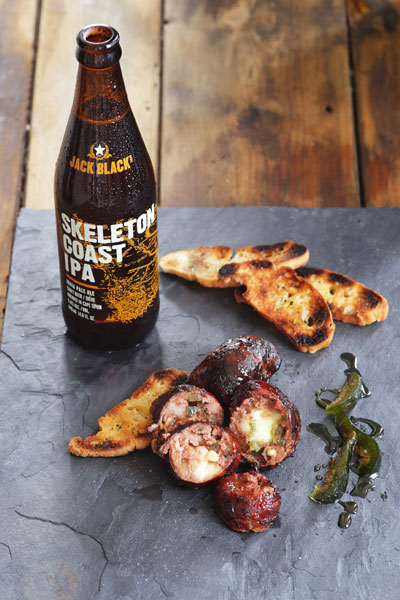
Skilpadjies is a traditional South African food, also known by other names such as muise, vlermuise and pofadder. The dish consists of lamb’s liver wrapped in netvet, which is the fatty membrane that surrounds the kidneys. Most cooks mince the liver, add coriander, chopped onion, salt and Worcestershire sauce then wrap balls of this mixture with the netvet and secure it with a toothpick. The balls, approximately 8cm in diameter, are normally barbecued (grilled over an open fire) and are considered ready when the fat is crisp.
Bokkoms
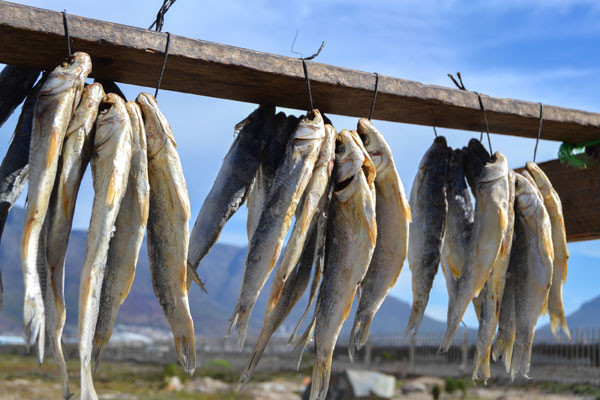
Although not everyone’s taste, bokkom hails from the West Coast region of South Africa. Dried in the sun and wind, the whole, small, mullet fish are then salted. Most eat the dried fish, often referred to as fish biltong, as a snack, but it can also be used in pastas, soups, and more. This particular dish is very localised and is eaten almost exclusively in the Western Cape.
Bobotie
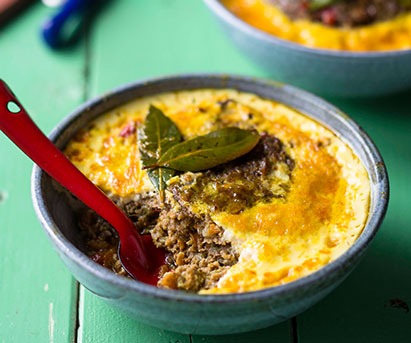
Bobotie, a dinner-time favourite, consists of spiced mince, an egg-based custard topping, and traditionally raisins or sultanas are added to the mince mixture. The dish has a slightly sweet flavour, which is typical of the Cape Malay influence. The dish includes curry, and turmeric flavours and is served with yellow rice with almonds mixed into the rice, as well as a tomato and onion sambal and fruit chutney.
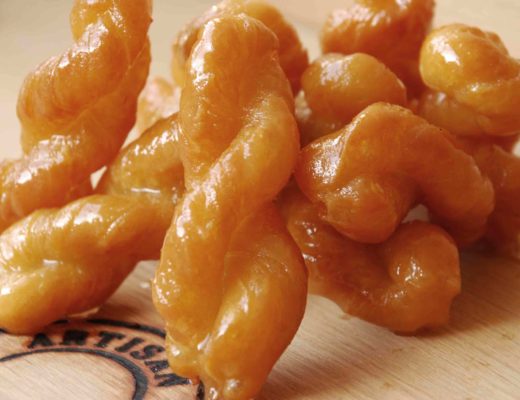
Koeksisters
This is a tasty tea-time treat made by frying pleated-dough pieces, and then dipping them just out of the fryer into a thick syrup flavoured with ground ginger. They have a golden, crunchy crust, a soft, doughnut-like centre, and are super sticky.
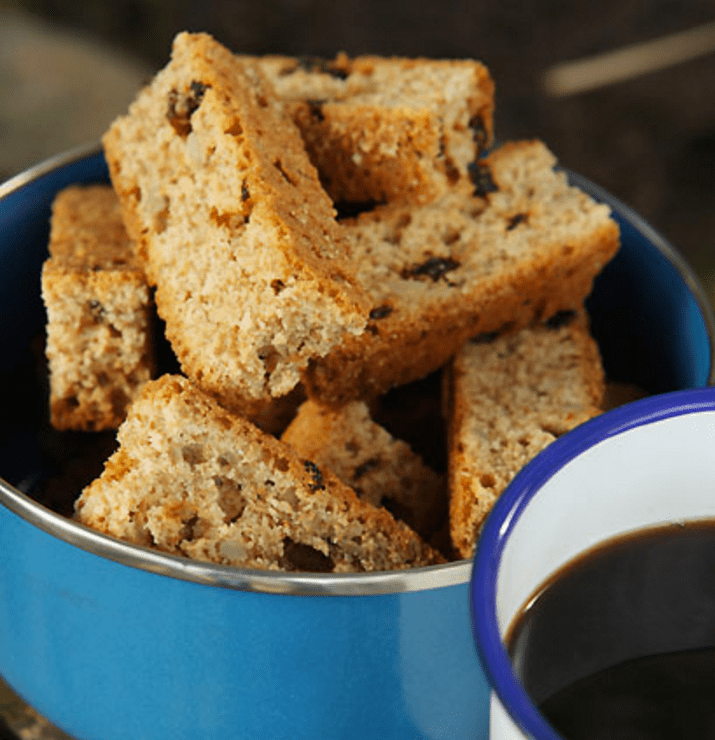
Rusks
Rusks is the anglicized term for “beskuit” and is a traditional Afrikaner breakfast meal or snack. They have been dried in South Africa since the late 1690s as a way of preserving bread, especially when travelling long distances without refrigeration. Their use continued through the Great Trek and the Boer Wars through to the modern day. Rusks are typically dunked in coffee or tea before being eaten.
Rusks are essentially double-baked bread dough. Closely packed dough are baked in pans like bread, after which long chunks are cut or broken off and slowly rebaked to a dry consistency. Several modern-day, mass-produced versions are available, the most famous brand being Ouma Rusks.
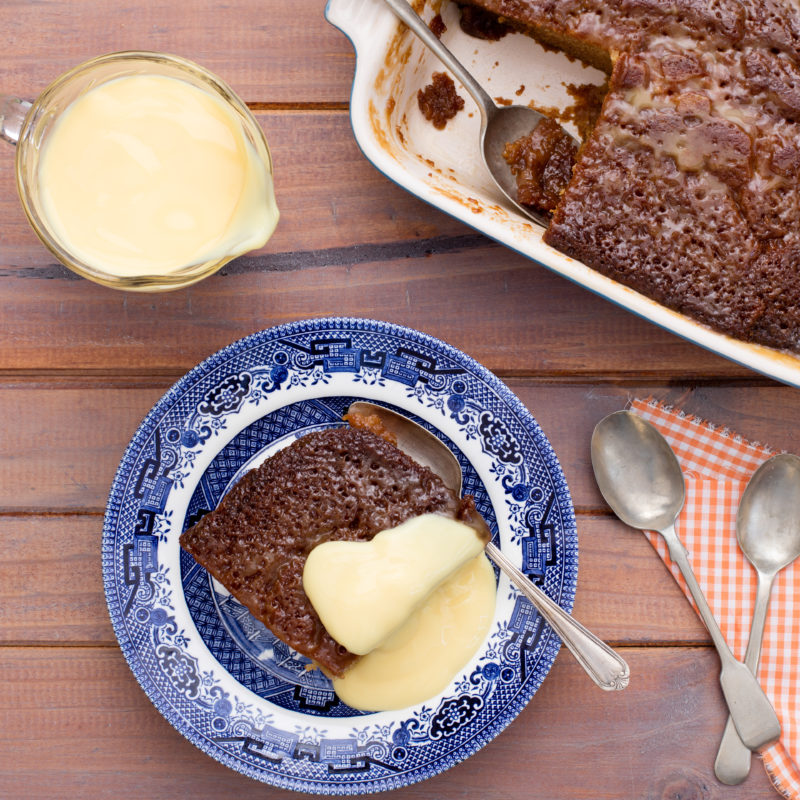
Malva pudding
Malva pudding, is of Cape Dutch origin. It is made with delicious (home-made if you have) apricot jam. Once out of the oven the cake like pudding is pierced with a skewer and a thick, sweet, rich, creamy sauce is poured over the sponge and left to soak in. The result is a sticky pudding with a spongy texture and a divine caramel taste. Traditionally served with custard, or vanilla ice cream.
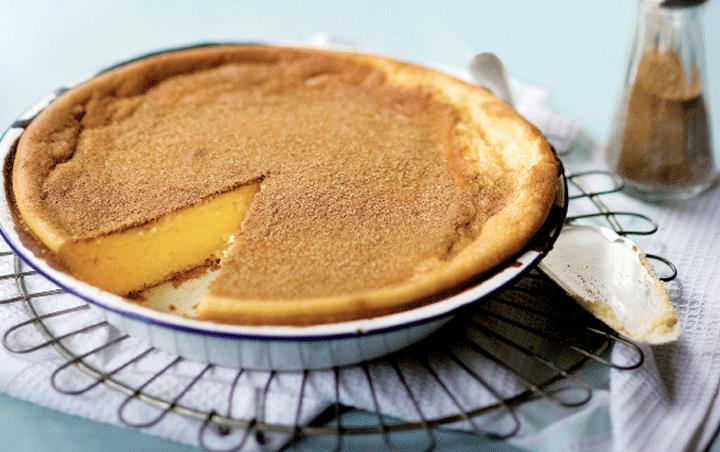
Milktart
It’s a rare thing to meet a South African who says they don’t enjoy this traditional dish. Milktart (Afrikaans “melktert”) is a pie-like dessert consisting of a sweet pastry crust and a creamy filling made of milk, flour, sugar, and eggs. It can be bought whole at most supermarkets, and almost every family has their own secret recipe. Our family infuses the custard with a stick of cinamon and removes it before baking and once out of the oven gives the pie a fine dusting of cinamon powder before serving.
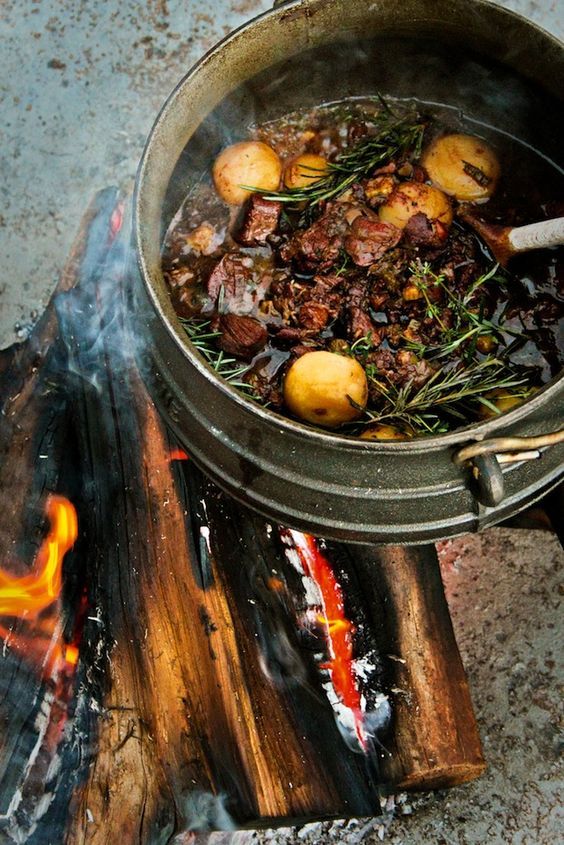
Potjiekos
South Africans cook potjiekos (or pot food) in a round, cast-iron pot over an open fire. It is traditionally made using meat and vegetables, modern variations have also become popular. Venison, chicken, curry and seafood poitjies are also very popular. Making potjiekos is a sociable and simple way to cook for a large group of people. The food is cooked slowly for hours over the coals and served with rice, potbrood (pot bread) also prepared on the fire and salads.
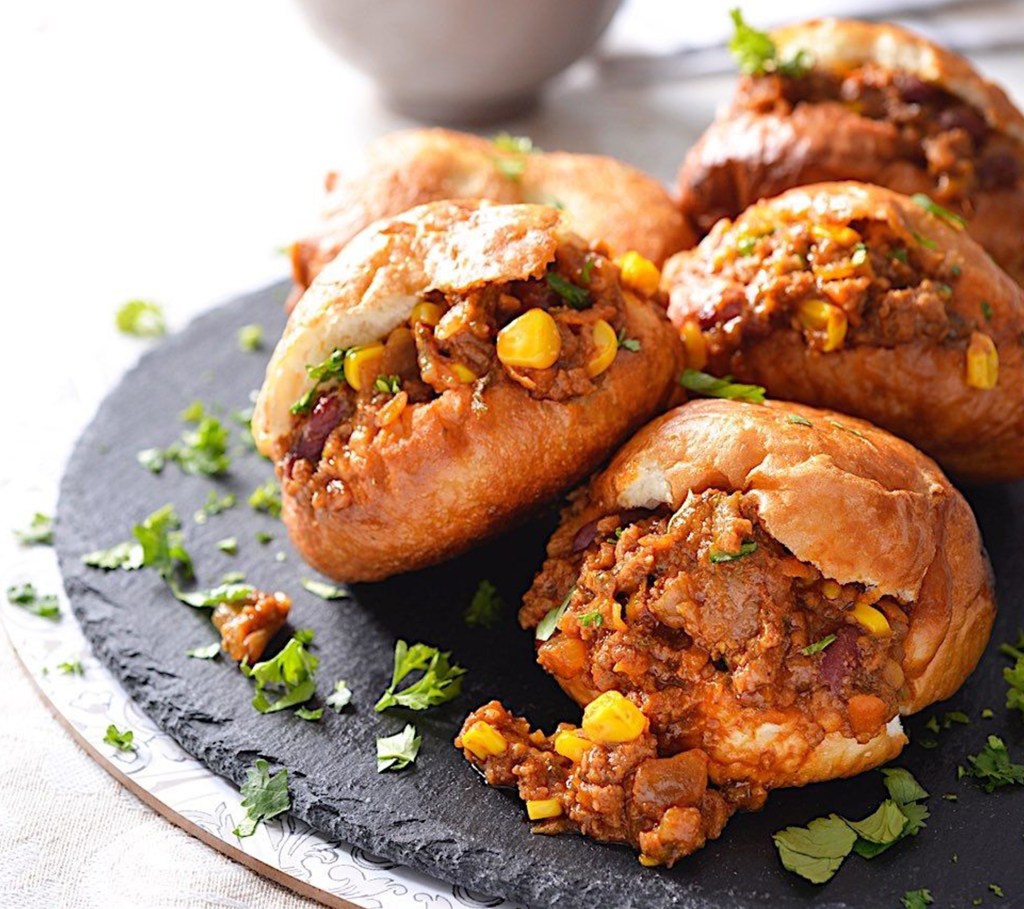
Vetkoek
Popular in Afrikaner cooking, vetkoek is basically a fried bread dough. The word means “fat cake” and is similar to the Dutch oliebollen. It can be accompanied by sweet – Home made apricot jam or savoury toppings like minced curry and chutney or cheese.
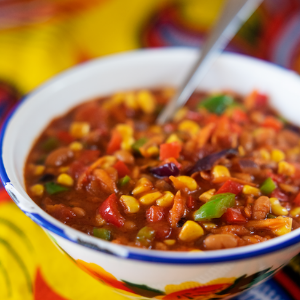
Chakalaka
Chakalaka combines vegetables such as peppers, onions, carrots, and tomatoes into a delicious spicy relish. Often served at braais to accompany side dishes like pap (similar to a polenta but smoother), it also goes wonderfully with boerewors and other braai meats.
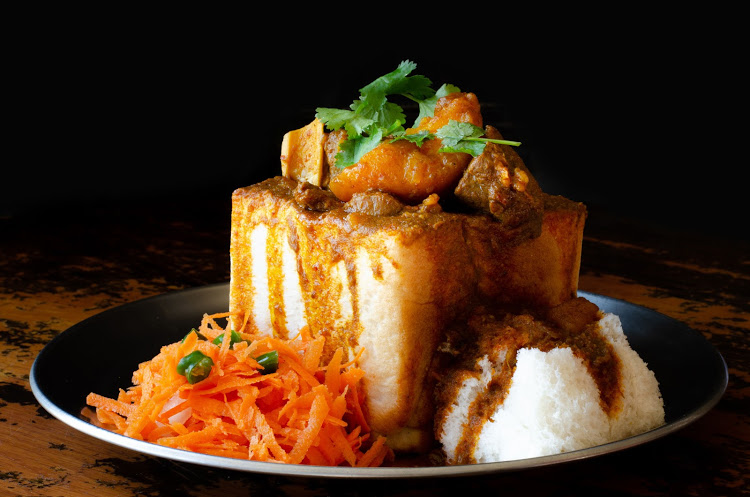
Bunny chow
This is traditionally the street food of Durban, but has become popular across South Africa. It is made from hollowed out loaves of bread, stuffed with spicy curry. It was originally created by the immigrant Indian community in the Natal area of Durban and served to workers for lunch. Try chicken, pork or vegetarian varieties containing lentils and beans as a variation on the theme.
On many occasions biltong is often used in an ingredient in other dishes. Eco Lodge’s Hog and Hippo Bistro is famous for their cheese and biltong soup which the guests love. It is usually served at one of the Eco Lodge braai evenings as a starter. For those interested, here is one of the many versions of our famous soup.
CREAMY BILTONG & CHEESE SOUP
Ingredients
50g butter
1 large onion, finely chopped
5ml ground cumin
100g biltong powder
1 Vegetable Stock Pot
500ml boiling water
250ml flour
500ml milk
380g (1 can) Nestlé Ideal Unsweetened Evaporated Milk
5ml fresh nutmeg
200g mature Cheddar, grated
50ml sherry
50g blue cheese, crumbled (optional)
salt and pepper to tasteextra biltong slices
Directions
1. Melt butter in a large pot until frothy and add onion. Fry until soft and translucent, then add cumin and biltong powder.
2. Dissolve Knorr Vegetable Stock Pot in 250ml of the boiling water and keep ready.
3. Add flour to the onion mixture and lower heat.
4. Slowly add water in measured quantities, stirring continuously and adding more water as the mixture thickens. Add the remaining 250ml boiling water and keep stirring.
5. Add milk in small quantities until it’s well incorporated and creamy. Grate nutmeg into the soup and add Nestlé Ideal Unsweetened Evaporated Milk.
6. Turn o the stove and add the cheese, stirring to melt. Once you’ve added the cheese, don’t boil the soup again, as it will split.
7. Add sherry and mix well before adding the crumbled blue cheese (optional), leaving some for serving.
8. Season to taste, remembering that the biltong powder is already seasoned and the additional biltong and blue cheese that you’ll serve the soup with will add some saltiness.
9. Purée soup using a stick (or jug) blender for a smoother consistency, if preferred.
10. Serve with sliced biltong These traditional dishes are only a small part of what is such a rich part of the South African culture and their warm hospitality. Don’t forget to end your meal with a glass of Amarula, a uniquely traditional South African liqueur made from the sun-ripened fruit of the African Marula tree.
Smaaklike ete!
 Tourism Tails