We are all very familiar with Africa’s Big 5 – The elephant, leopard, lion, buffalo and rhino, so called because these five animals were the hardest and most ferocious of the big game to hunt, and when you read further you will see exactly why they are on this list.
The iSimangaliso Park has 4 of the big 5. The exception being the lion. The lion prefers the grassland where it can camouflage itself and hide from prey it may be stalking. The iSimangaliso park is subtropical with palms and greenery, a little like the vegetation in the Jurassic Park movie, so not an ideal habitat for a lion. The Hluhluwe-iMfolozi Park only 45 minutes from St Lucia has the Big 5 and is one of the oldest most established Game Parks in South Africa. St Lucia is the ideal base for visiting these parks.
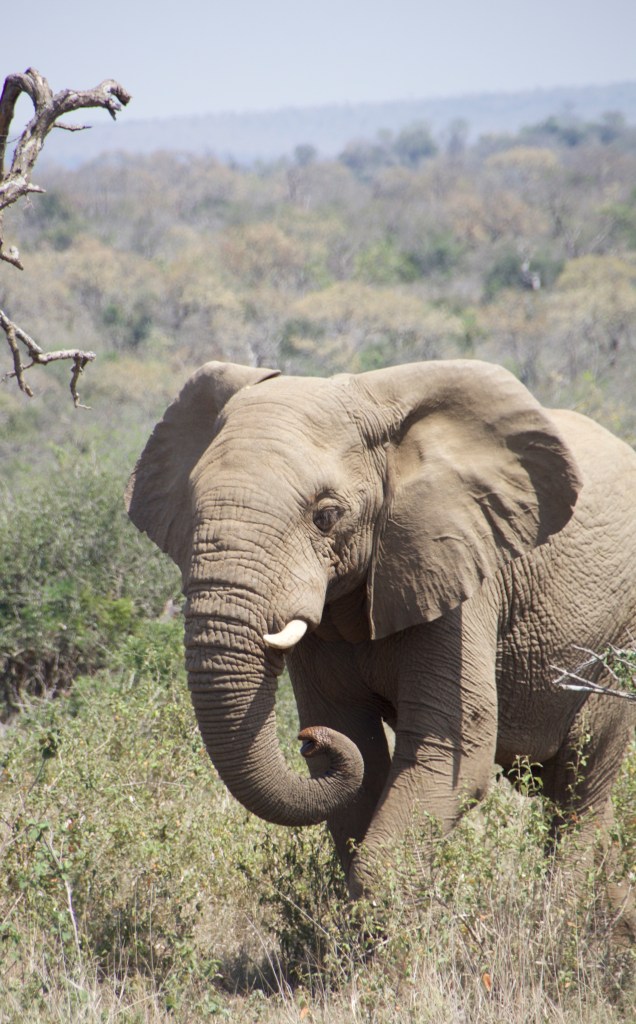
You can understand why elephants have been listed as one of the big 5 when you consider they are the largest of all the land animals, with the largest brains in the animal kingdom. They spend up to 16 hours a day eating, and in that time consume up to 250 kg of food a day and can live up to 70 years of age.
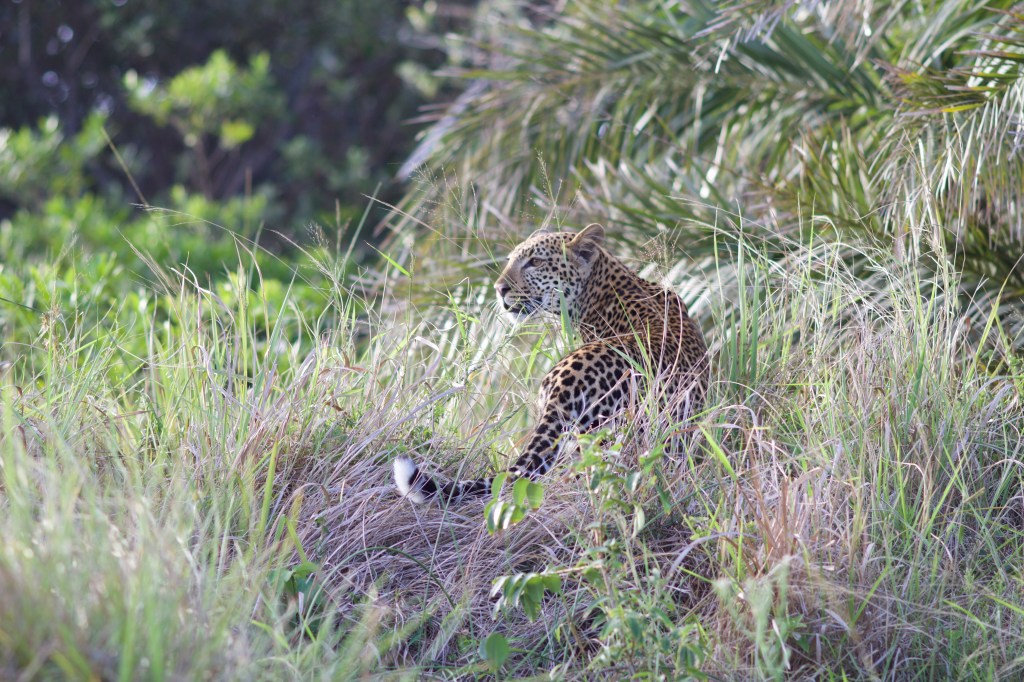
Leopards are primarily nocturnal animals; they are pound for pound the strongest of the big cats. They can leap up to 6 metres high with their prey into the trees. They are also strong swimmers, which is unusual for a cat. They can purr when content, and growl when angry, just like our house cats.
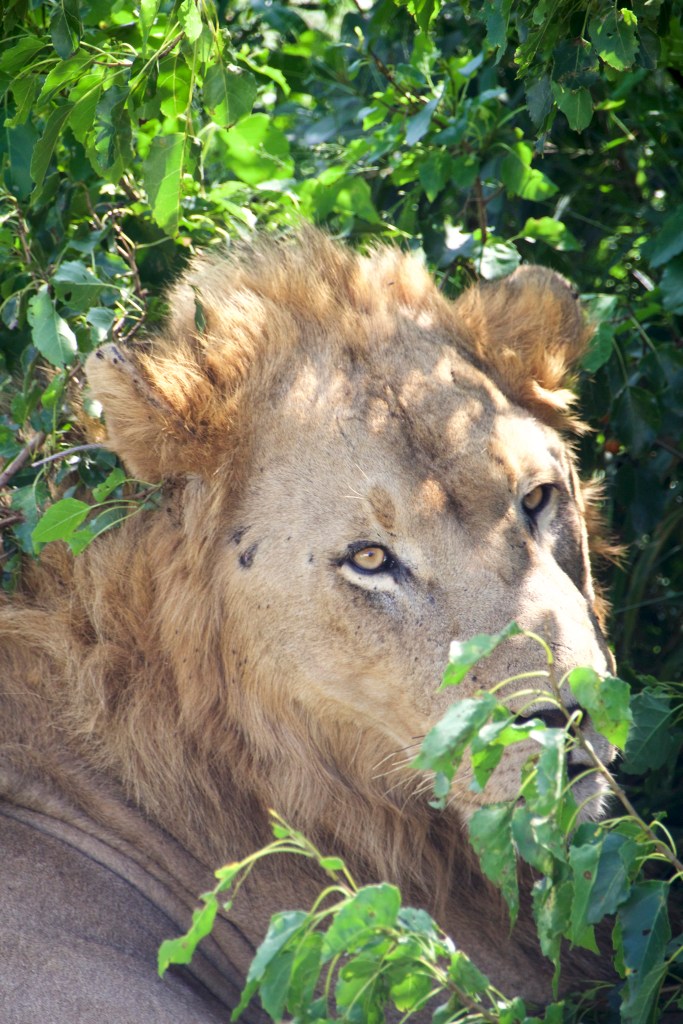
The African lion is the 2nd largest cat (the tiger being the largest). The female lions live together for life with up to 3 adult males and of course their cubs. They have the loudest roar and in lion society the males eat first!
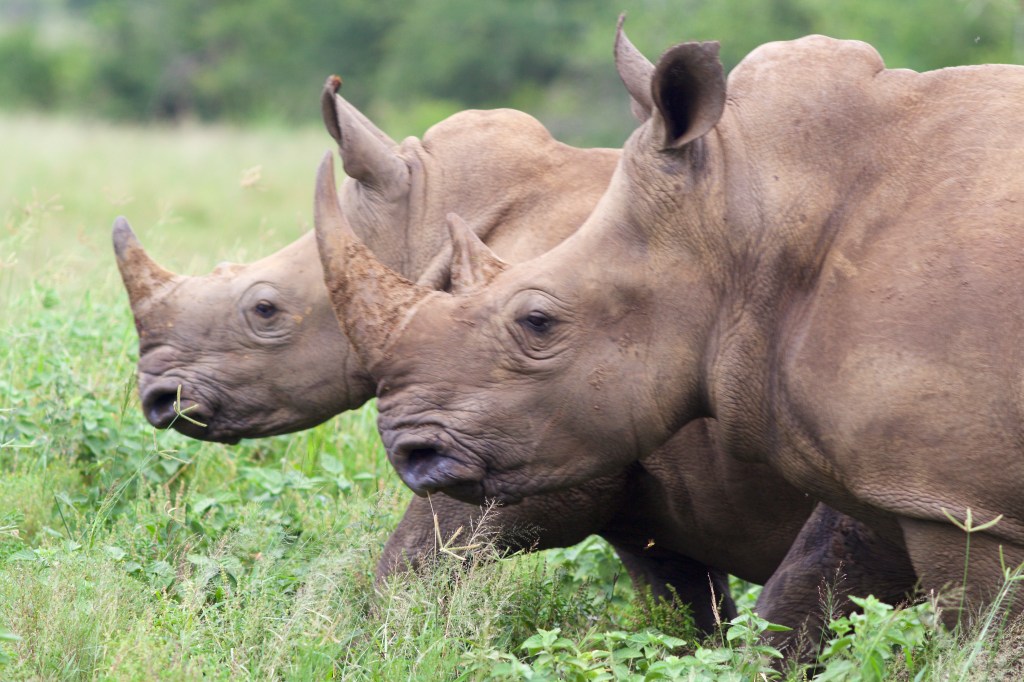
If you ever want to tell the difference between a black and white rhinoceros don’t expect to see a colour difference, rather look at their lips. The white rhino is square lipped so adapted for eating grass, while the black rhino has a hooked lip adapted for eating twigs and stripping their leaves.
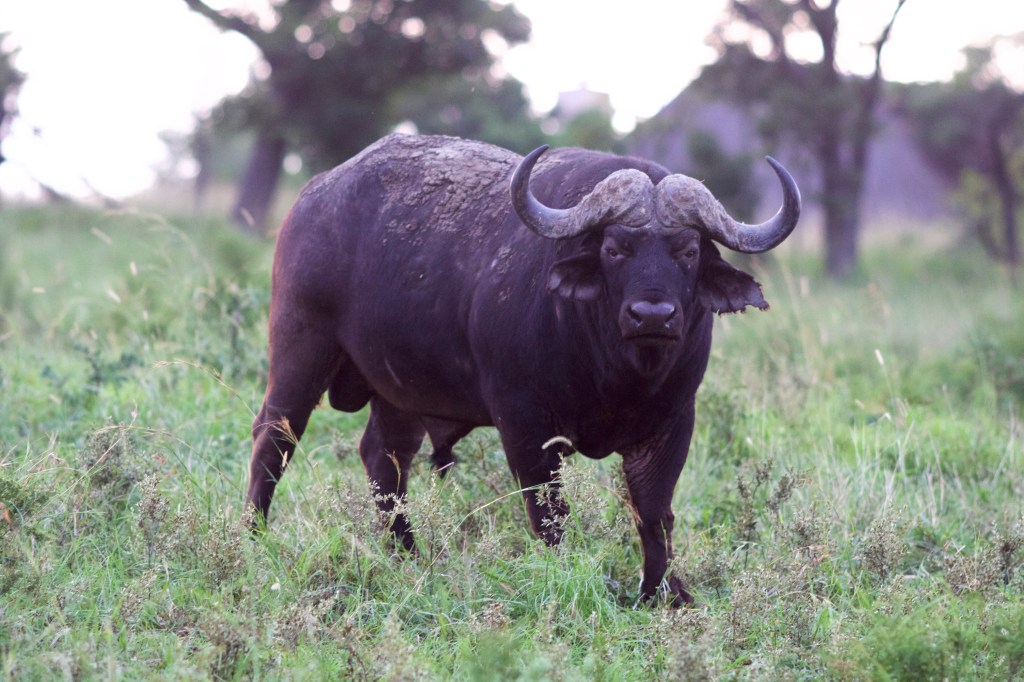
Buffalo are probably known as the meanest and most unpredictable of the Big 5. Their sense of smell far exceeds their eyesight. They are very aggressive, especially when injured and it is probably this reputation, which has put them on the Big 5 list rather than their more docile second cousin the cow.
 Tourism Tails