If you have ever lived or worked in or around a game reserve, you will know that certain animals are regularly found in certain areas. As a territorial animal you are restricted to a certain area. You can move about in your little piece of Africa; but avoid crossing into your neighbours’ territory. If you cross the boundary you may find yourself in a little skirmish or two and end up high tailing it back to your place of residence. Territories are simple as long as you stick to the rules. Sometimes there are changes in the hierarchy when one of your neighbours reaches an untimely demise, and ends up as a meal, or something called natural mortality occurs.
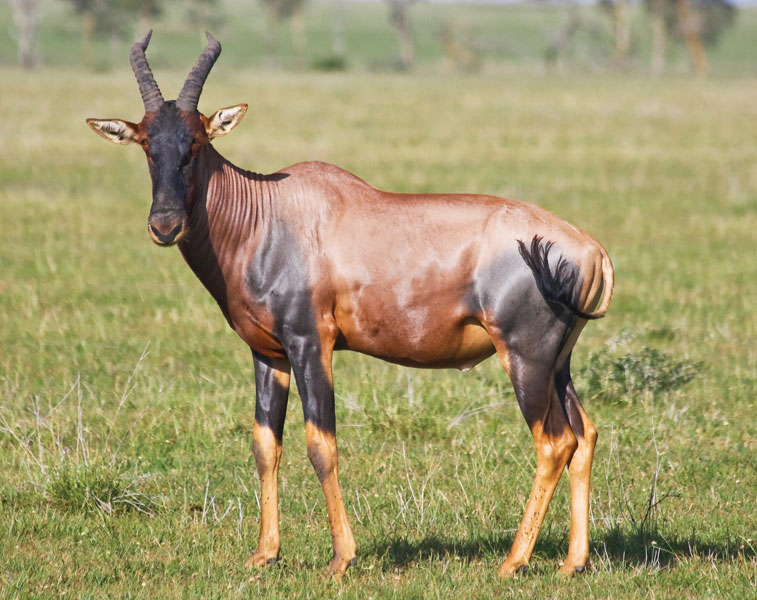
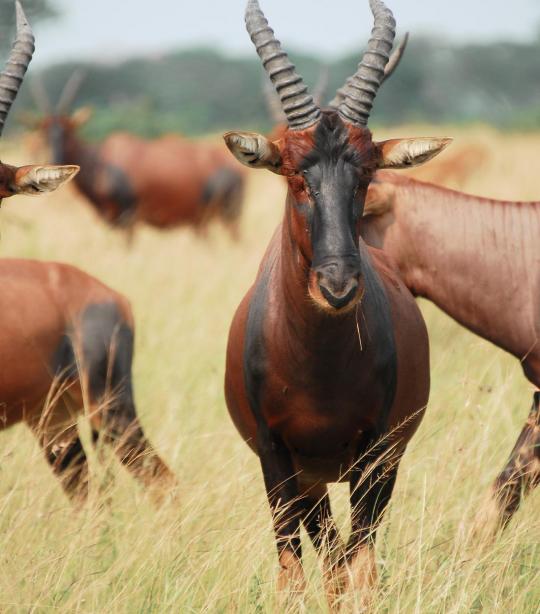
When you are involved in this territory thing, some animals will take it quite far and create stomping grounds (like your reserved seat in the local bar,) within their territory. These are usually created by ruminants that have chosen these locations because they have a good lookout and have short grass that provides a relatively easy escape from predators. A few of these can be found in the iSimangaliso Wetland Park. This is where the whole “Topi or not Topi” comes into play. In South Sudan there are several thousand Topis, in fact in excess of 750 000! These fill a similar ecological niche to that of the wildebeest down South. They are possibly on a similar intellectual scale of intelligence which isn’t saying much. I always tell my guests that wildebeest get “first, second and third prize for stupidity”. Although topis can run faster than wildebeest, which means that they can get away from trouble faster, unfortunately they also head into trouble a little faster. It is not always the speed that is an advantage; it is how well you can stop or turn or both. With this information in mind, each night we passed the group of three topis standing on their stomping ground. Although this was a short distance from the road, they are easy to identify because they have a light coloured rump that is easily identified in a spotlight.
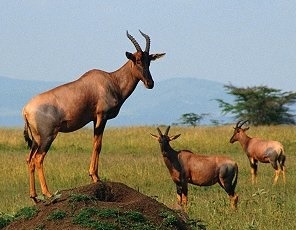
After passing these topi stomping grounds week after week, several nights later we discovered their numbers had dropped from three to two. After searching the area as though we were looking for an escaped prisoner, we found no sign of the truant topi. Suddenly out of the corner of my eye I saw the glint of eyes in a patch of dense grass no more than five metres from the ruminating topis. When I trained my spotlight on this patch of grass, a leopard leaped up and went bounding away into some dense bush a short distance from the topis. What did the topis do? The remaining two looked as though they were avoiding a wave on the beach and moved a short distance away. In the end I surmised that the truant topi had become a meal for this leopard. Had we not arrived at this moment, one of the other two may well have become a meal too. Well that was what I thought at the time but, a couple of nights later the truant topi reappeared, and I was left pondering the mystery.
 Tourism Tails