South Africa is known for its rich insect diversity, which of course includes bees. According to the Agricultural Research Council, there are 2 755 recorded bee species in sub-Saharan Africa. Of these, approximately 1 000 are found in South Africa, and many of them are endemic to the Fynbos and Succulent Karoo areas.
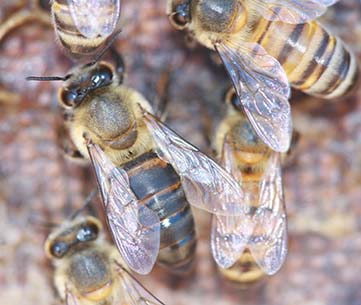
Some interesting bee facts:
- All worker bees are female.
- A bee produces a teaspoon of honey (about 5 grams) in her lifetime.
- To produce a kilogram of honey, bees fly the equivalent of three times around the world in air miles.
- The type of flower the bees take their nectar from determines the honey’s flavour.
- Male bees (drones) have bigger eyes to help them find the Queen Bee.
- Bees mate high in the sky. Afterwards the male bee loses his reproductive organs and dies.
- A Queen Bee can produce 2,000 eggs a day. Fertilised eggs become females and unfertilised eggs become males, with the help of pheromones.
- To get more bees in your garden grow more colour.
- Bees love blue and love cluster plants like lavender and rosemary.
- Bees don’t want to sting you because they die.
- There are over 20,000 different species of bee, found on every continent except Antarctica.
- Honey has been shown to have many health benefits both when eaten and when applied to the skin. The darker the honey the better.
- The bee is the only social insect to be partially domesticated by humans.
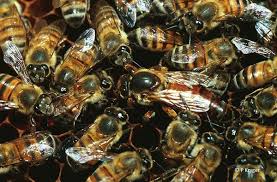
Bees play an instrumental role in supporting biodiversity and various ecosystems, both locally and globally. Most importantly, these insects are the world’s primary crop pollinators and more than 50 different crops that are cultivated in South Africa, rely on honeybees.
Several threats to the environment have placed bee species across the world in a vulnerable position. The honeybee population’s rapid decline is not just a local phenomenon, but a global crisis.
How to attract bees into your garden:
- Bees use scent to find flowers from afar, so choose sweetly scented, nectar-rich plants.
- They only see the colour of plants when they get closer to them.
- Bees are attracted to blue, yellow, white, purple and violet flowers with violet being their top choice.
- Single flowers provide more food for pollinators than double flowers, which are filled with petals.
- Flat or shallow blossoms, such as daisies, zinnias, asters and Queen Anne’s lace, will attract the largest variety of bees
- Don’t use pesticides.
- Use local native plants. Research suggests native plants are four times more attractive to native bees than exotic flowers.
- Chose several colors of flowers.
- Plant flowers in clumps. Flowers clustered into clumps of one species will attract more pollinators than individual plants scattered through the habitat patch.
- Include flowers of different shapes. There are many different species of bees, and they are all different sizes, have different tongue lengths, and will feed on different shaped flowers. Consequently, providing a range of flower shapes means more bees can benefit.
- Have a diversity of plants flowering all season. Most bee species are generalists, feeding on a range of plants through their life cycle. By having several plant species flowering at once, and a sequence of plants flowering through spring, summer, and autumn, you can support a range of bee species that fly at different times of the season.
- Plant where bees will visit. Bees favor sunny spots over shade and need some shelter from strong winds.
 Tourism Tails