The annual migration of the Brown-veined White Butterfly in South Africa takes place during midsummer every year.
The migration originates in the arid regions of the Karoo and Kalahari. These populations owe their strength to the main food plant of the caterpillars, the Shepherd’s Tree. The core populations are maintained by the females laying eggs on the Shepherd’s trees before they move off to migrate. The mass of white butterflies probably plays an important role in pollination, but this is still poorly understood. In fact, there is much that we still do not know about this widespread butterfly.
Every year in midsummer (December or January) they gather in their millions when the migration starts. The sky is full of butterflies, all flying steadily in a North-Easterly direction, as the annual migration of this butterfly hits especially the Central, Northern, and North-eastern parts of South Africa. Depending on climatic conditions like rain, drought etc. their numbers differ each year.
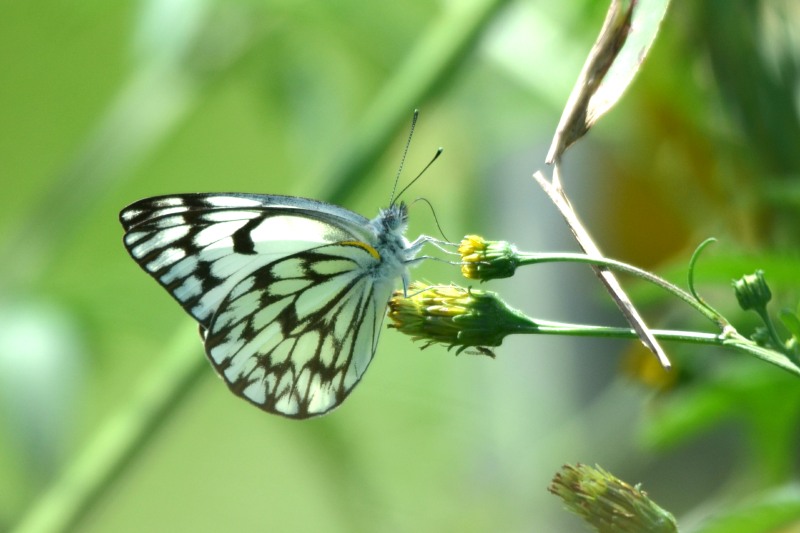
Following them and preying on them, are hundreds of insect-eating birds, as well as many dragonflies out for a quick attack on a slow moving and low-flying butterfly. Spiders also catch them in their webs.
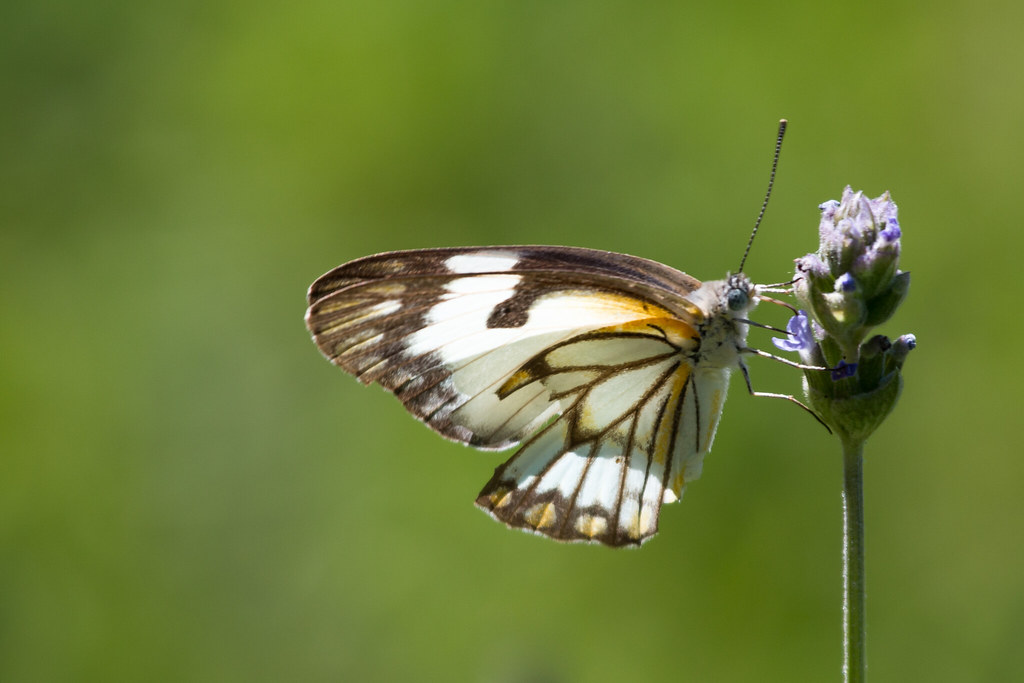
After crossing the provinces of the Northern Cape, parts of the Free State and Northwest Province on their journey northeast, they move over the provinces of Gauteng as well as in parts of Mpumalanga province and also parts of Limpopo Province.
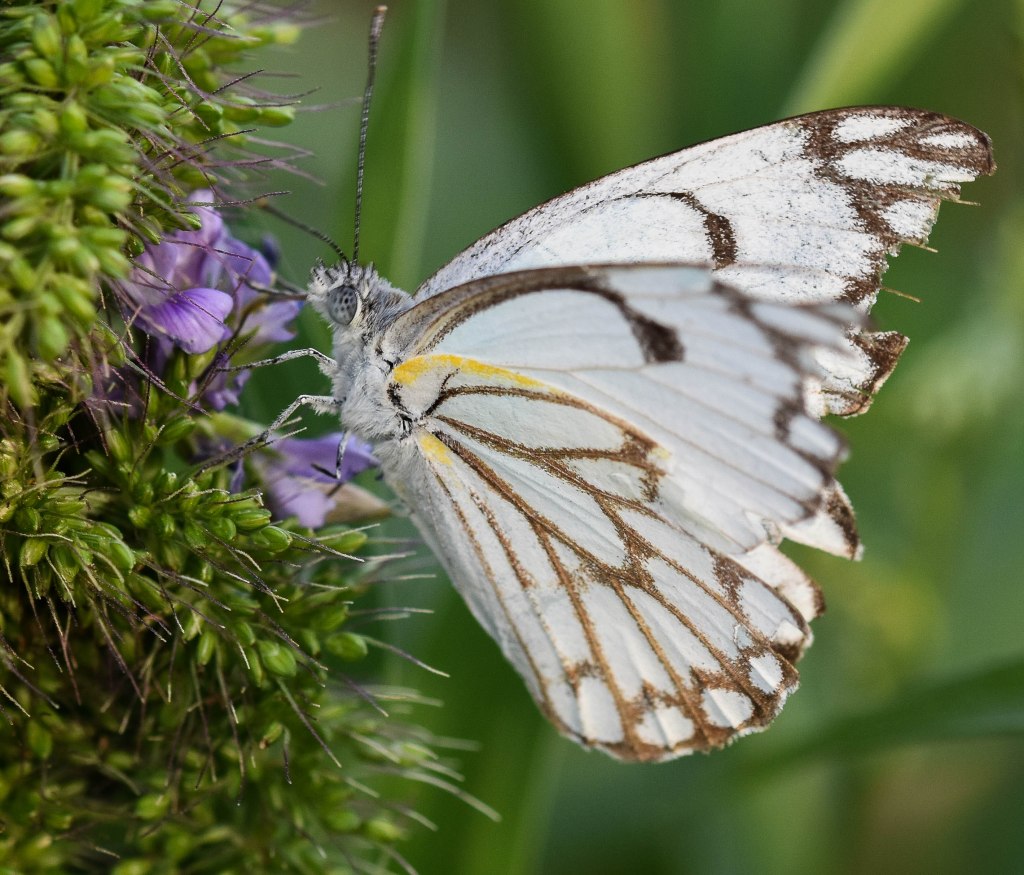
These butterflies start flying, and laying eggs, from a specific area in the Southwest – Kalahari (Northern Cape region). As they fly in a north-easterly direction, more and more join the flight. They also pause to lay eggs along the way.
Little research has been done with regards to where exactly these butterflies fly to, but they have been noticed flying above the ocean near the Mozambique coast, where at the end of their journey, they most probably fall into the sea. They need not fly back to sustain the population, as eggs have already been deposited on the way.
One could argue that the flight is an emigration rather than a migration, as they only fly one way and then die at the end of their journey.
 Tourism Tails