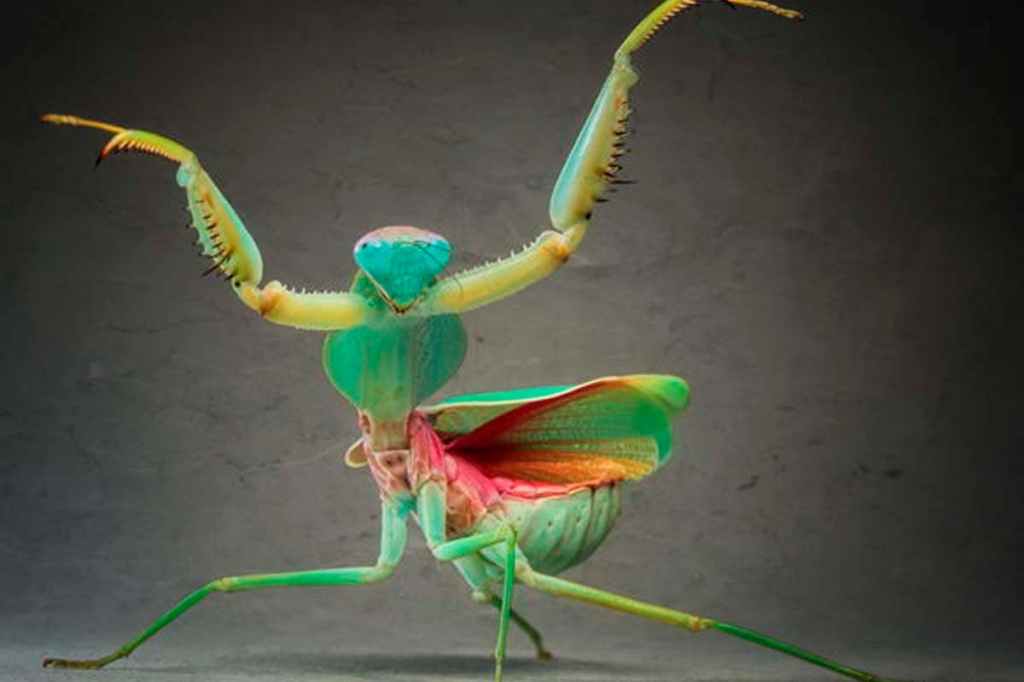
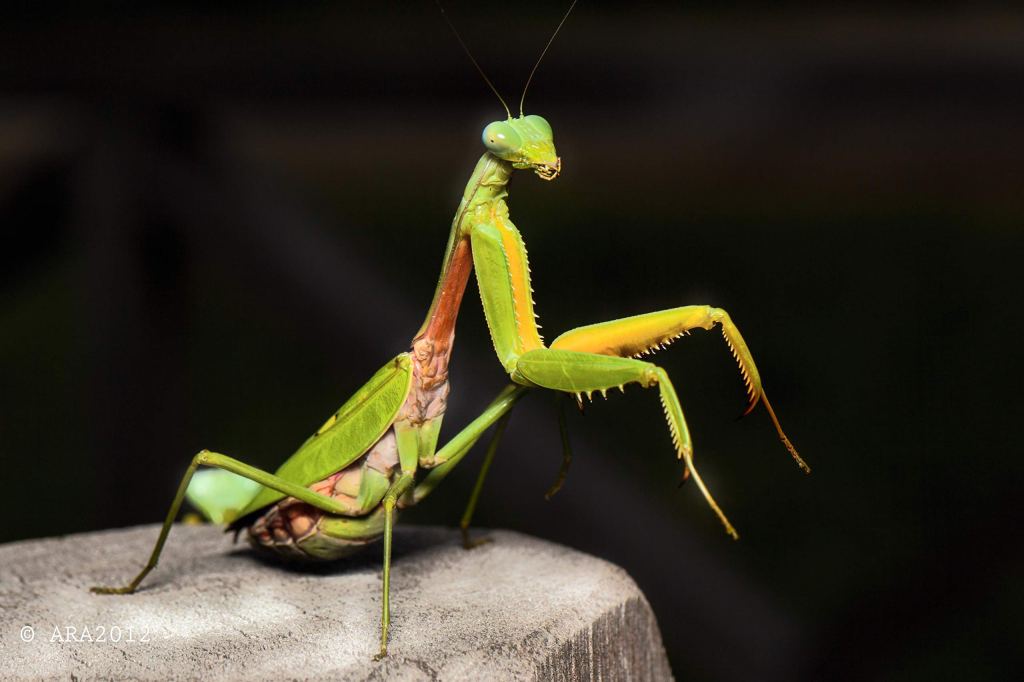
There are over 200 species of Mantis found in sub-Saharan Africa alone. Their scientific name, Mantodea, translated from Greek, means prophet. The insects are colloquially called praying mantis due to their characteristic pose which so closely resembles a person with their hands clasped in prayer. However, because they are predatory creatures, their name is sometimes incorrectly spelled as preying mantis.
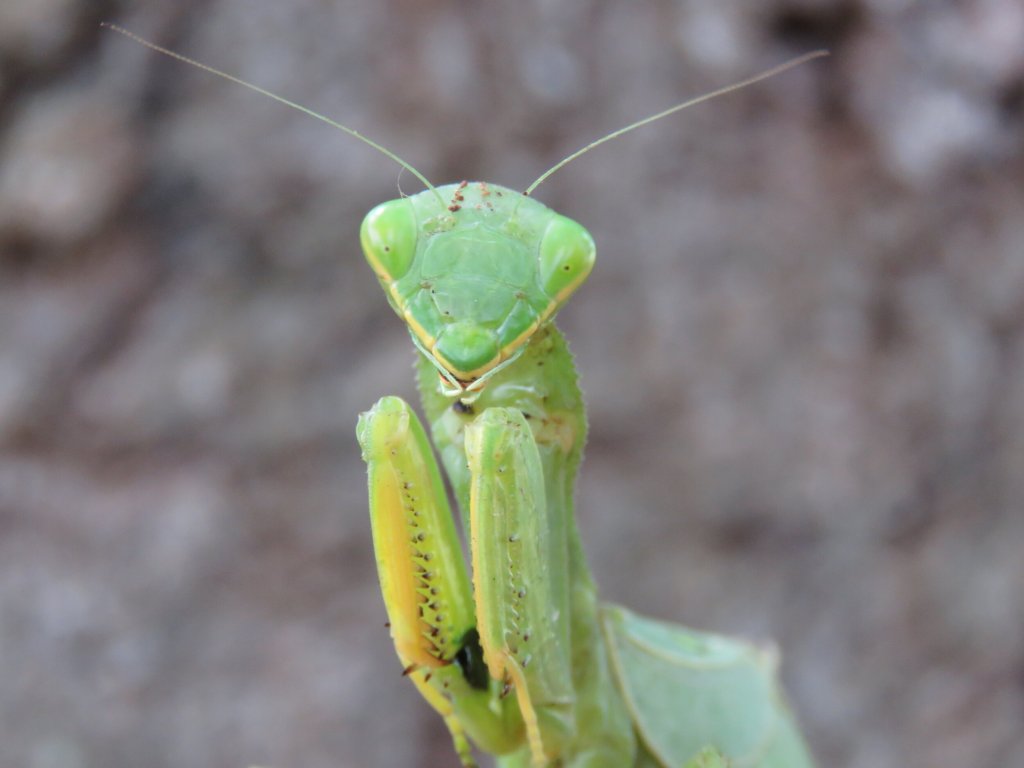
All insects within this species have very distinctive triangular shaped heads which can turn almost 180 degrees in either direction. They have compound eyes with binocular vision and can see up to 15 meters, allowing them to spot both predators and prey very well.
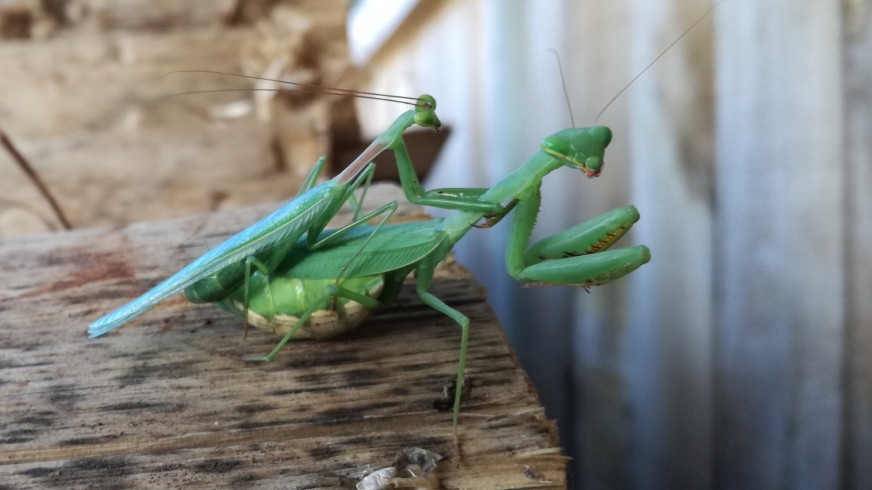
The female praying mantis is most notorious for her habit of biting off the head of her mate during or after mating. However, this trait has been mostly noted in mating pairs of captive mantises, leading to the conclusion that the behaviour may be stress related, and not a common occurrence in the wild.
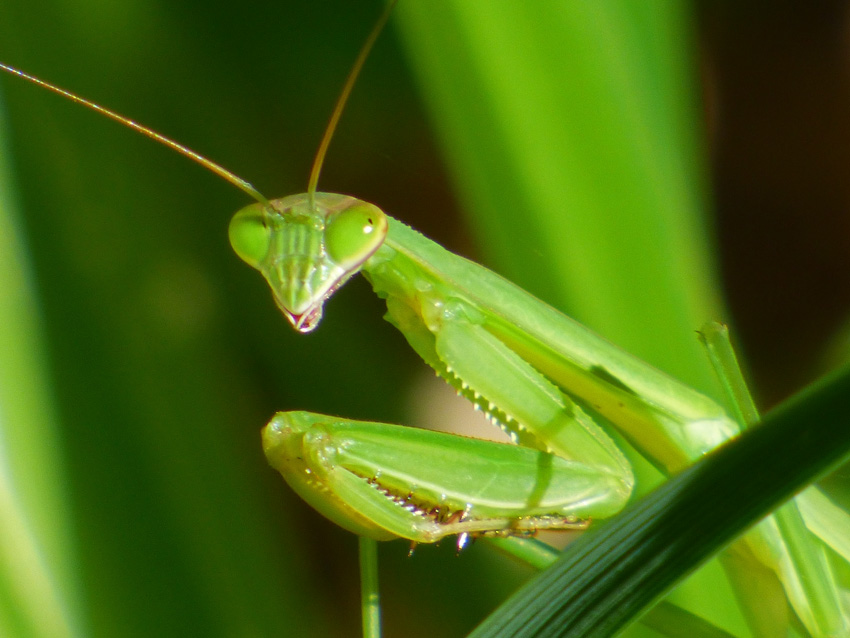
The praying mantis is totally carnivorous, eating mainly insects such as butterflies, moths, crickets, grasshoppers, and flies. Very large species have been seen to catch small lizards. They are also cannibalistic, not averse to eating members of their own species. They generally use coloration for camouflage, swaying silently in the breeze as they wait for their prey to move as close as possible; then, with lightning speed, they grab the insect and hold it with the hooked spines on their front legs, finally killing it with a lethal bite to the head.
In South Africa, the Khoi and San tribes call the praying mantis Hottentotsgod, which means God of the Bushmen. There is also an African belief that a mantis landing on a person is an omen of good luck.
 Tourism Tails