There are three common duiker species in this part of the world, and it is not uncommon to see all three on your safari through one of our parks. Its name comes from the Afrikaans ‘duiker’ meaning ‘to dive,’ because of its habit of ducking into bushes when there is danger about.
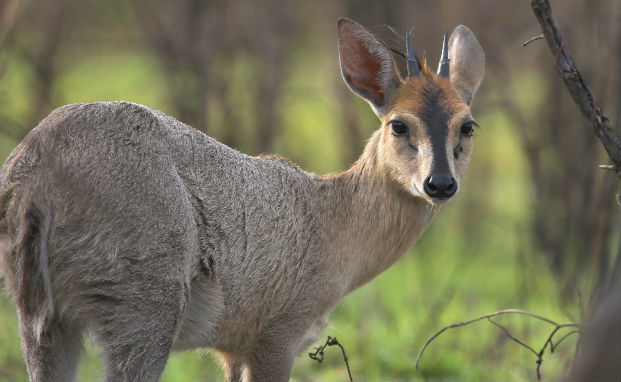
Common Duiker:
“Common” is a most apt description of this small antelope, as it enjoys the widest distribution of all the African antelopes. It is also called the Bush duiker, grey duiker, Savannah duiker or Grimm’s duiker. The name ‘grey duiker’ is because of its characteristic greyish colour, but “bush“ is a misnomer, as it does not live in forest or thickets but in grassland, savannah woodland, and karroid shrubland. They can live without drinking water, and they eat leaves, fruit, and seeds, and are one of very few antelope known to eat carrion and insects.
Blue Duiker:
Blue duikers live throughout central, eastern, and southern Africa. They inhabit a wide variety of forest and woodlands, including lowland rainforest, gallery forest, coastal scrub farmland, dense thicket, and montane forest. Blue duikers are forest antelope that spend most of their time foraging for fruit and other plant materials to eat. They are most active at dawn and at dusk. They are known to follow in the wake of monkeys and birds, eating fruit that those animals drop.
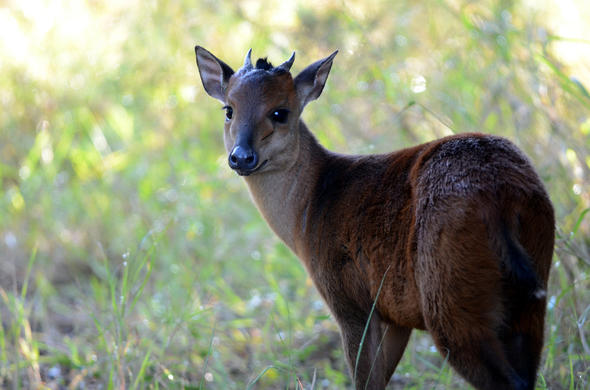
Red Duiker:
The Red Duiker is smaller than the Common Duiker. The upper parts are a deep chestnut-red and the lower parts of the flanks and under parts are a pale chestnut colour. Red Duiker forage on freshly fallen leaves, fruits, and flowers from forest canopies. Foraging occurs mostly during the early mornings and late afternoons.
 Tourism Tails