Applying sustainable fishing practices and methods isn’t hard. We need to be aware of how fishing techniques affect aquatic wildlife and habitats.
It is possible to fish sustainably. In some parts of the world, people have been doing it for thousands of years. Today, we can learn much from these old ways of fishing.
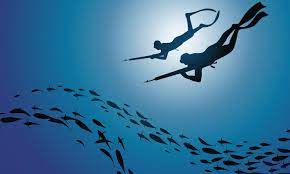
The Tagbanua people of the Philippines are one example. They have been fishing sustainably for many years and use spear fishing. The Tagbanuas fish for specific kinds of fish only during certain times of the year and catch only a small number of fish. The rest of the year, the fish are left alone. That gives their population time to grow larger again.
The biggest problem these days is with commercial fishing. There is more and more pressure to feed an ever-increasing world population. Some of the industrial scale fishing techniques are described below –
Gillnetting
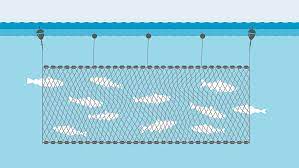
Gillnetting uses vertical panels of netting that hang from a line of floaters. Gillnets have been used since the Viking era, but the advent of the powered drum to drag in larger and larger nets and the use of synthetic fibres for netting material changed this type of fishing to an unsustainable one. These nets can now be kilometres long, and they catch everything in its path. Many of the species caught are not wanted (they are called bycatch), and populations are decimated. In addition, some of these nets break free and float around the ocean, catching fish for years afterwards.
There is a movement to ban gillnetting completely, but to date only one country has done this. Some regulations are in places in certain areas to make gillnetting more sustainable:
Gillnetting is banned at certain time of the year
Netting is banned when bycatch numbers become too high
Regulations determine the breaking strength of the nets, the material used, and the size of the gaps in the nets.
While this can be done in territorial waters, it is almost impossible to control in international waters, and illegal fishing continues unabated.
Longline fishing
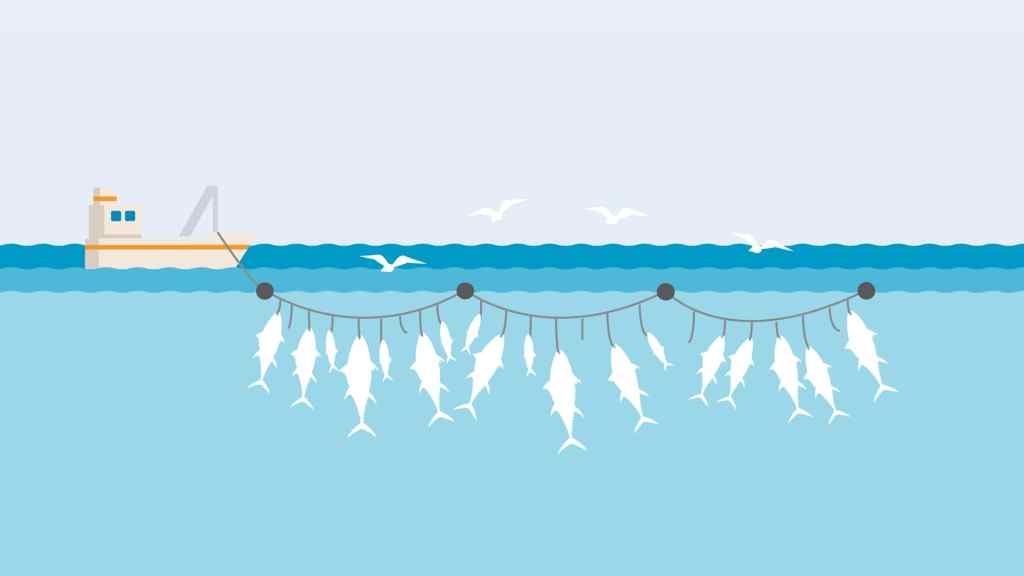
Longlining is a technique that uses a long line with baited hooks attached at intervals via short branch lines. Longlines can be up to 100km long. Originally thought to be a better option than gillnetting, it does unfortunately result in a huge proportion of bycatch – especially dolphins, seabirds, sea turtles and sharks.
There have been attempts to control longlining by limiting the number of hooks for example when fishing for Patagonian toothfish, deploying streamers to scare away birds, and limiting fishing seasons.
Very little information on bycatch is available as international longliners keep very little if any records of their catches. Longlining has had catastrophic implications for certain fish species.
Seine fishing
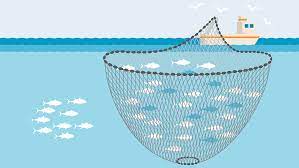
Seine fishing uses a surrounding net, deployed either from a boat or from the shore. It differs from gillnetting in that the net surrounds the fish rather than directly snaring them in the net. Seine fishing targets specific fish types, usually those travelling in shoals like mackerel or herring, so the bycatch is lower than with gillnetting. However, it can put huge pressure on fish stocks.
This large scale depletion of the oceans is close to causing permanent damage to our marine ecosystem if this issue is not addressed.
 Tourism Tails