Mangroves provide a slew of benefits in addition to storing carbon, reducing flooding and erosion from storms, acting as nurseries for fish, and filtering pollutants from water.
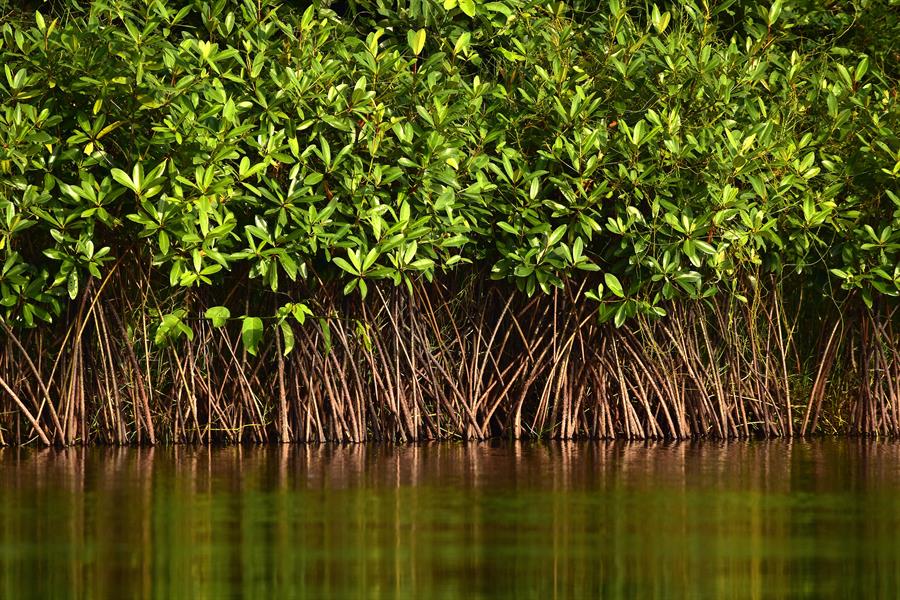
Straddling the interface of land and sea, mangrove forests are of two worlds. Their branches provide homes for lizards, snakes, and nesting birds, while their roots, when submerged, become protective nurseries for baby fish and sanctuaries for marine mammals. Mangroves also provide a slew of benefits for coastal human communities. They act as storm barriers, protecting inland areas from flooding and erosion by dissipating the energy of big waves. They help filter river water of pollutants and trap excess sediment before it reaches the ocean. Their role as fish nurseries can have big impacts on local economies and food production.
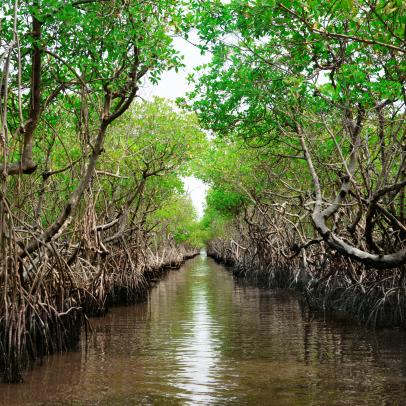
Mangroves also have a big impact on climate. Although they’re only found in tropical areas and cover an estimated 140,000 square kilometres – less than 3% the extent of the Amazon rainforest – mangroves are powerhouses when it comes to carbon storage. Mangroves can hold 4 times more carbon than rainforests can. As mangrove trees grow, they store carbon from the atmosphere in their wood. More carbon builds up in mangrove soils with the accumulation of organic matter, such as dead leaves and branches. Most of the carbon is stored in the soil beneath mangrove trees. Mangroves are able to store and stockpile carbon from the atmosphere during their growing period from 50 metric tons to as much as 220 metric tons per acre.
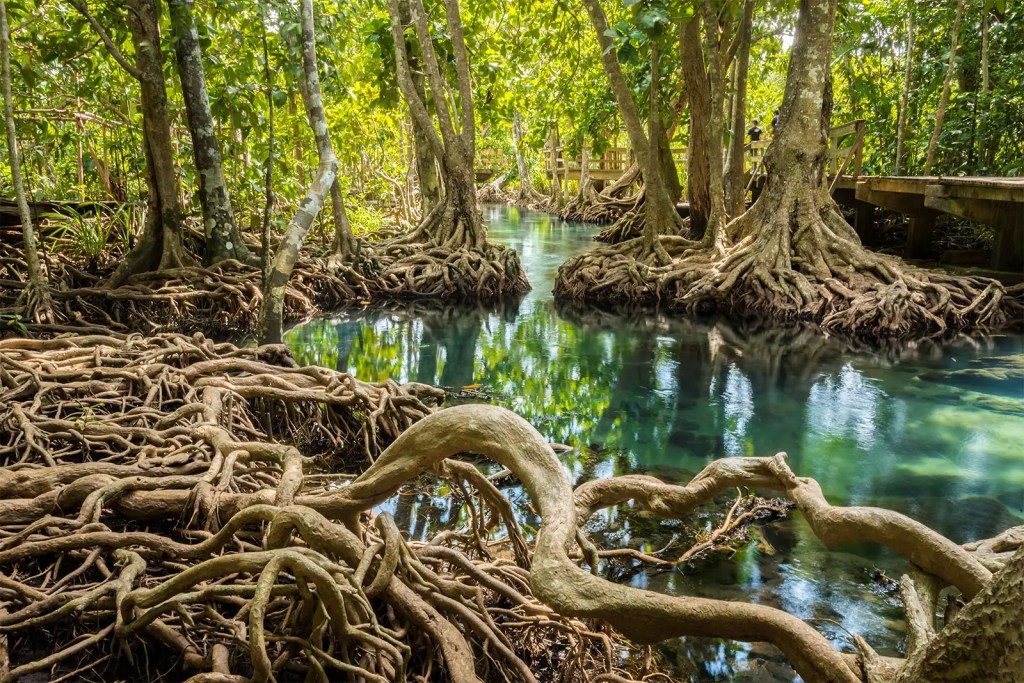
Research indicates at least 35 percent of the world’s mangrove forests may have been lost between 1980 and 2000. Mangroves are deforested for many reasons, including to make room for shrimp farms and other forms of aquaculture, as well as for their wood. Mangroves also depend on the presence of freshwater and can die when dams and other developments stem the flow of rivers.
The good news is that mangroves recover quickly when given a chance. It also is very important to restore mangroves, particularly in deltaic regions, where they can increase those ecosystems’ capacity to clean the atmosphere of existing carbon dioxide. By improving our understanding of how mangroves function under different conditions, we can safeguard and increase these valuable blue carbon stores.
 Tourism Tails