There are 32 types of mudskippers. The mudskipper has a dull yellow-brown coloured body. There is a black stripe on each of its flanks from its eye to the tail. Some fishes may also have a dark stripe on the back.
Their cheeks have bluish-white spots, and their dorsal fin is red or brown in colour. The rear dorsal fin of the fish is dark in colour along with a pale, white margin. During mating season, the males will also develop brightly coloured spots in order to attract females.
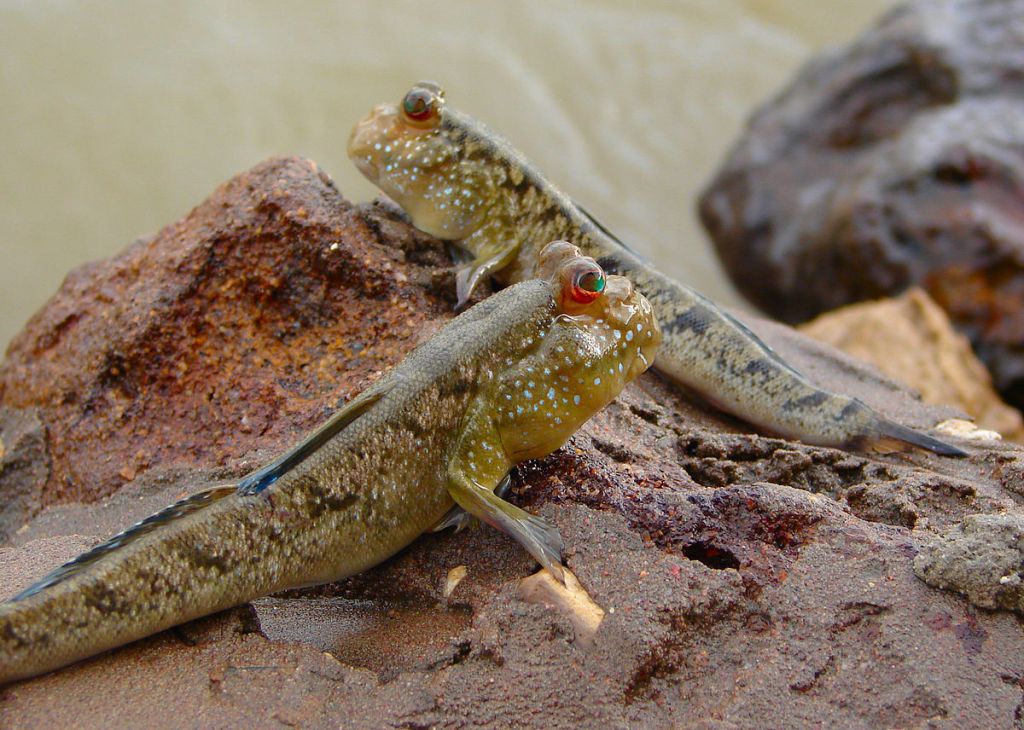
Living in intertidal zones, this fish species can tolerate various levels of salinity in the water where it resides
The most interesting trait of the mudskipper is their ability to both survive and thrive in and out of water. When leaving the water and moving into a drier environment on land they are still able to breathe using water that is trapped inside their rather large gill chambers. They are also able to absorb oxygen from the lining of their mouth and throat allowing them to stay out of water for long periods of time. In fact, it has been discovered that they spend up to three quarters of their life on land. This fish has several other adaptive features that help it survive both on water and on land. The fish can move on land using its pectoral fins, which help it to hop around. The pelvic fins of the fish are useful for moving up roots or rocks, and the pectoral fins assist in pulling or pushing the fish high or low.
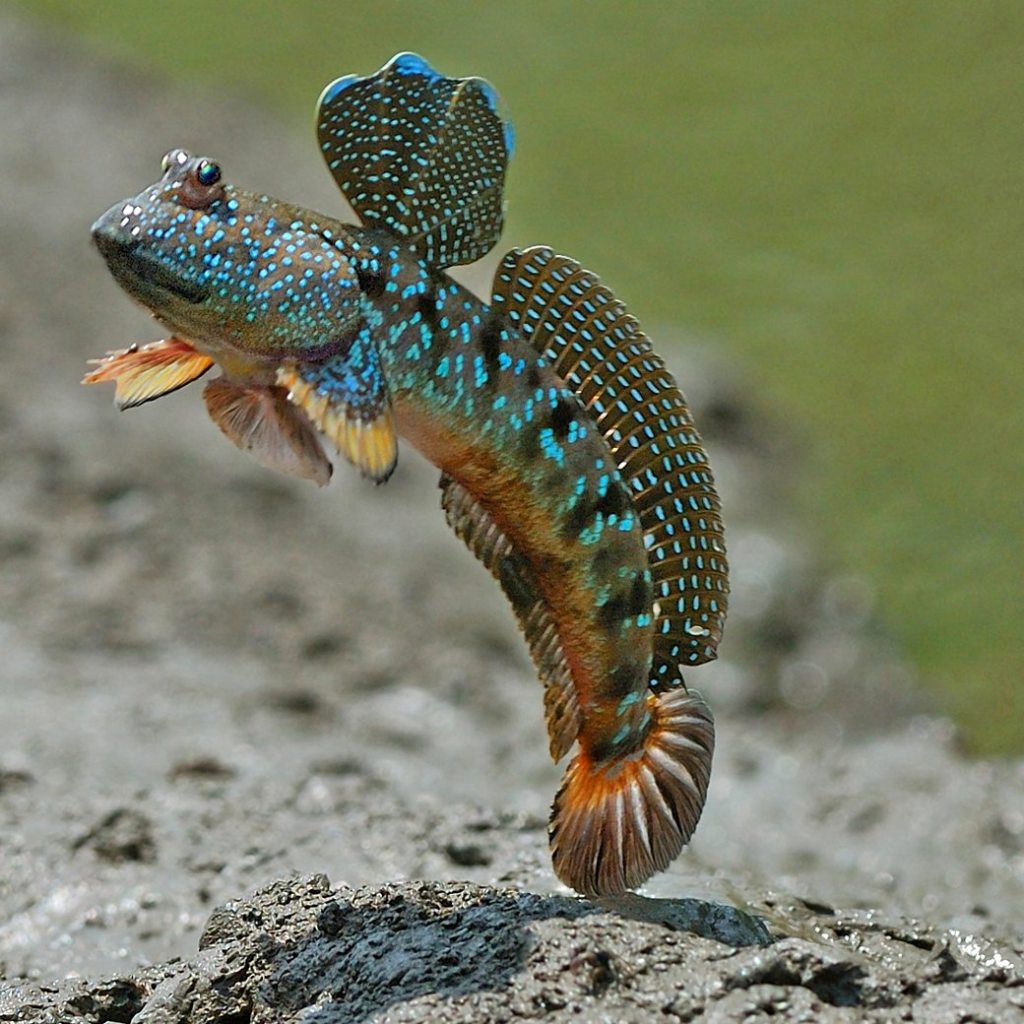
The mudskipper’s ideal habitat is that of the marine coasts and freshwater areas near the oceans. In addition to that, it is also found in the muddy shores near rivers and estuaries. Mudskippers typically live in burrows in intertidal habitats and exhibit unique adaptations to this environment that are not found in most intertidal fishes, which typically survive the retreat of the tide by hiding under wet seaweed or in tide pools. These burrows are most often characterised by their smooth and vaulted ceilings. During high tides in those tidal zones, they may be seen to cling to a mangrove tree or its roots to save their life. During low tide, they comfortably swim around in large pools of water.
Mudskippers have an average lifespan of five years in the wild.
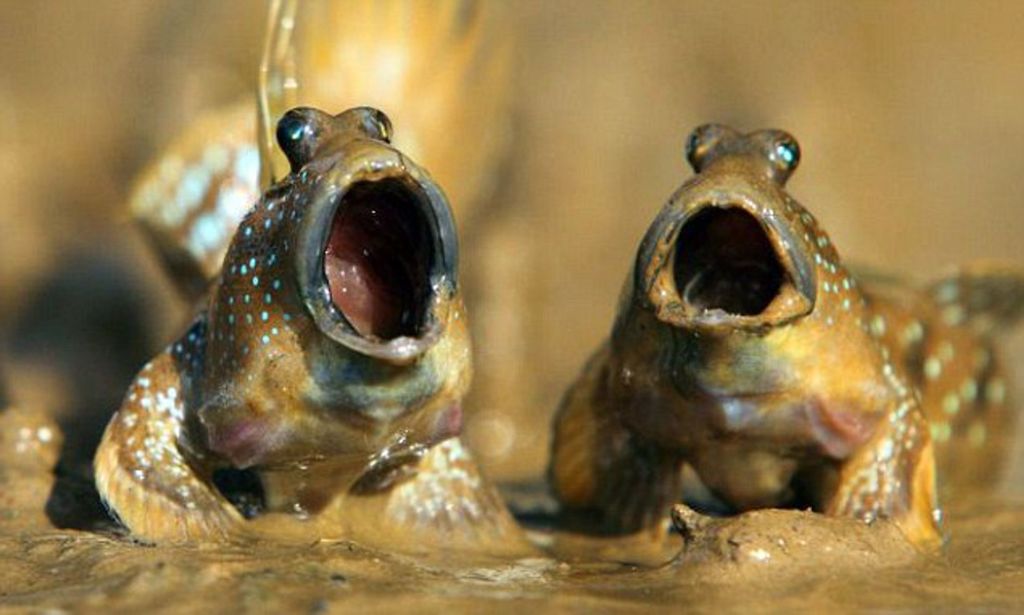
The mudskipper species mostly communicate using sound in their burrows along with their body language. Some males can get quite territorial about their mud burrow and might even get aggressive with other fishes.
This species is carnivorous in nature. Its diet primarily consists of fiddler crabs, medaka fish, and other types of juvenile fish.
Apart from their natural predators in the wild, giant mudskippers are also hunted by humans. This is because many humans believe that these fish have medicinal properties that can be used for healing.
 Tourism Tails