Thorns, spines, and prickles represent growths from the stem, leaf, fruit, or root that are sharp and woody at maturity. Thorns and spines are modification of existing organs such as stems, leaves or stipules. Prickles or emergences are outgrowths derived from epidermal and sub epidermal layers in locations other than nodes (where stems, leaves or stipules arise).
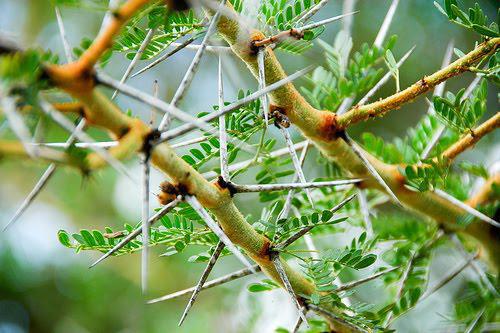
Thorns, spines and prickles can be very formidable and this Acacia nicely illustrates how these structure would deter animals from feeding on “thorn”- armed stems.
Thorn – A sharp pointed modified stem.
Spine – A sharp pointed structure that is a modified leaf or stipule.
Prickle – A sharp outgrowth from the epidermis or bark.
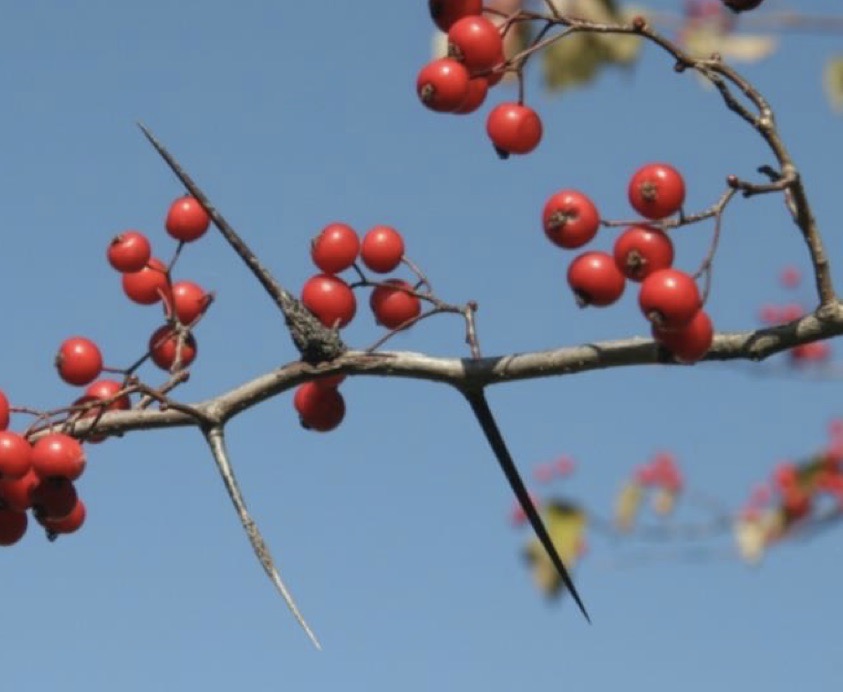
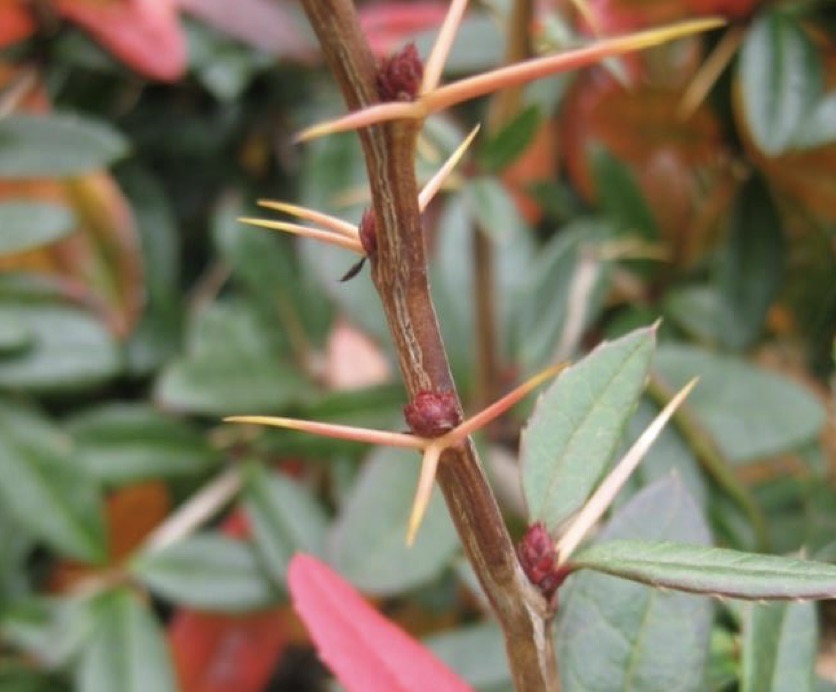
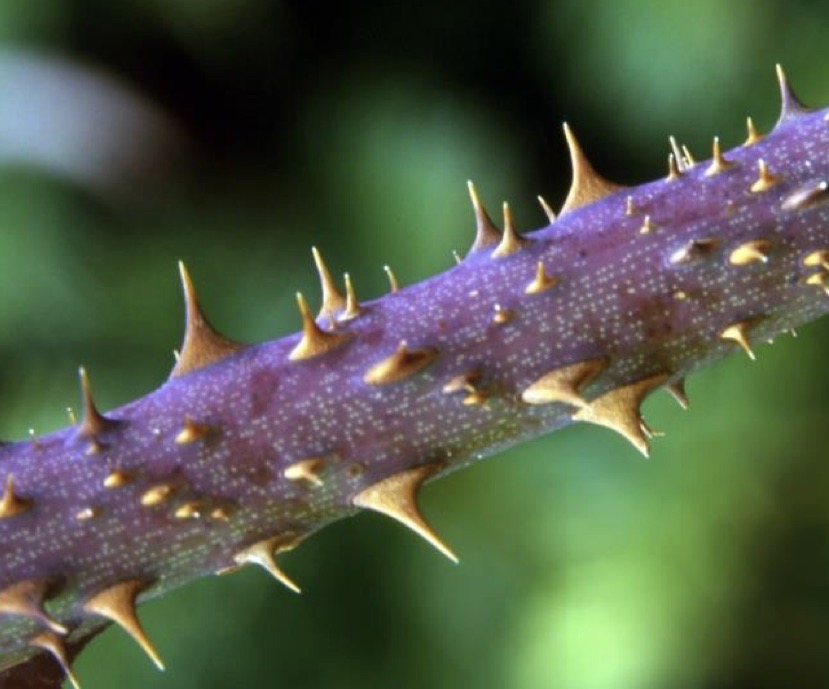
Thorns:
A thorn is a modified stem and can be recognised because it is subtended by a leaf. Thorns may be branched or un-branched. Branched thorns in honeylocust. Hawthorn has an un-branched thorn. In Alluaudia, each pair of leaves subtends a thorn.
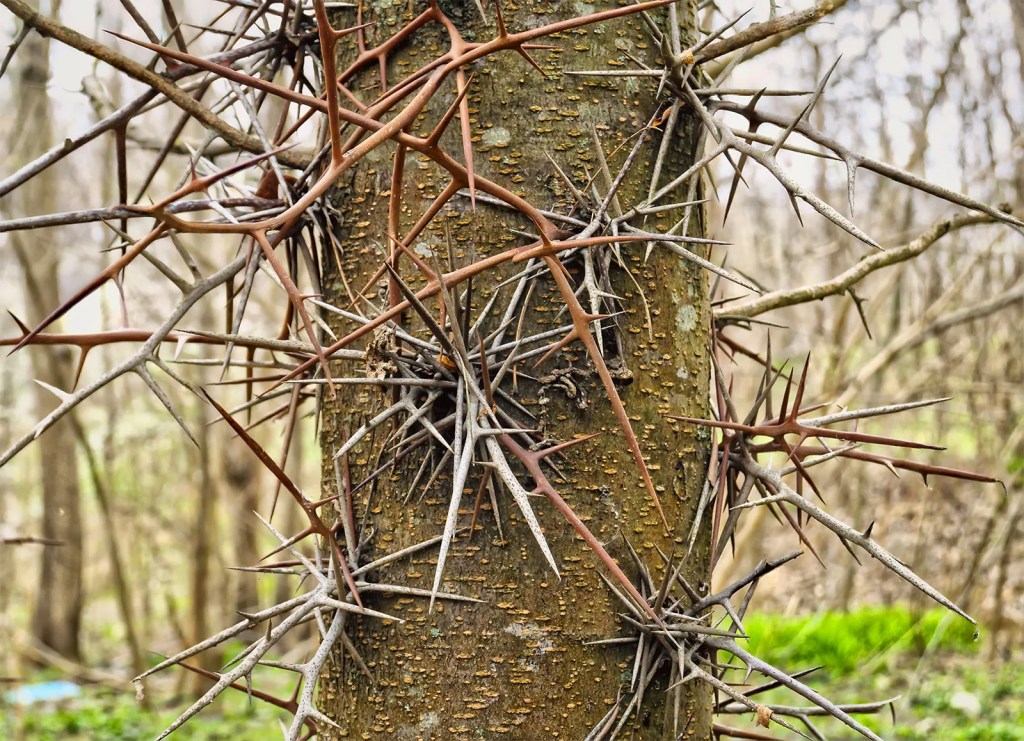
Spines:
A spine is a sharp pointed structure that is a modified leaf or stipule.
Ocotillo produces a spine that is a fusion of the stem and the lower portion of the leaf petiole. In many Euphorbia species, the spines are modified stipules appearing on either side of the bud and leaf scar.
The impressive spines in Acacia species are stipule spines. In several Acacia species, the stipule spines are hollow and provide shelter for Pseudomyrmex ants. The leaves also produce food packets called Beltian bodies for the ants. In return the ants defend the Acacia from insect or animal pests.
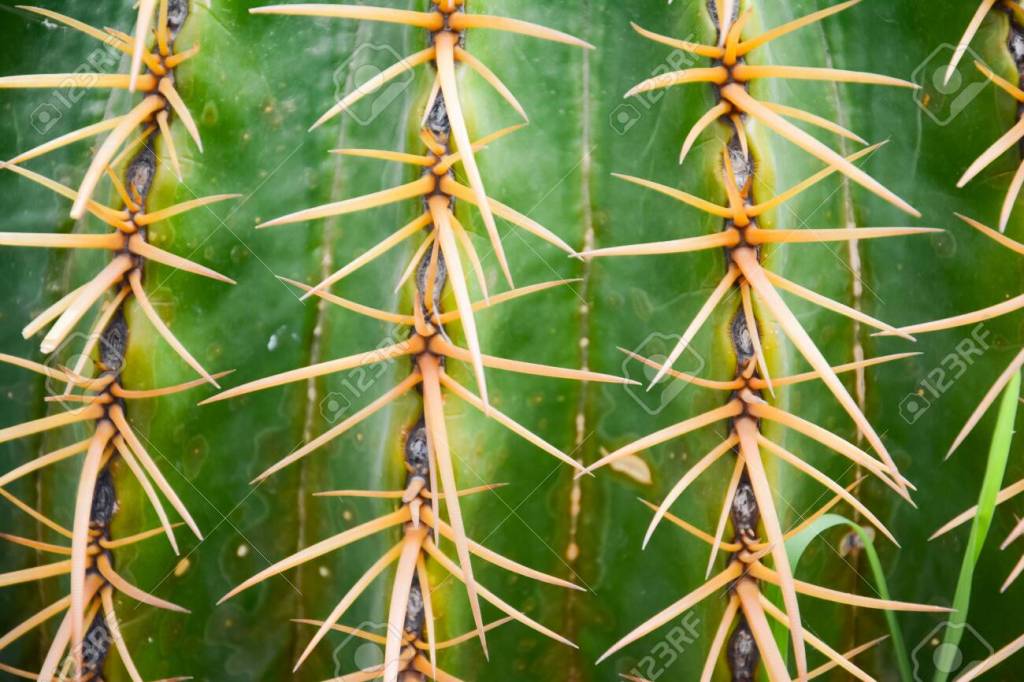
Cactus spines are usually modified leaves or shoots located in the axil of a leaf. A group of spines is termed an areole. The early development of spines in the leafy cactus Pereskia grandiflora shows that the spine originates in the axil of the leaf where the axillary bud would normally produce a shoot. Cactus spines provide protection from animal predators and can function to shade the plant from the desert heat.
Prickles:
Prickles are also called emergences and occur in places other than the stem node like thorns or spines. Prickles can be very numerous and be fearsome structures. On some plants, prickles continue to enlarge into large structures.
The prickles formed along the stems and leaves on some palms can be spectacular. Prickles can occur on leaves and may protrude from the main veins. Prickles may also arm the edges of a leaf or bract.
Prickles can also occur on fruits. Prickles can even be seen on adventitious roots as seen on the prop roots of screw. Similarly, prickles are produced on the prop roots of walking palm.
In some cases, “thorniness” is a juvenile phase characteristic that is lost as plants age and become mature flowering trees. This occurs in plants like honeylocust that produces thorns and castor-aralia that produces prickles.
 Tourism Tails