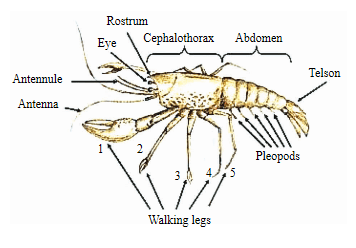
Decapods have 10 legs. The last five pair of appendages on their thorax are walking legs. In some species, the first pair of walking legs have large pinchers or chelipeds.
Decapods have 3 pairs of appendages, or maxillipeds, on their heads that make up their mouthparts. They also have two pairs of antennae on their heads. Crabs, shrimp, krill, and lobsters are all decapods.
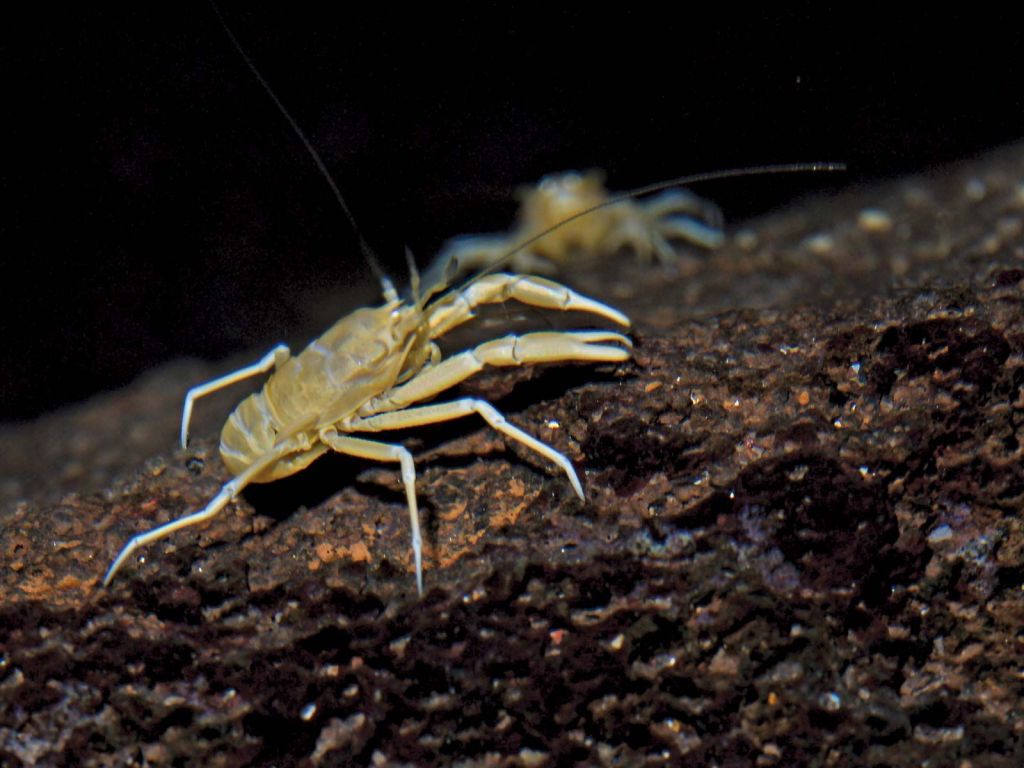
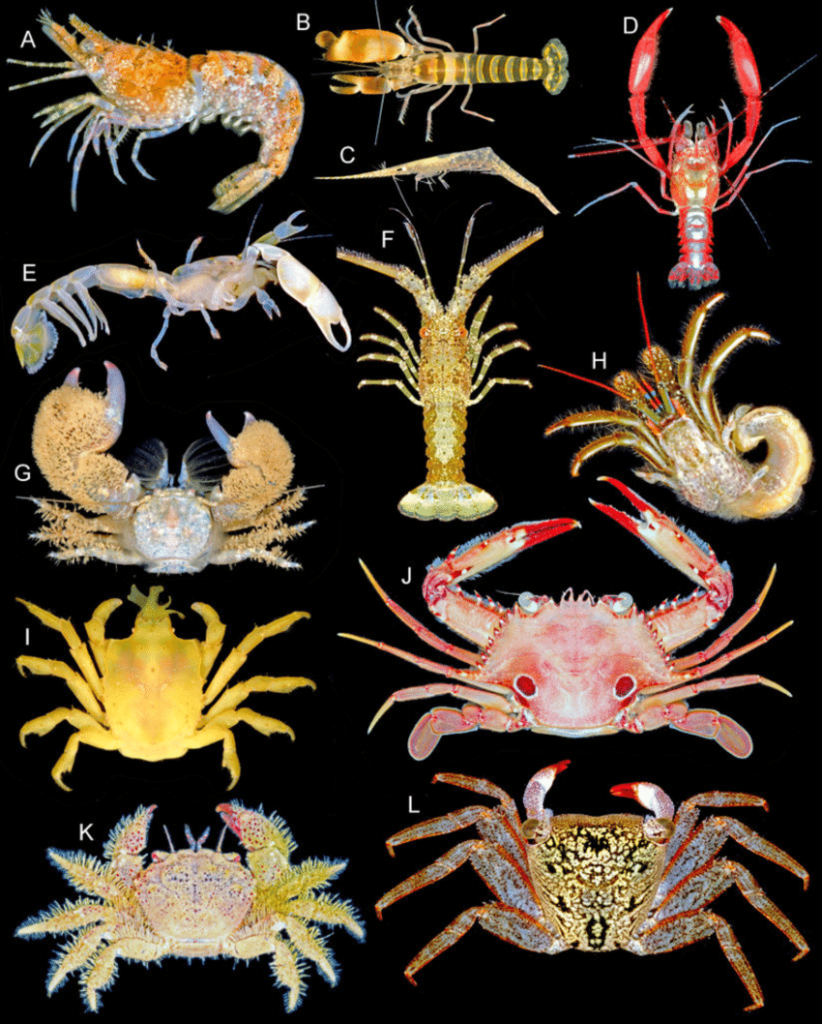
Decapods are primarily marine animals and are most abundant in warm, shallow tropical waters, but they are exploited commercially throughout the world. The presence of five pairs of thoracic legs (pereiopods) is the basis for the name decapod. Members of the order exhibit great diversity in size and structure. The macrurous (shrimplike) species, which can be as small as 1cm, have elongated bodies with long abdomens, well-developed fan tails, and often long, slender legs. The brachyurous (crablike) types, which in the case of spider crabs can have spans of almost 4m between their outstretched claws, have bodies that are flattened and laterally expanded, frequently with stout, short legs and reduced tail fans.

 Tourism Tails