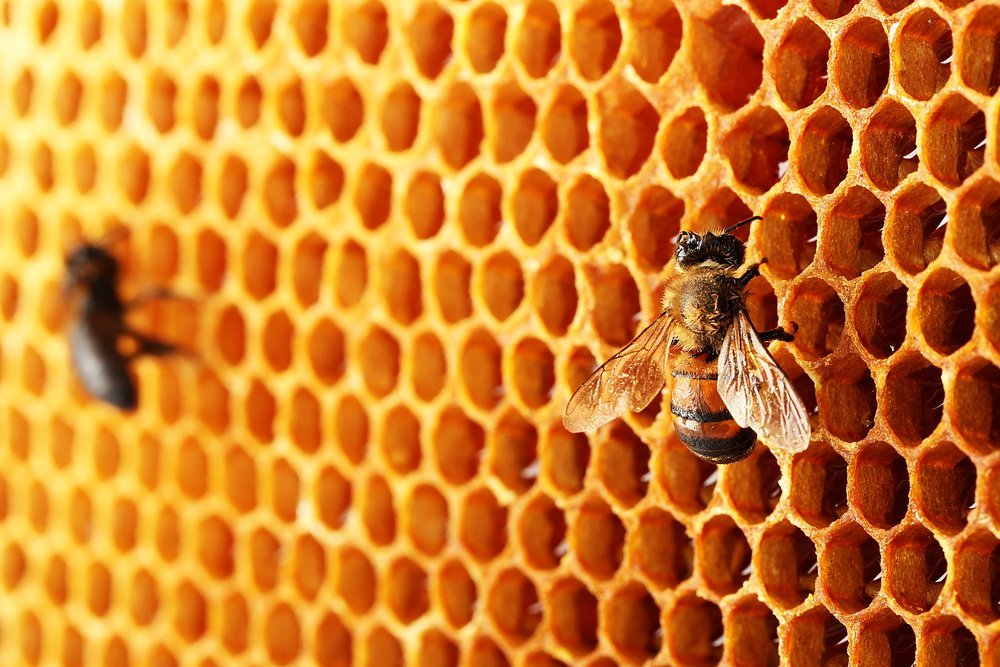
It’s well known that honey bees, build wax combs which are used for storing honey and rearing larvae. But why do honey bees use hexagons?
Using hexagons enables bees to make very efficient use of space whilst using as little wax as possible. They hold the maximum amount of honey, whilst ensuring no space is wasted, because the hexagons fit tight, and side by side together, in a compact fashion.
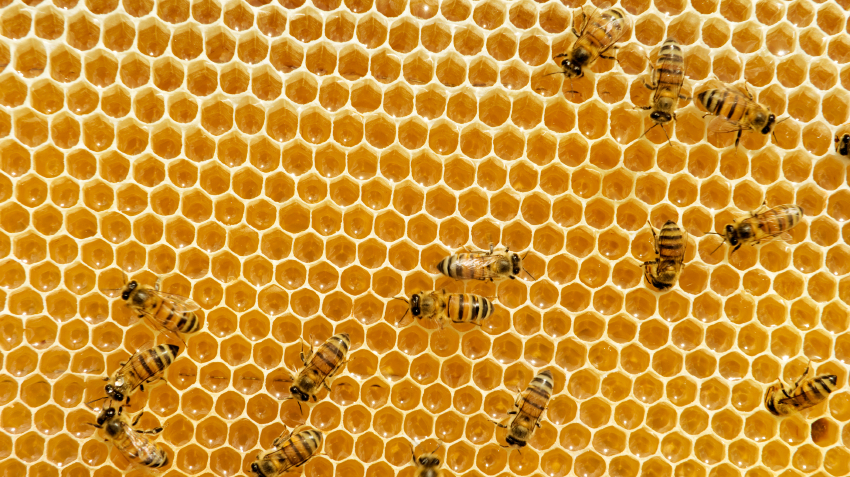
It should be said that much effort is required for bees to make honeycombs. Wax is first secreted by young bees, and carefully constructed into perfectly uniform hexagonal-shaped wax cells by many worker bees. Many individual cells must be made in order to have sufficient comb for storing honey.
Honey is the bees’ natural food source, eaten by colonies during the winter months when there are insufficient flowers from which to feed. Some of the hexagonal beeswax cells will actually be used for rearing their young.
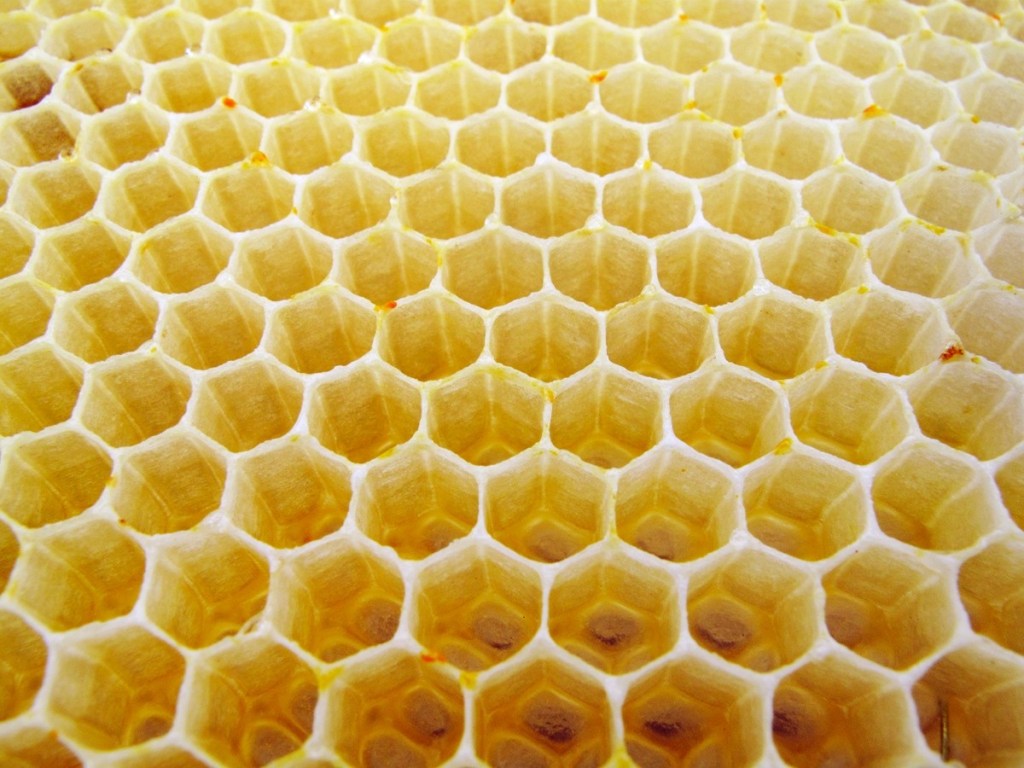
By ensuring that all cells are identical and with uniform, straight edges, then the cells fit perfectly, neatly and tight together. Gaps are minimised, meaning that no vital space is wasted, and each individual cell shares its walls with its neighbour. Bees are able to produce the maximum number of cells with the amount of wax used.
It’s no secret that the efficiency of the hexagon shaped honeycomb created by the humble but amazing honey bee has inspired humans in the creation of buildings, transportation and storage. However, the hexagon structure of the honeycomb is also used in mechanical and chemical engineering, biomedicine and nanofabrication. Honeycomb structure has even been designed into snowboards!
 Tourism Tails