Honey badgers are more closely related to a weasel than a European badger, and they don’t eat honey, though their weakness for beehives often gets them in trouble with humans. They live in a wide range of habitats, from forests to deserts, but mostly hang out in dry area in Africa, the Southwest Asia and India.
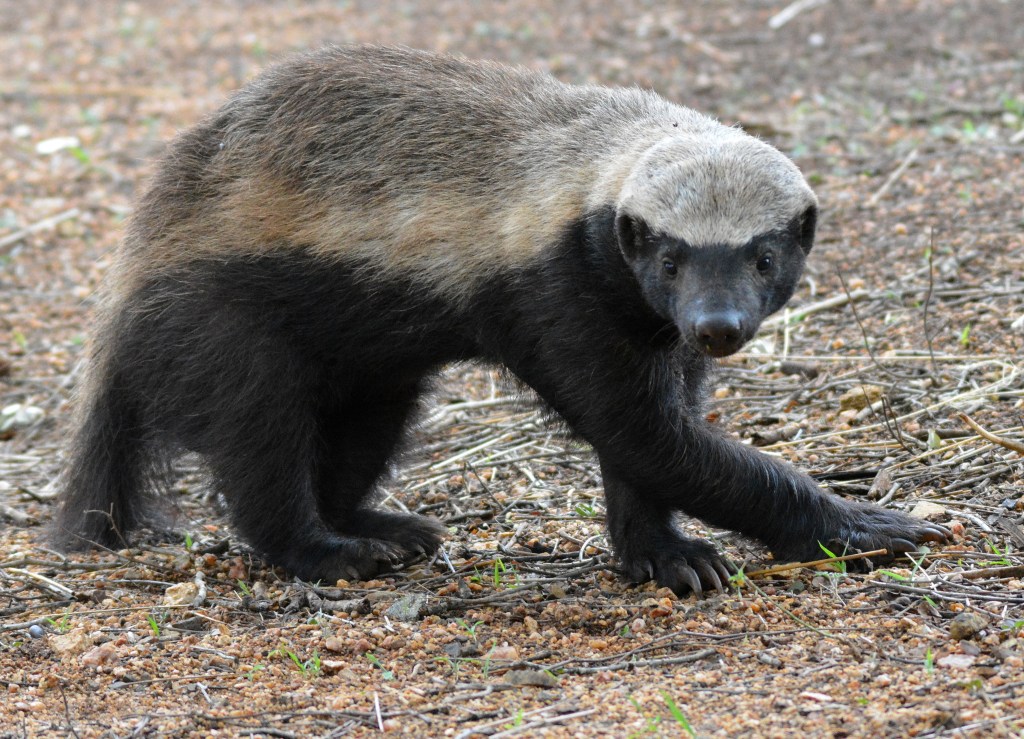
Honey badgers’ thick skin is loose — so loose, in fact, that they can almost turn around completely within it. If an animal bites the honey badger on the back, it can turn right around and bite the animal right back. They have long claws on their front feet that they use for digging, but which they use for fighting as well. Inexperienced predators — a young leopard, lion, or hyena, for instance — might try to attack a honey badger once, but they’ll never try it again after the first time.
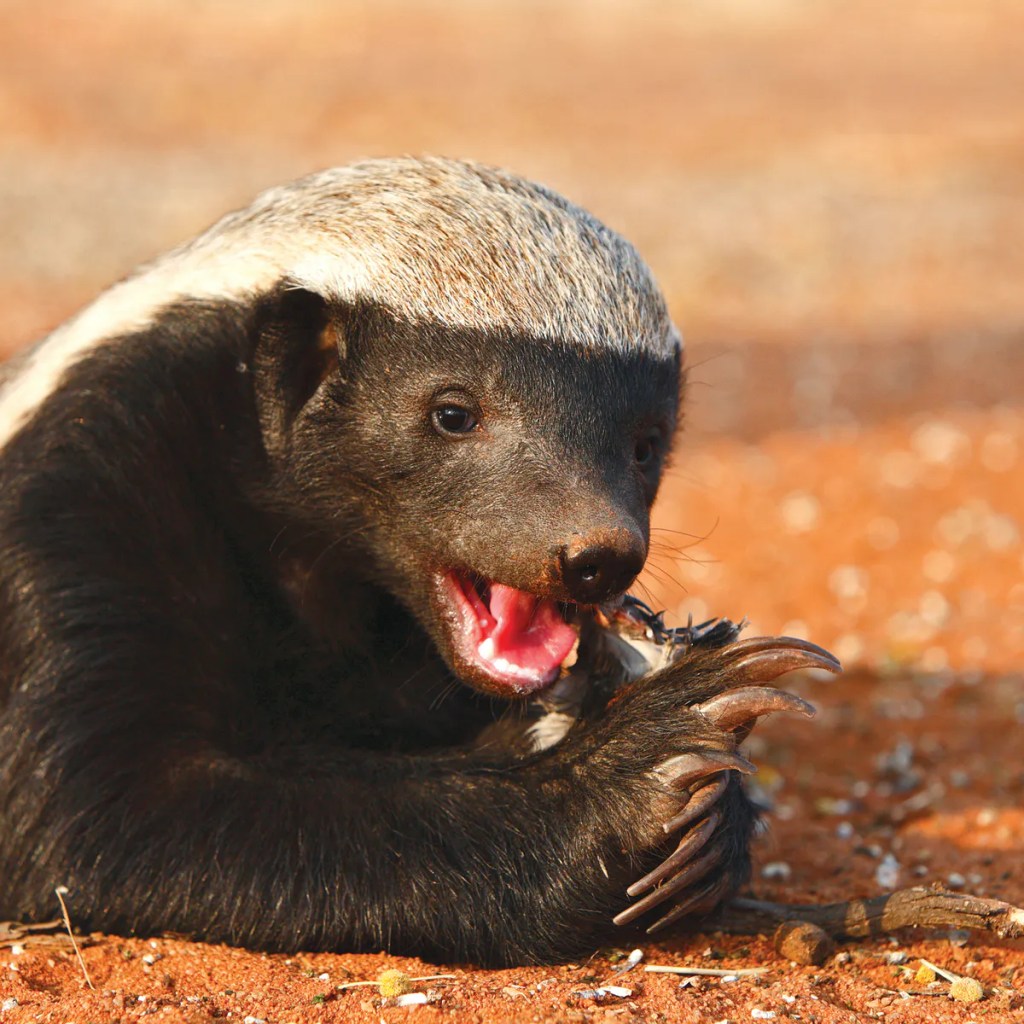
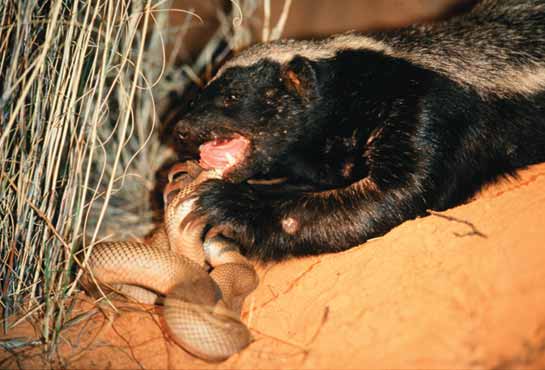
Honey badgers often tangle with venomous snakes, but one misconception is that are naturally immune to venom. While it’s true they eat a lot of venomous animals, their immunity needs to be developed over time. How honey badgers acquire this immunity is not well studied or understood, but mother honey badgers spend a long time raising each pup (14-18 months), and as the baby grows, its mom slowly introduces it to venomous animals, starting with the mildest scorpion and moving up the venom ladder until the youngster is eating cobras and puff adders.
 Tourism Tails