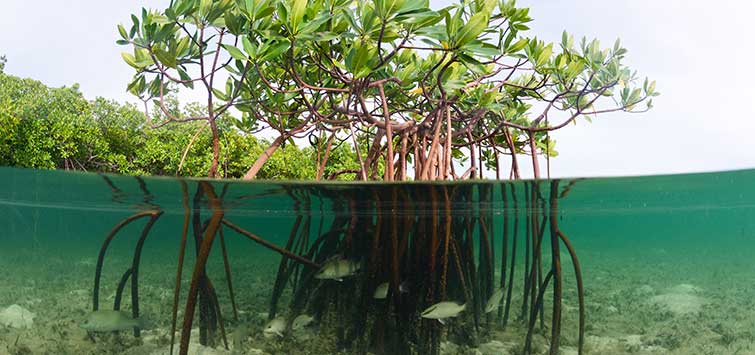
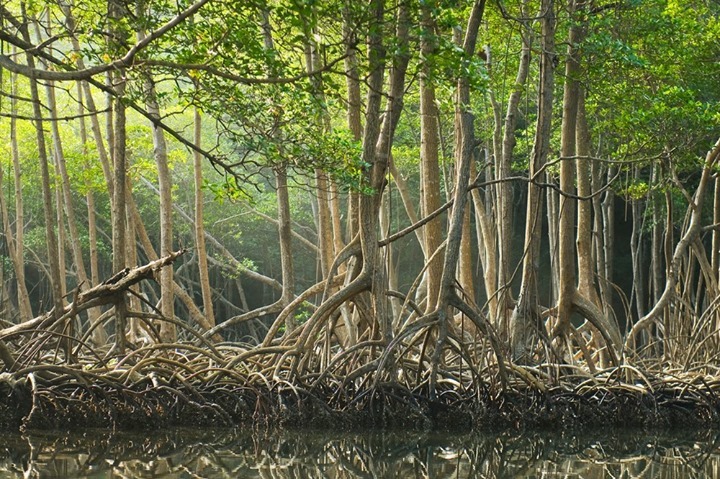
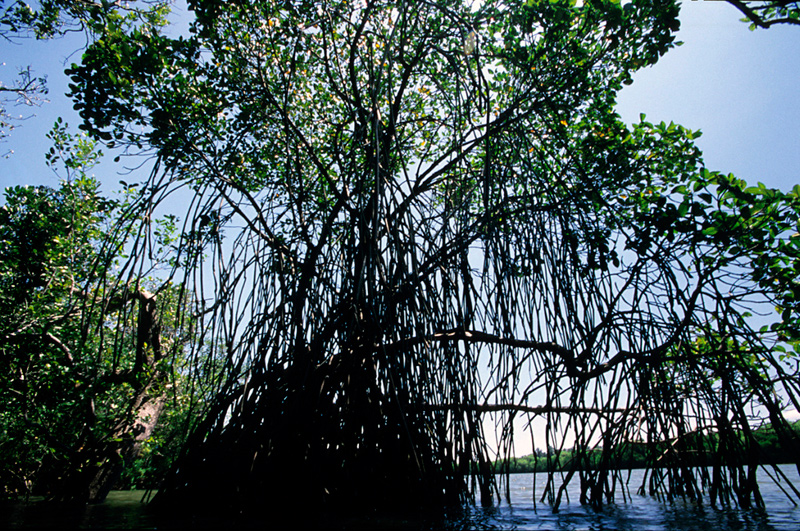
Mangroves are defined as salt tolerant trees and shrubs that grow in the intertidal regions of the tropical and subtropical coastlines. They grow luxuriantly in the places where freshwater mixes with seawater and where sediment is composed of accumulated deposits of mud.
Mangrove species have unique way of reproduction, which is generally known as vivipary. Seeds germinate and develop into seedlings while the seeds are still attached to the parent tree. These seedlings are normally called as propagules and they photosynthesise while still attached to the mother tree. The parent tree supplies water and necessary nutrients. They are buoyant and float in the water for some time before rooting themselves on suitable soil.
Kian Barker, owner of Eco Lodge and ShakaBarker Tours has a B. SC. in Botany and Zoology, as well as a B. SC. Honours in Ichthyology and Fisheries Science. He has published numerous articles in a variety of publications on estuarine management, tourism and related ecological aspects, as well as appearing in a number of television documentaries concerning the iSimangaliso Wetland Park. Kian believes passionately in repurposing for an even more sustainable eco friendly future. He has established an eco friendly 50 Shades of Green benchmark, that will hopefully be accepted into the tourism industry as a standard to aspire to. He has adapted Eco Lodge to embrace these green living practices, that also help conserve our natural environment, animals, and resources like water and energy. He also specialises in offering a variety of eco-tourism services in the iSimangaliso Wetland Park and surrounds.
View more posts
 Tourism Tails