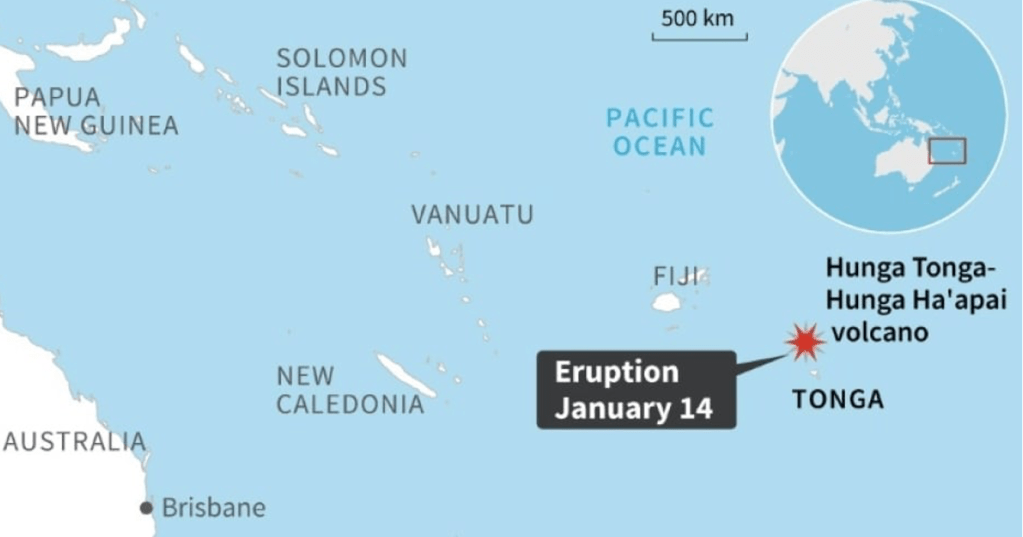
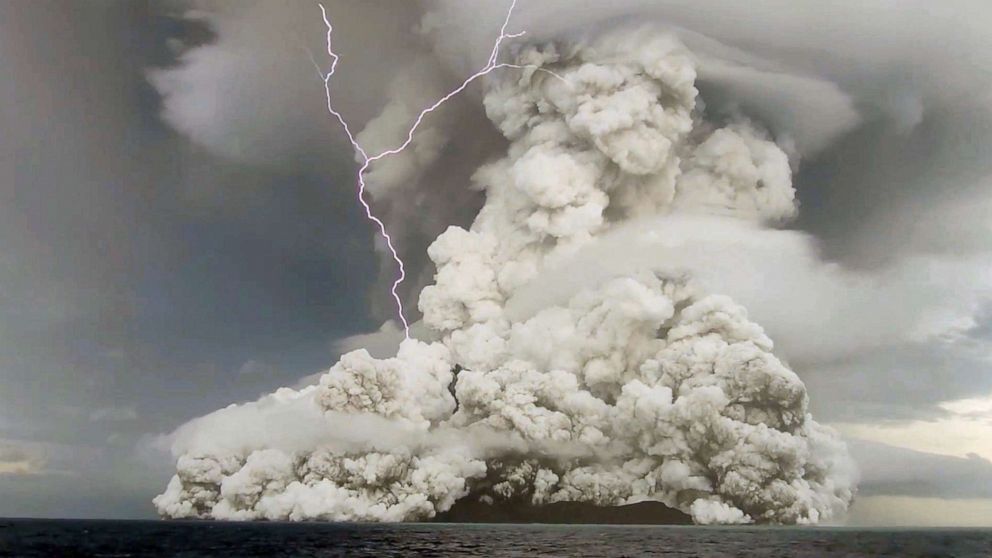
Remember the fantastic sunsets we saw last year? You can thank the Hunga Tonga eruption for that. The eruption was the largest explosion recorded in the atmosphere by modern instrumentation, far larger than any 20th century volcanic event or nuclear bomb test. It is thought that in recent centuries, only the Krakatoa eruption of 1883 rivalled the atmospheric disturbance produced The eruption was so intense that it destroyed half of an island, and then created a new island, which was later named Hunga Tonga-Hunga Ha’apai. The resultant tsunami was over 20 metres high, and caused extensive damage.
Described by scientists as a “magma hammer”, the volcano at its height produced a series of four underwater thrusts, displaced 10 cubic kilometers of rock, ash and sediment, and generated the largest atmospheric explosion recorded by modern instrumentation.
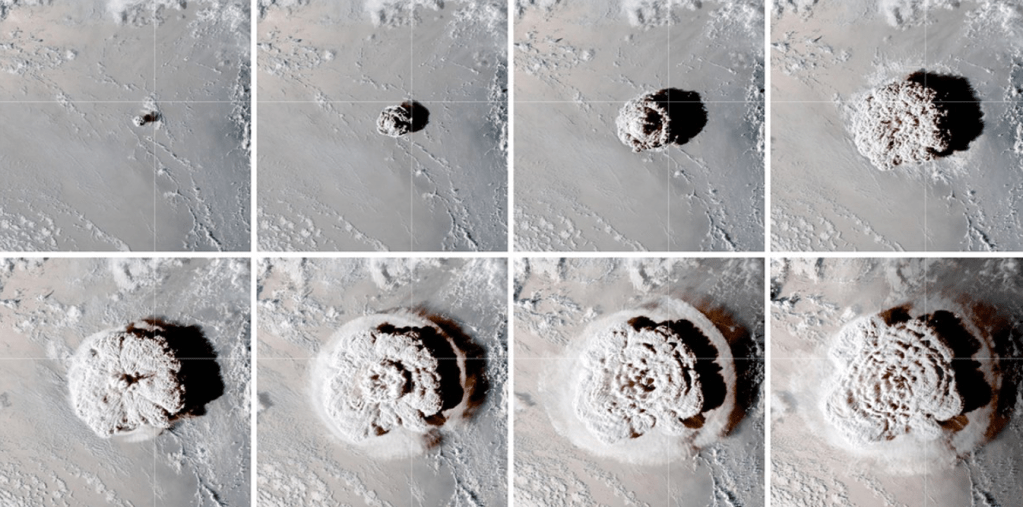
A satellite image of the explosion. It expanded at up to 950 metres per second. To give you and idea of scale, the last photo has a diameter of over 600 km, and it reached this size in 10 minutes. That would cover an area from Durban to Johannesburg, or almost the size of Germany.
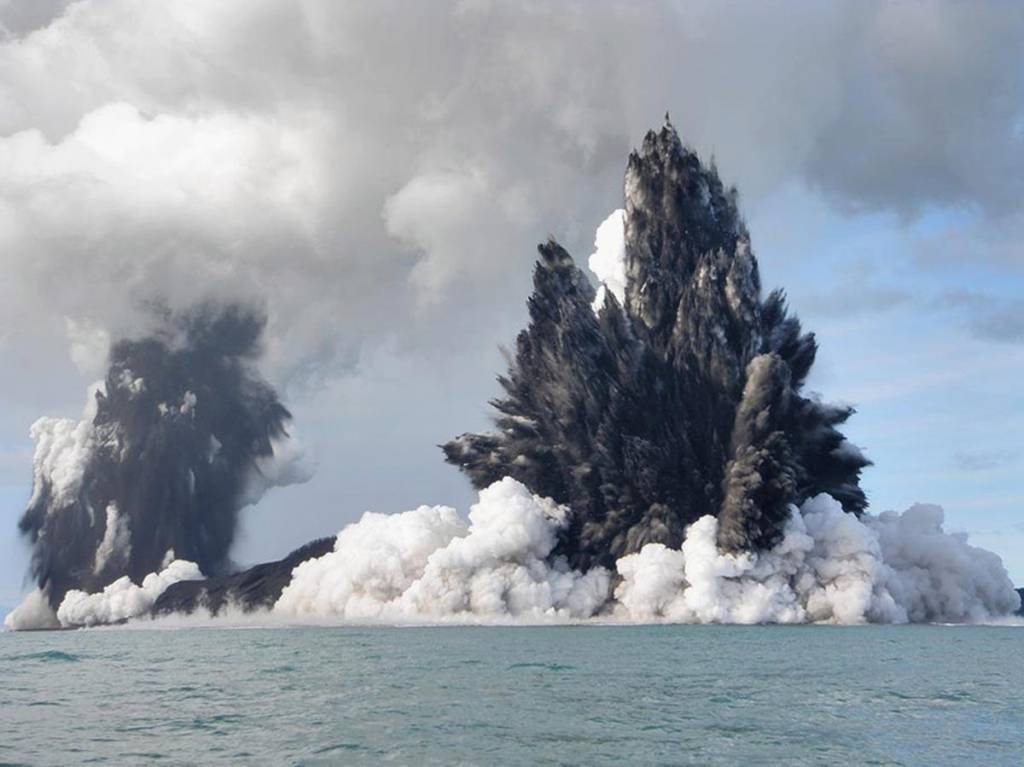
The eruption had significant consequences for the surrounding areas. Ash and smoke from the eruption caused disruptions to air travel in the region, with flights cancelled or rerouted to avoid the plume. The ash also posed a health risk, with people advised to stay indoors to avoid breathing in the fine particles. The eruption also had a significant impact on marine life, with reports of dead fish and other sea creatures washing up on nearby shores.
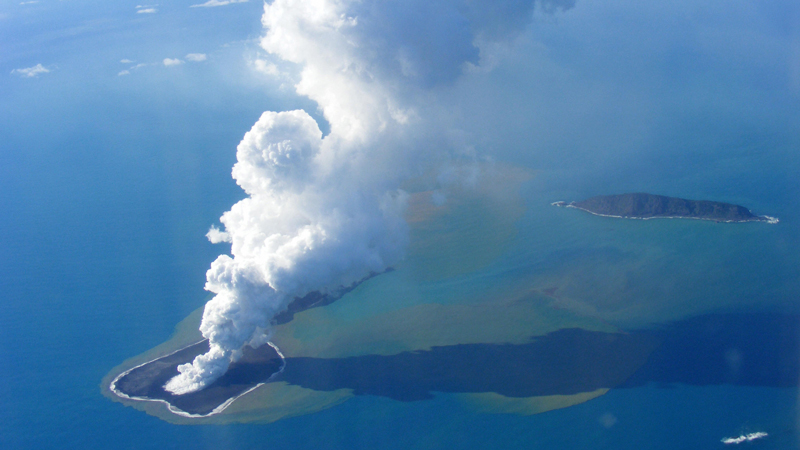
Despite the immediate impacts of the eruption, the long-term effects are still being studied. The creation of the new island, for example, is a significant event that could have ecological and geological implications for the surrounding area. The island is already showing signs of life, with plants and seabirds making their homes on its rocky shores. The island’s formation also provides scientists with a unique opportunity to study the formation of new land and the processes that shape our planet.
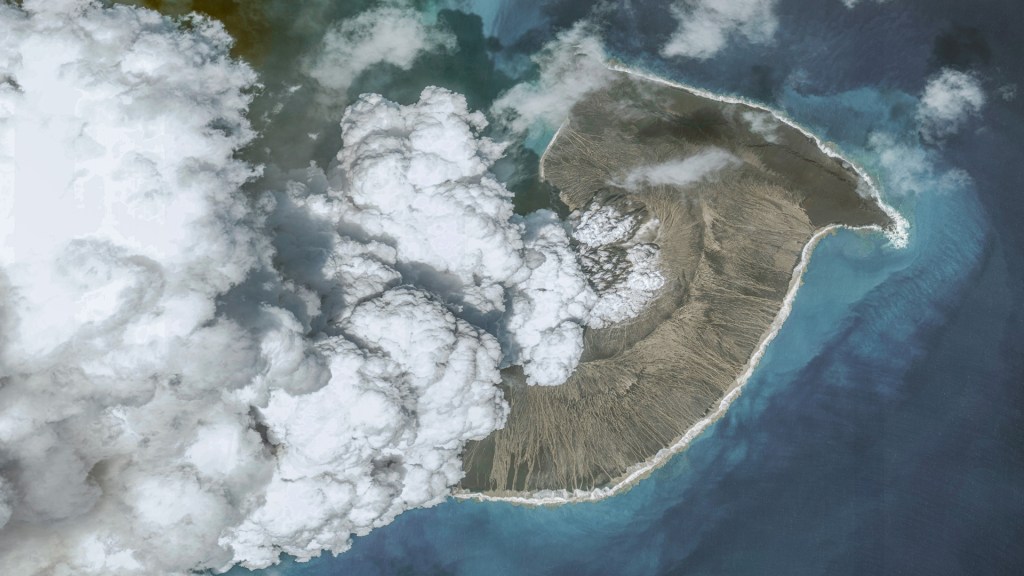
The Hunga Tunga eruption highlights the power and unpredictability of nature. It is a reminder of the importance of understanding and monitoring our planet’s volcanic activity, which can have significant consequences for people, wildlife, and the environment. While eruptions like Hunga Tunga can be disruptive and dangerous, they also provide valuable insights into the workings of our planet and the forces that shape it. Through careful study and observation, scientists can continue to learn more about the Earth’s geology and the complex systems that make up our planet.
 Tourism Tails