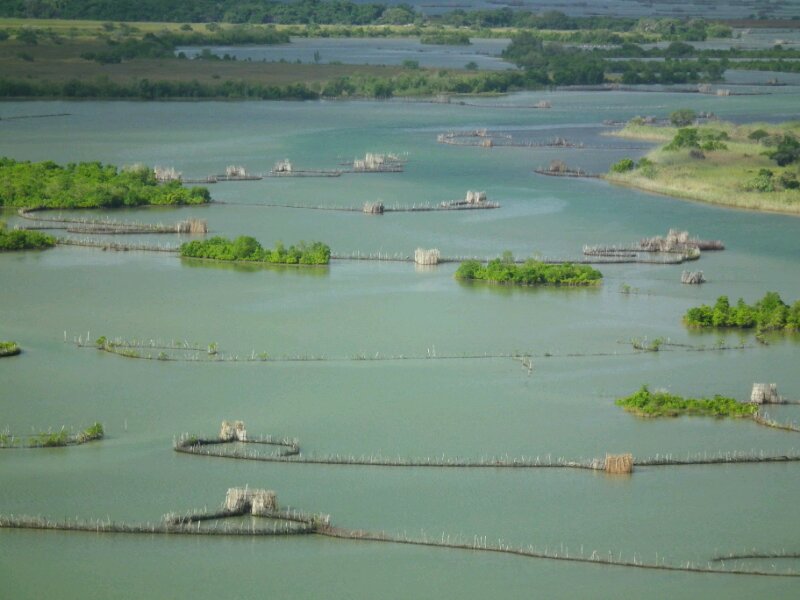
The Kosi Bay fish traps are a unique traditional fishing method used by the Tsonga people in the Kosi Bay estuary on the east coast of South Africa. The fish traps consist of interconnected woven baskets made of natural materials such as sticks, reeds, and grasses, which are positioned in a way that allows the tide to flow through them. The design of the traps enables them to catch a variety of fish species, including mullet, grunter, and bream, as well as other marine animals such as crabs, prawns, and mussels.
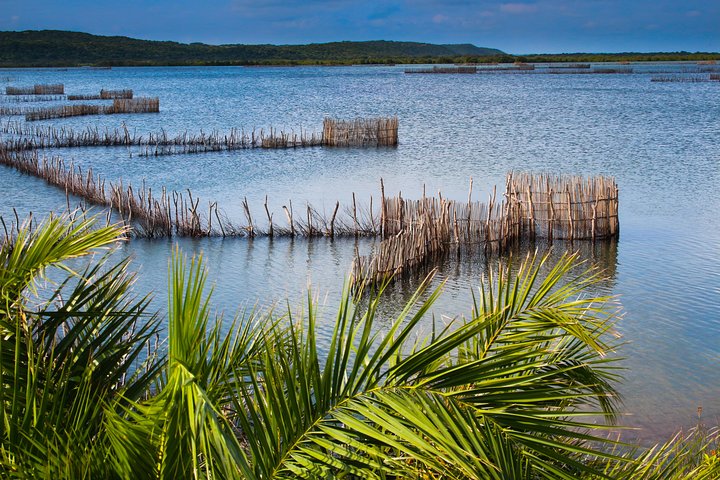
The fish traps have been used for centuries by the local communities as a means of subsistence, providing a vital source of protein in their diet. Today, the traps continue to be used by local fishermen as a source of income. The traps are also important in supporting the ecological balance of the estuary by providing a means of controlling the fish population and acting as an artificial reef that provides a habitat for a range of fish species.
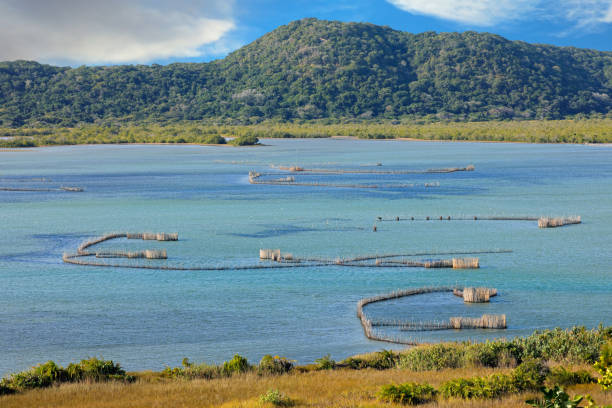
However, the fish traps of Kosi Bay face challenges such as the impact of climate change on the estuary and the introduction of modern fishing methods. Changes in weather patterns and sea levels have affected the effectiveness of the traps, while the use of gill nets and longlines has resulted in a decline in the use of traditional traps.
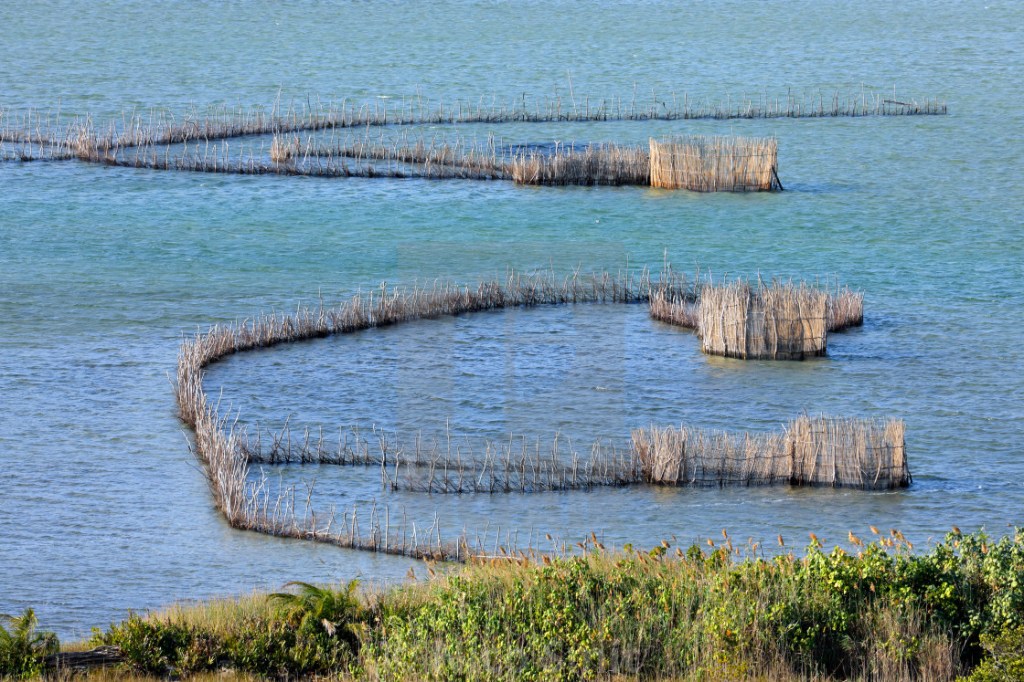
In conclusion, the fish traps of Kosi Bay are a cultural and environmental heritage that has been passed down from generation to generation. They have been used for centuries as a means of subsistence and continue to be an important part of the local fishing industry. Despite facing challenges, the fish traps remain a symbol of the cultural heritage of the Tsonga people and play a vital role in supporting the ecological balance of the Kosi Bay estuary.
 Tourism Tails