Nature is a harmonious web of interdependencies, where countless species rely on one another for survival. Among the many intricate ecological relationships, the fascinating alliance between wasps and figs stands out. Within this unique partnership, wasps play a crucial role in pollinating fig flowers, while figs provide a specialized habitat for these remarkable insects. This essay explores the intricate process of wasp pollination in figs and highlights the significance of this mutually beneficial relationship.
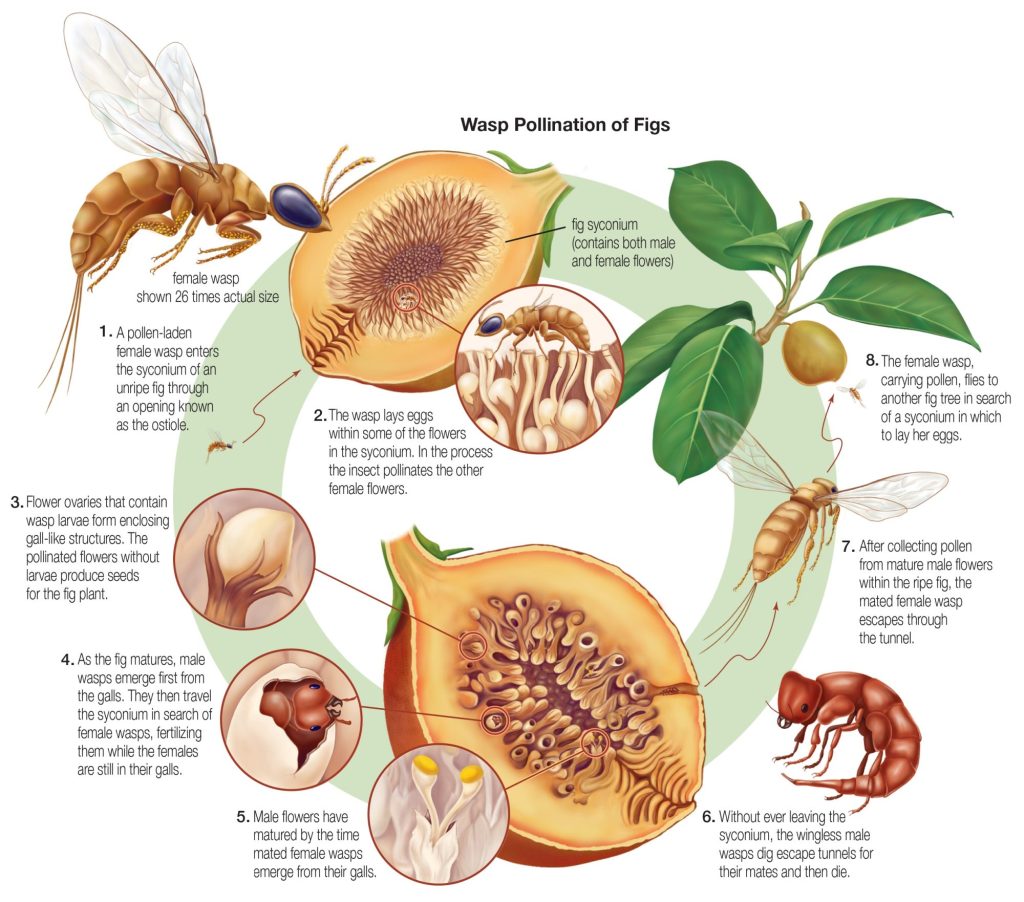
The interaction between wasps and figs exemplifies a textbook case of mutualism, a symbiotic relationship where both species benefit. Fig trees (genus Ficus) depend on fig wasps for successful pollination, while wasps rely on figs for reproduction and a safe haven for their developing offspring. This intricate relationship has evolved over millions of years, resulting in a remarkable co-dependence that ensures the survival of both species.
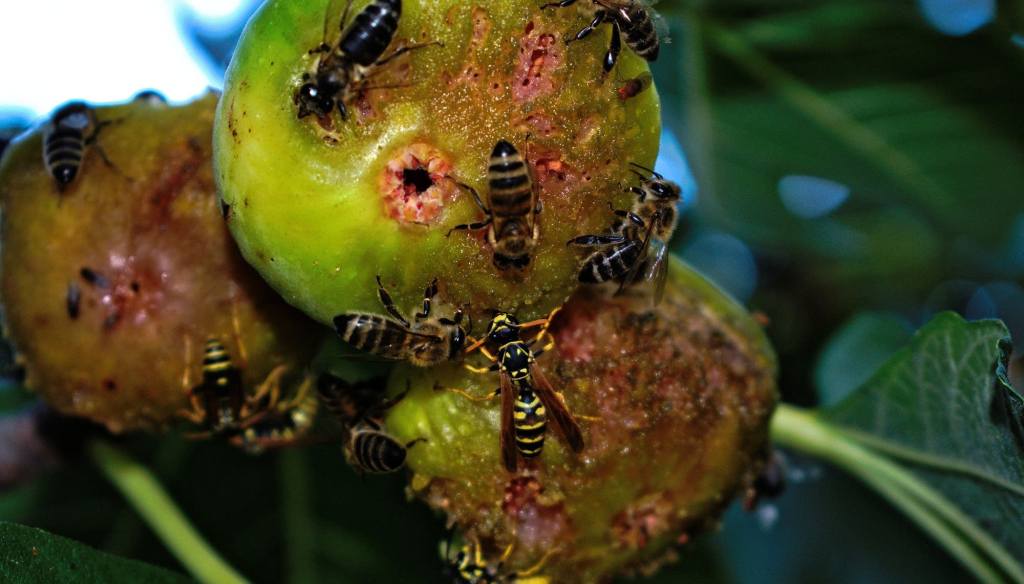
The life cycle of fig wasps revolves around the fig fruit itself. Female fig wasps enter a receptive fig through a tiny opening known as the ostiole, which serves as an entry point for their pollination mission. Inside the fig, the wasps lay their eggs within the unopened female flowers, and in the process, inadvertently transfer pollen from their previous fig visit. This intricate process, known as mutual pollination, ensures cross-pollination between fig trees, promoting genetic diversity and increasing the chances of successful reproduction.
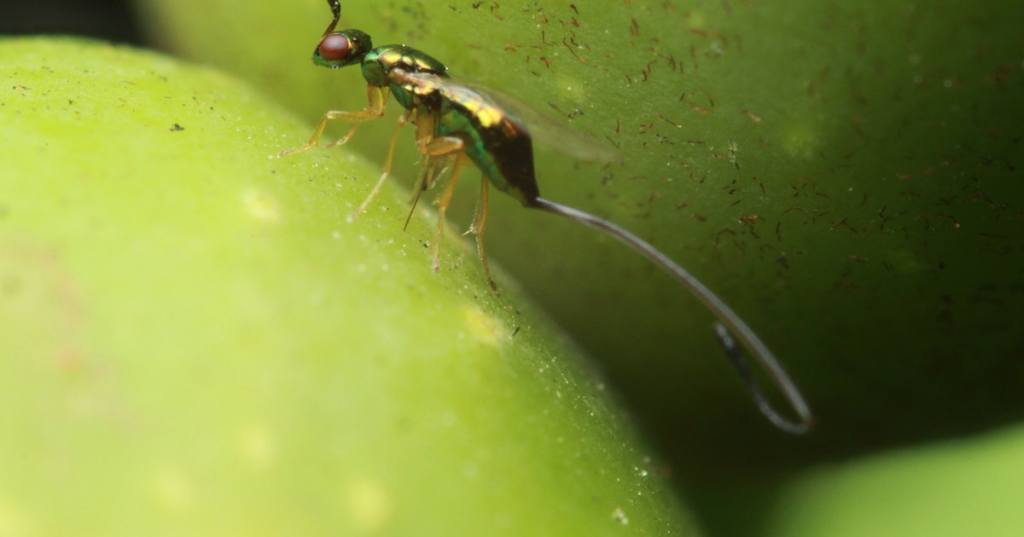
Fig wasps are remarkably adapted to their role as pollinators. Different species of figs have co-evolved with specific species of wasps, resulting in a high degree of specialization. Each fig species has its own unique species of wasp that exclusively pollinates it. This remarkable level of specificity is due to the intricate morphology of fig flowers and the corresponding specialized body features of the wasps, ensuring a successful pollination process within each specific fig species. The wasps have become finely tuned to detect and enter only the appropriate fig species, thus maintaining the delicate balance of the fig-wasp mutualism.
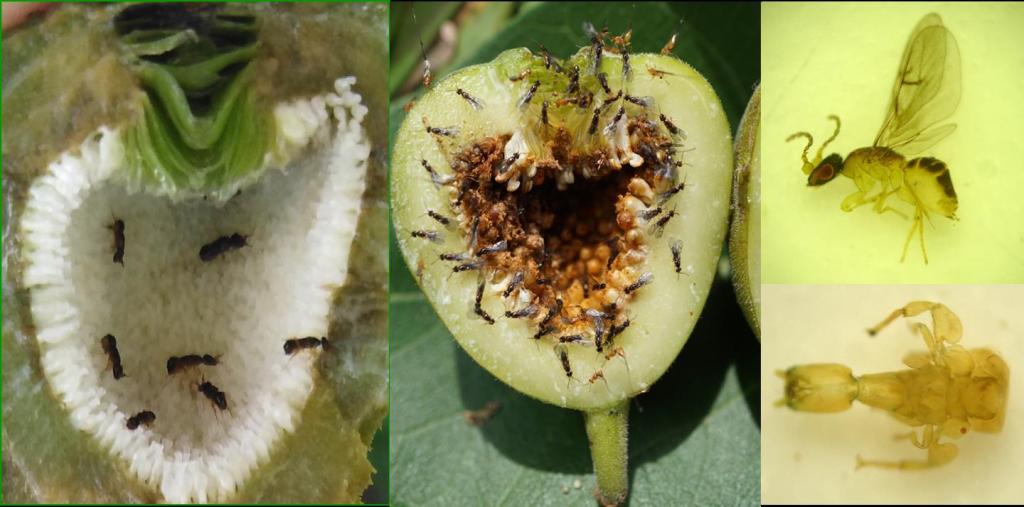
Once the fig wasp has laid her eggs, she dies within the fig, providing nourishment for the developing larvae. Male wasps hatch first, maturing within the fig. They fertilize the females and then chew exit tunnels, enabling the wingless female wasps to escape and find new receptive figs to continue the cycle. As the females exit, they inevitably come into contact with pollen, collecting it on their bodies to transport to the next receptive fig, thus perpetuating the process of pollination and ensuring the survival of both figs and fig wasps.
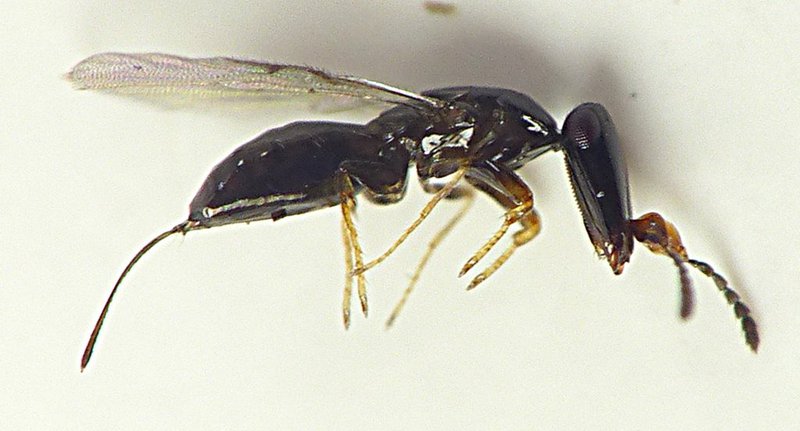
The intricate relationship between wasps and figs highlights the delicate balance of nature’s ecosystems. Disruptions to this partnership can have far-reaching consequences, affecting not only the figs and wasps but also the broader biodiversity that relies on their mutualism. It is crucial to recognize the importance of conserving fig habitats and preserving the diversity of fig wasp species to maintain the integrity of this unique ecological relationship.
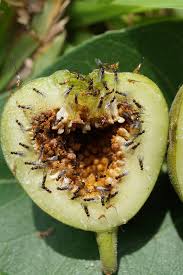
The fascinating alliance between wasps and figs serves as a testament to the remarkable intricacies of nature. As fig wasps pollinate fig flowers, they ensure the reproductive success of fig trees, while finding a specialized habitat within the figs themselves. This mutually beneficial relationship exemplifies the interconnectedness of species in the natural world and underscores the significance of preserving biodiversity and protecting the delicate balance of ecosystems. By understanding and appreciating the wonders of wasp pollination in figs, we gain deeper insights into the complexity and beauty of nature’s interdependent relationships
 Tourism Tails