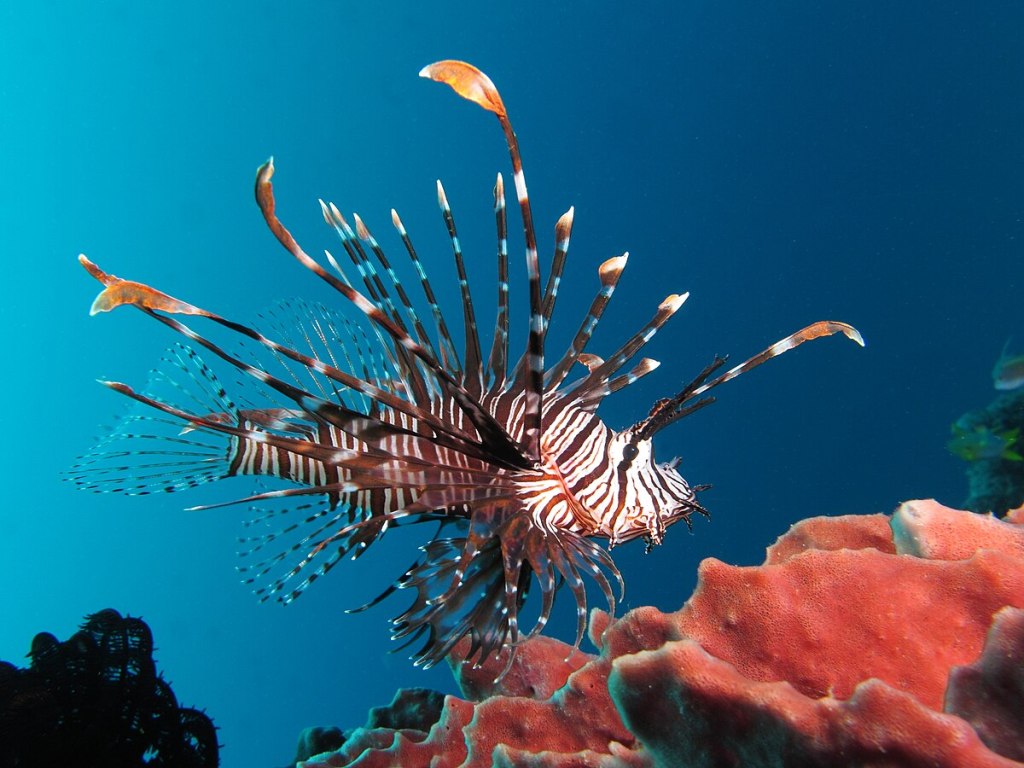
The invasion of lionfish (Pterois volitans and Pterois miles) in the Atlantic Ocean and Caribbean Sea represents one of the most concerning ecological crises of recent times. Native to the Indo-Pacific region, lionfish have become a destructive force in non-native waters, where they pose significant threats to marine biodiversity, fisheries, and coral reef ecosystems.
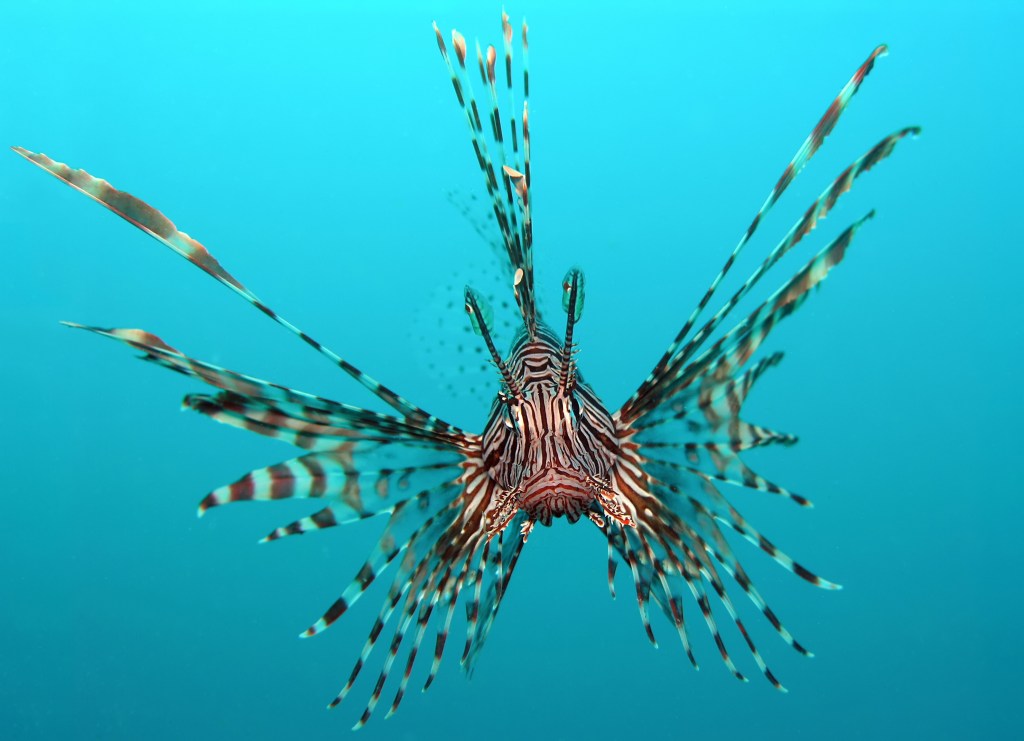
Lionfish were first documented in the Atlantic Ocean off the coast of Florida in the mid-1980s, likely introduced through the aquarium trade. Their population exploded rapidly due to their high reproductive rate, lack of natural predators, and the favourable conditions of the Atlantic and Caribbean waters. Female lionfish can lay up to 2 million eggs per year, leading to swift and widespread colonization. Their spread has been facilitated by ocean currents, enabling them to inhabit a range extending from North Carolina down to the northern coast of South America and throughout the Caribbean Sea.
The impact of lionfish on local ecosystems is profound and multifaceted. As voracious predators, lionfish consume a wide variety of smaller fish and crustaceans, many of which are vital to the health of coral reefs. Their diet includes juvenile fish of commercially important species, such as grouper and snapper, which has significant implications for local fisheries. By preying on herbivorous fish that keep algae in check, lionfish indirectly contribute to the overgrowth of algae on coral reefs, which can smother corals and reduce biodiversity.
The rapid depletion of native fish populations disrupts the ecological balance and reduces the resilience of coral reef ecosystems. Studies have shown that lionfish can reduce juvenile fish recruitment by up to 79% on invaded reefs. This predatory pressure has cascading effects, altering species composition and undermining the functional integrity of these ecosystems.
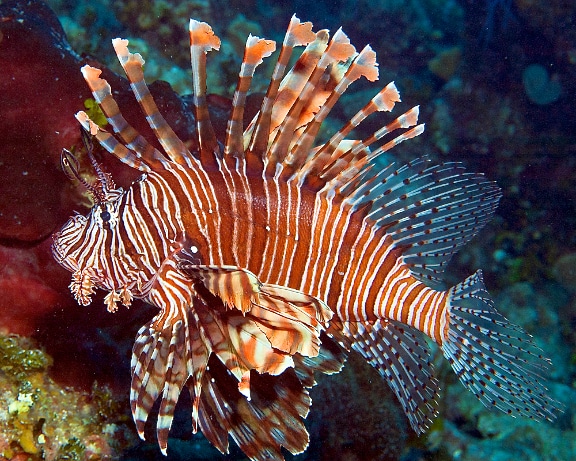
Controlling the lionfish invasion has proven to be challenging due to their high reproductive capacity and the vastness of the affected area. Traditional methods such as trapping and spearfishing are employed to reduce their numbers, but these efforts are labour-intensive and localized. Community involvement and incentivized lionfish hunting competitions have been initiated in various regions to increase removal efforts. Additionally, research is being conducted to explore biological control methods, such as the potential use of native predators or parasites.
Public awareness campaigns are crucial in promoting responsible aquarium practices to prevent future introductions of invasive species. Educating the public about the ecological risks associated with releasing non-native species into the wild is a vital step in mitigating similar invasions.
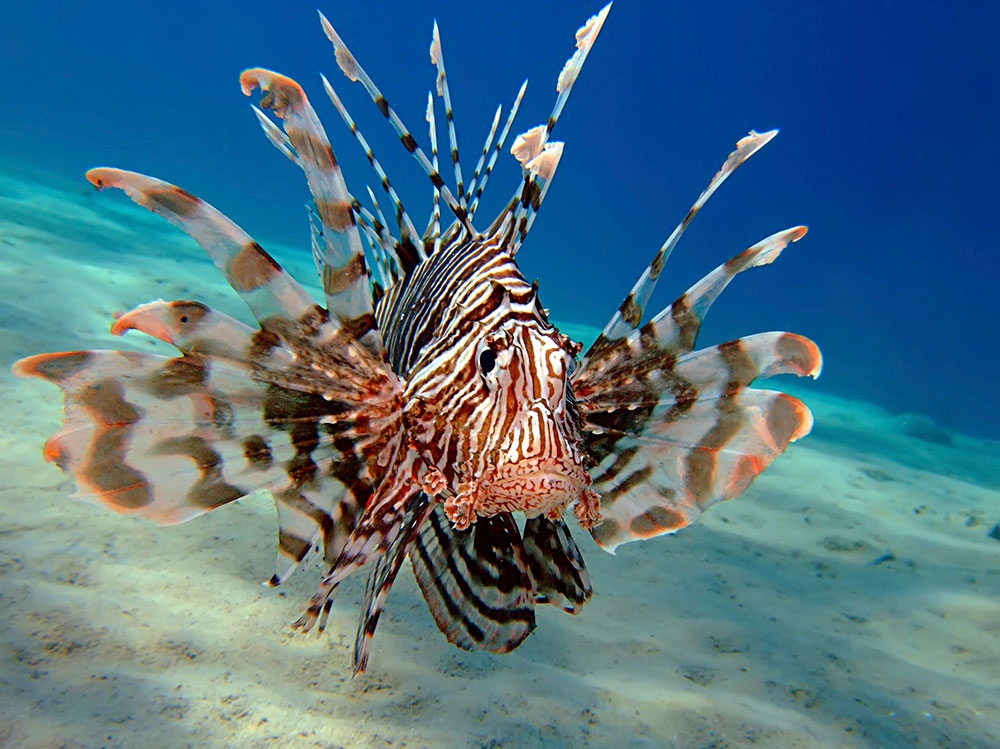
The invasion of lionfish in the Atlantic and Caribbean waters is a stark reminder of the fragility of marine ecosystems and the far-reaching consequences of human activities. The lionfish crisis underscores the importance of preventing the introduction of non-native species and highlights the need for coordinated and sustained management efforts. Addressing this issue requires a combination of scientific research, community engagement, and policy measures to protect and restore affected marine habitats. By learning from this invasion, we can better prepare for and prevent future ecological disruptions, ensuring the health and diversity of our ocean ecosystems.
 Tourism Tails