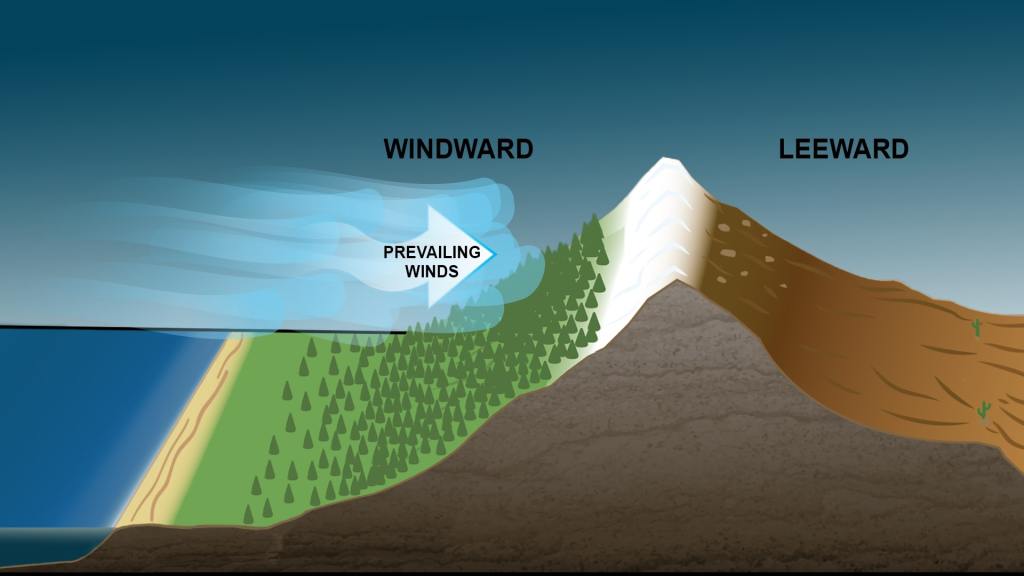
Prevailing winds are the dominant winds that blow consistently from a specific direction over a particular region of the Earth’s surface. They are crucial components of the Earth’s climate system, influencing weather patterns, ocean currents, and human activities. Understanding prevailing winds is essential for comprehending global climate dynamics and their impact on various geographical regions.
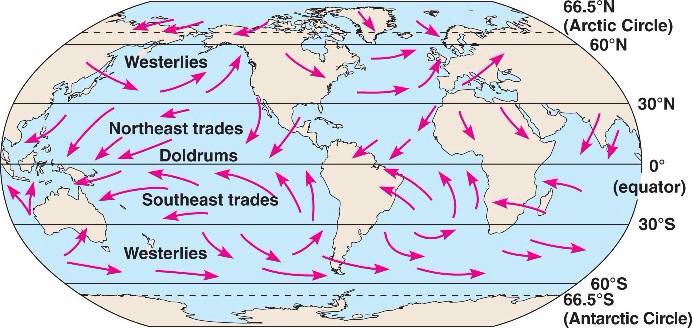
Prevailing winds result from the Earth’s rotation and the unequal heating of the Earth’s surface by the sun. The Coriolis effect, caused by the Earth’s rotation, deflects the direction of these winds, creating distinct wind patterns across the globe. The primary zones of prevailing winds are the trade winds, the westerlies, and the polar easterlies.
Trade Winds: Located between the equator and 30 degrees latitude in both hemispheres, trade winds blow from the northeast in the Northern Hemisphere and from the southeast in the Southern Hemisphere. These winds are driven by the intense solar heating at the equator, causing warm air to rise and move toward the poles, where it cools and descends, creating a circulation pattern known as the Hadley Cell.
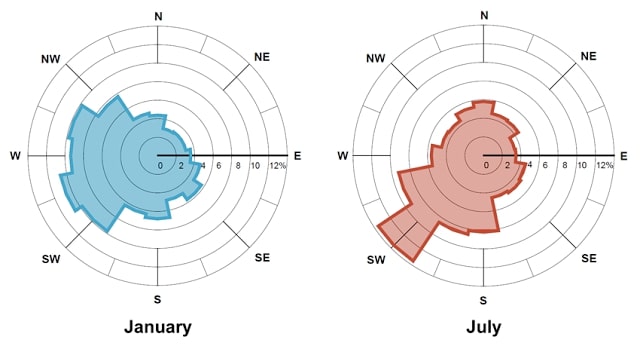
Westerlies: Found between 30 and 60 degrees latitude in both hemispheres, the westerlies blow from the west to the east. These winds are formed by the Ferrel Cell, where air moves poleward from the subtropical high-pressure zones and is deflected eastward by the Coriolis effect.
Polar Easterlies: These winds occur between 60 degrees latitude and the poles, blowing from the east to the west. They are the result of cold, dense air descending at the poles and moving toward the lower latitudes, influenced by the Polar Cell.
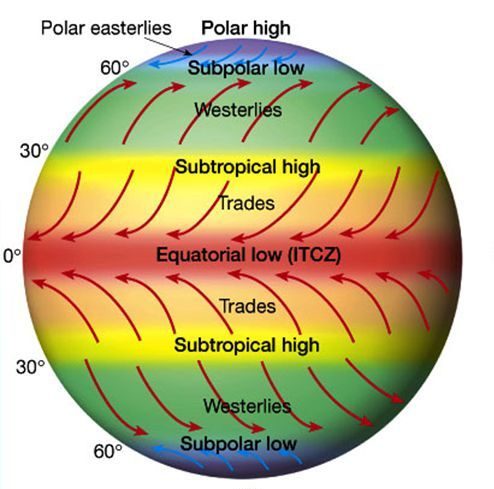
Prevailing winds play a significant role in determining climate patterns. For instance, the trade winds bring moist air to the equatorial regions, contributing to the heavy rainfall and lush tropical climates. Conversely, the westerlies influence the weather in the mid-latitudes, often bringing storms and precipitation to regions such as North America and Europe. The polar easterlies help maintain the cold temperatures of the polar regions.
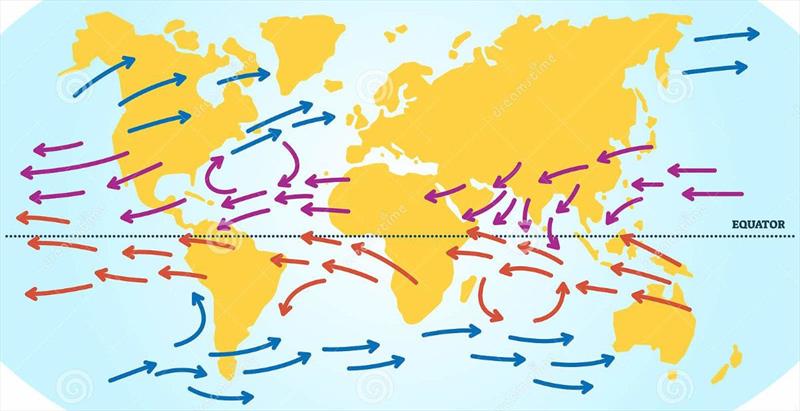
Moreover, prevailing winds are crucial in driving ocean currents, which in turn regulate global climate. The trade winds, for example, drive the equatorial currents, while the westerlies are responsible for the major currents in the mid-latitudes, such as the North Atlantic Drift. These ocean currents redistribute heat around the planet, affecting weather patterns and marine ecosystems.
Prevailing winds have historically influenced human activities, particularly in navigation and agriculture. Sailors relied on the predictability of the trade winds and the westerlies for transoceanic voyages during the Age of Exploration. In agriculture, understanding prevailing wind patterns helps farmers anticipate weather conditions and manage crops effectively.
Today, prevailing winds are harnessed for renewable energy through wind turbines. Regions with consistent and strong prevailing winds are ideal for wind farms, contributing to sustainable energy production and reducing reliance on fossil fuels.
Prevailing winds are a fundamental aspect of the Earth’s atmospheric dynamics, shaping climate patterns, driving ocean currents, and influencing human activities. Their consistent and predictable nature makes them a critical factor in both natural processes and human endeavours. As our understanding of these winds deepens, we can better appreciate their role in the Earth’s climate system and utilize this knowledge to address contemporary environmental challenges, such as climate change and sustainable energy development.
 Tourism Tails