Ant colonies are among the most fascinating examples of social organisation in the animal kingdom. Despite their small size, ants live in highly structured communities that function like complex machines. Each member of the colony has a specific role, and through cooperation and communication, ants are able to build intricate nests, find food, care for their young, and defend their colony from threats.
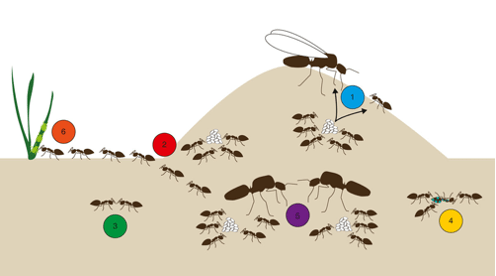
At the heart of every ant colony is the queen. The queen’s primary job is to lay eggs, ensuring the growth and survival of the colony. In some species, a colony may have more than one queen, but in most, she is the sole reproductive female. The majority of the other ants are female workers. These workers are sterile and take care of all the colony’s needs, including feeding the queen and larvae, cleaning the nest, foraging for food, and defending against predators. Male ants, which appear only during certain times of the year, have the sole purpose of mating with the queen and then die shortly afterward.
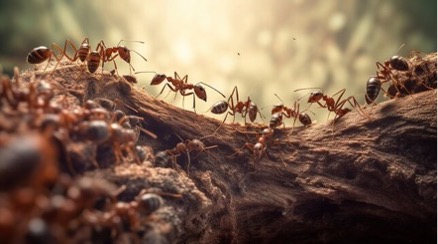
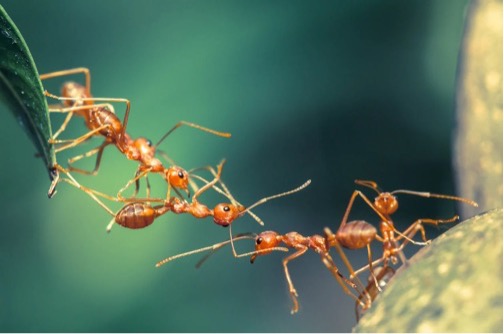
One of the most remarkable features of ant colonies is their ability to work as a single unit. Through chemical signals called pheromones, ants can communicate complex messages about danger, food sources, and trail directions. This communication allows ants to perform tasks collectively, such as carrying large prey items back to the nest or launching organised attacks on intruders.
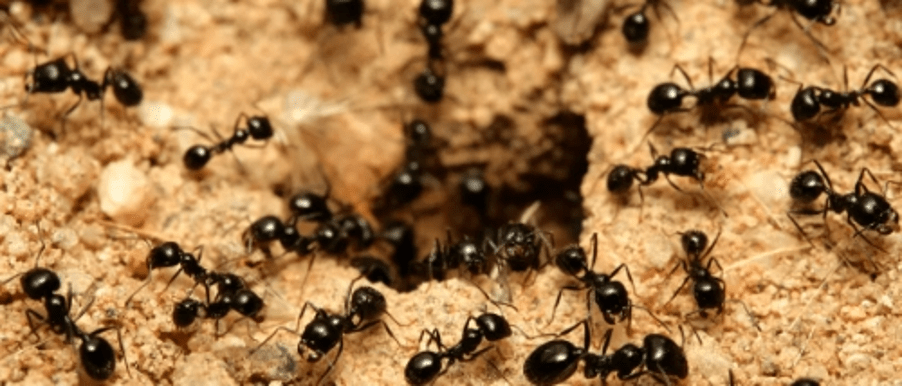
Ant colonies can range in size from a few dozen individuals to millions, depending on the species. Some, like army ants and leafcutter ants, form super colonies that can span vast areas and consist of many interconnected nests. These colonies demonstrate levels of efficiency and cooperation that rival even human societies in some respects.
In conclusion, ant colonies are a testament to the power of teamwork and specialization in nature. Their success lies in their ability to work together seamlessly, each ant playing its part for the good of the whole. Studying these tiny creatures can teach us valuable lessons about organisation, communication, and resilience.
 Tourism Tails