Nature and music, though seemingly separate realms, often echo each other in fascinating ways. One compelling connection lies between katydids, violins, and the phenomenon of stridulation. Each involves the creation of sound through the friction of surfaces—demonstrating how the principles of acoustics transcend species and disciplines.
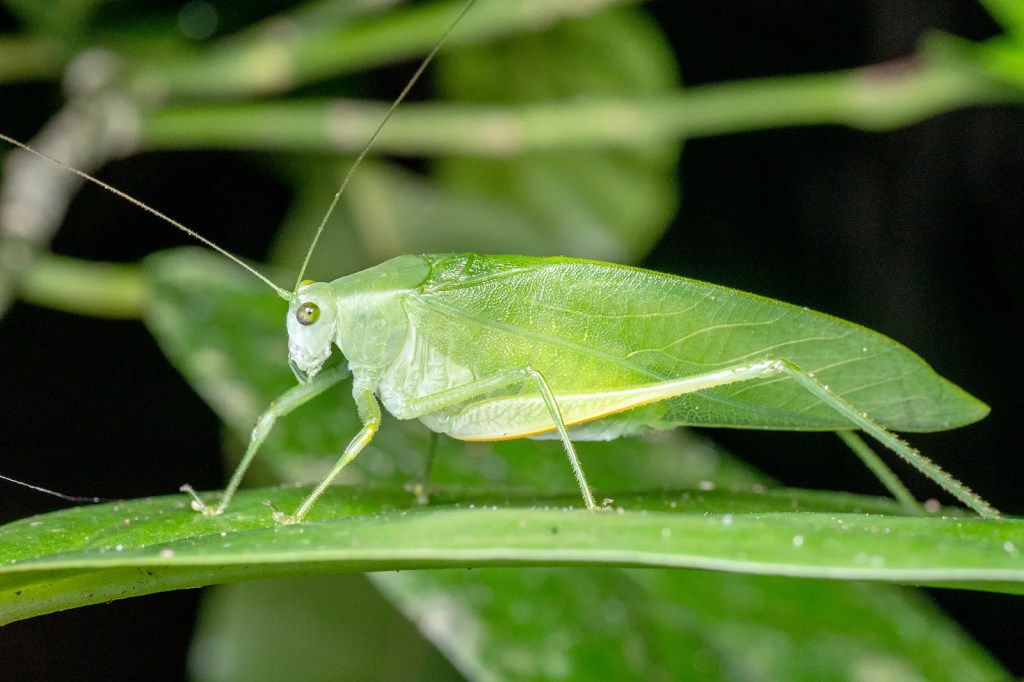
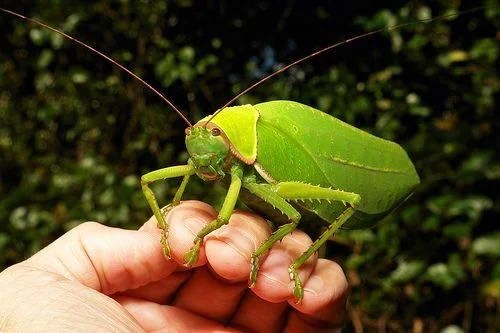
Katydids are nocturnal insects known for their distinctive, rhythmic calls, often heard in summer evenings. These calls are produced through stridulation, a process in which one body part is rubbed against another to create sound. Specifically, katydids have a specialized structure on their wings: a file-like ridge on one wing and a scraper on the other. When the insect rapidly moves its wings, these structures rub together, generating vibrations that resonate through a tymbal-like area on the wing, producing the sharp, chirping sounds we associate with them.
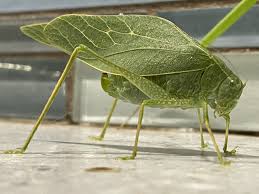
Stridulation, while common in insects like crickets and katydids, shares a conceptual parallel with the playing of stringed instruments—especially the violin. A violin produces sound when a bow, strung with horsehair, is drawn across its strings. The friction causes the strings to vibrate, and the wooden body of the instrument amplifies these vibrations into rich, resonant tones. Just as with katydids, the principle is simple: friction-induced vibration amplified by a resonating surface.
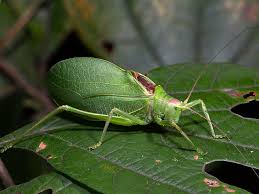
Though one is biological and the other mechanical, both systems rely on careful physical design to control pitch, tone, and volume. The katydid’s wings are finely tuned to produce species-specific sounds, while a violinist must adjust finger placement, bow pressure, and speed to achieve the desired note. In both cases, sound becomes a tool—whether for communication in the darkened forest or expression in a concert hall.
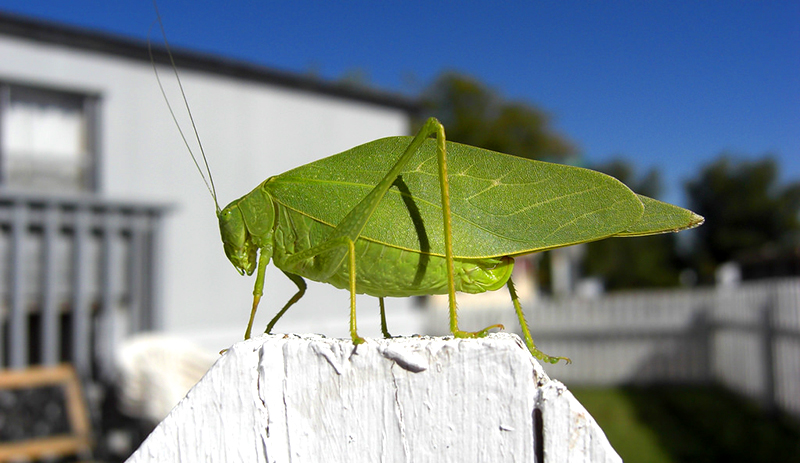
Katydids and violins remind us that the mechanics of sound are universal. Stridulation, in both insect and instrument, showcases nature’s ingenuity and humanity’s ability to mimic it, blending biology and artistry through the shared language of vibration.
 Tourism Tails