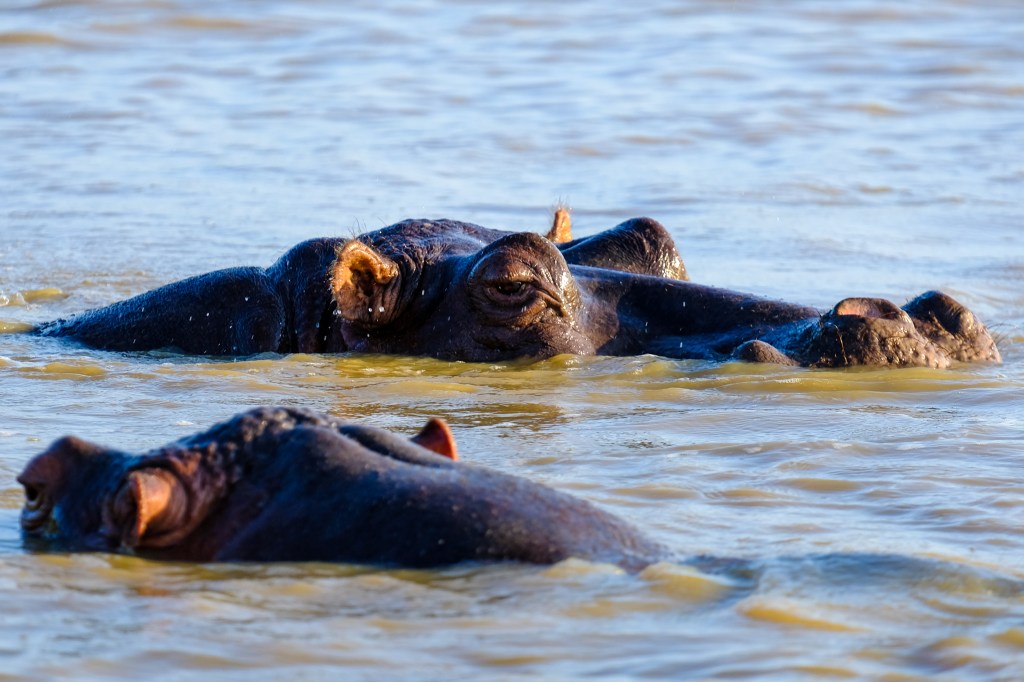
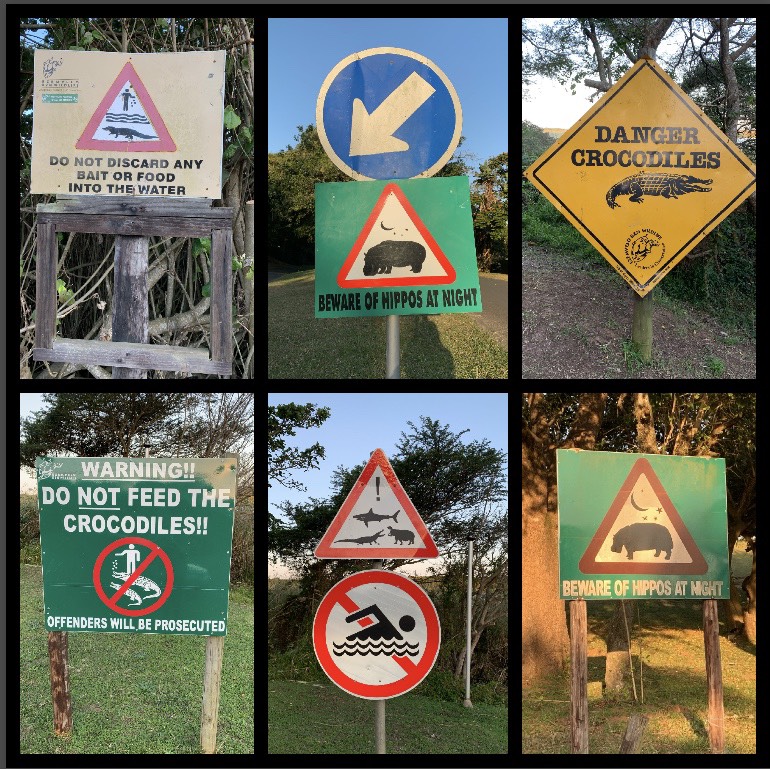
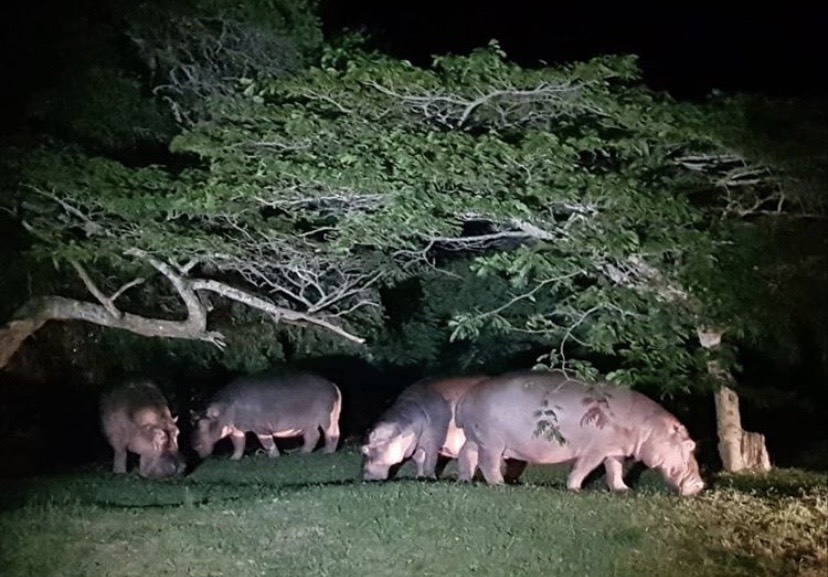
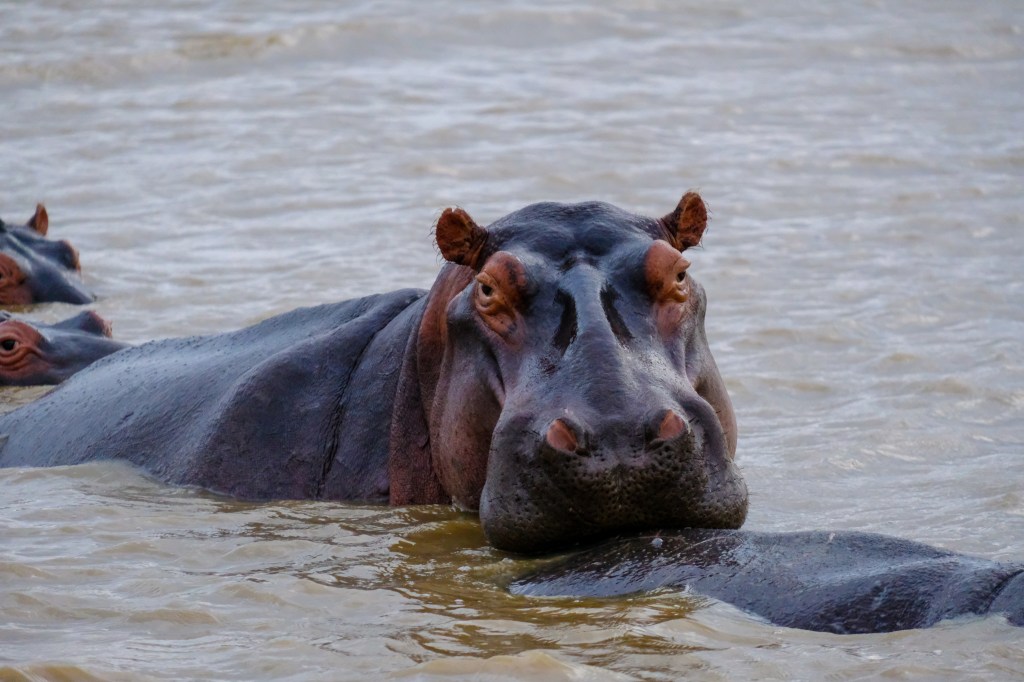
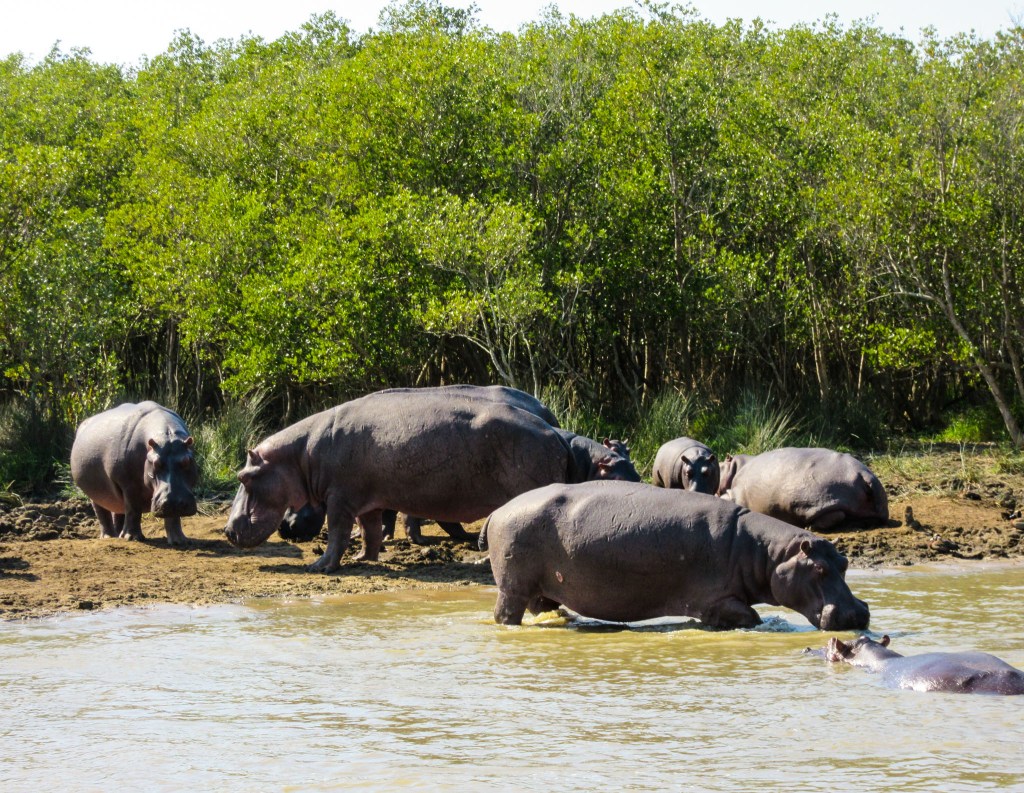
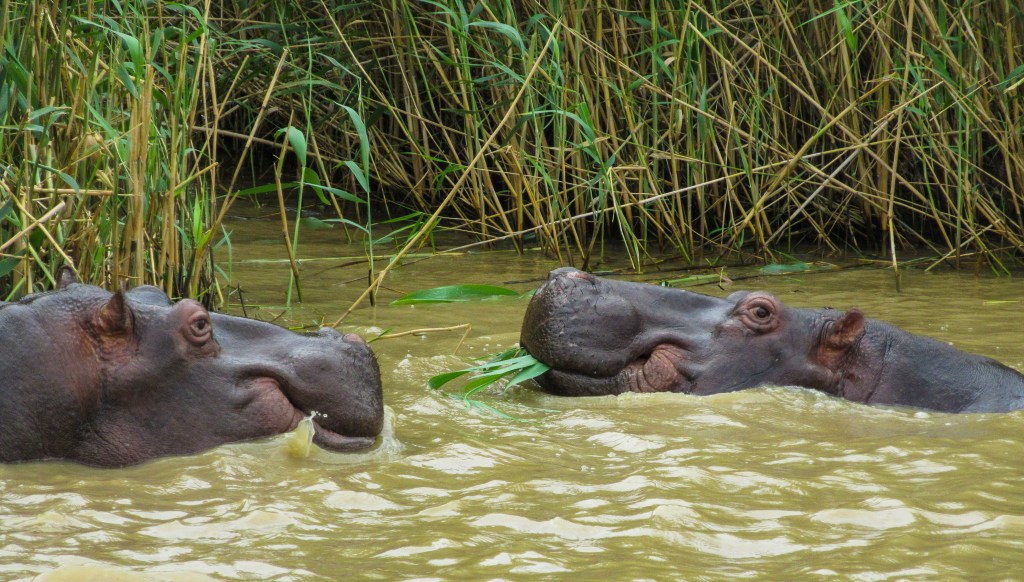
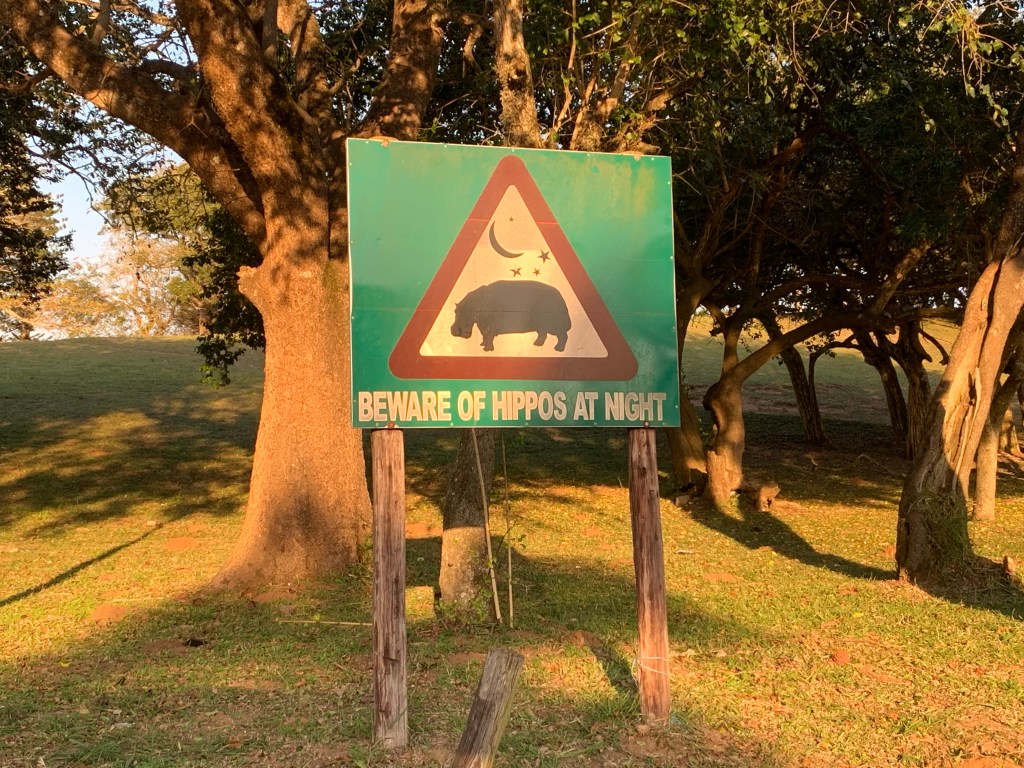
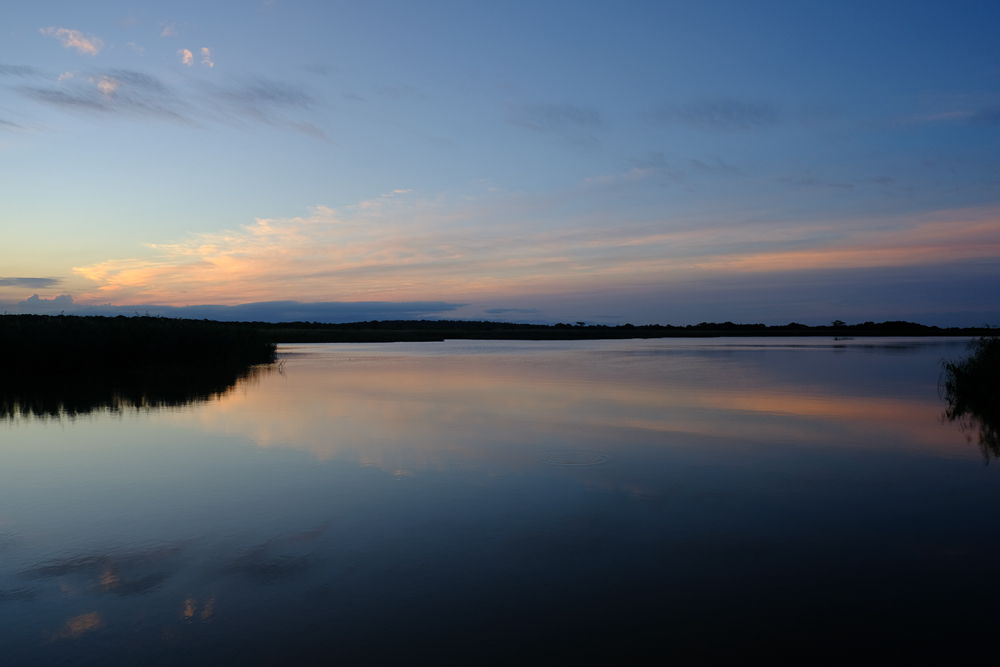
St. Lucia is a town in a world heritage site adjacent to the iSimangaliso Park on the banks of the Lake St. Lucia Estuary. It is home to a hippo pathway where these dangerous animals roam free coming up from the lake to feed on the sweet grass growing in the town and its gardens. The warning signs along South Africa’s Indian ocean coastal town are rather unusual, to say the least. It’s not sharp bends or speed bumps you have to look out for – it’s the hippos.
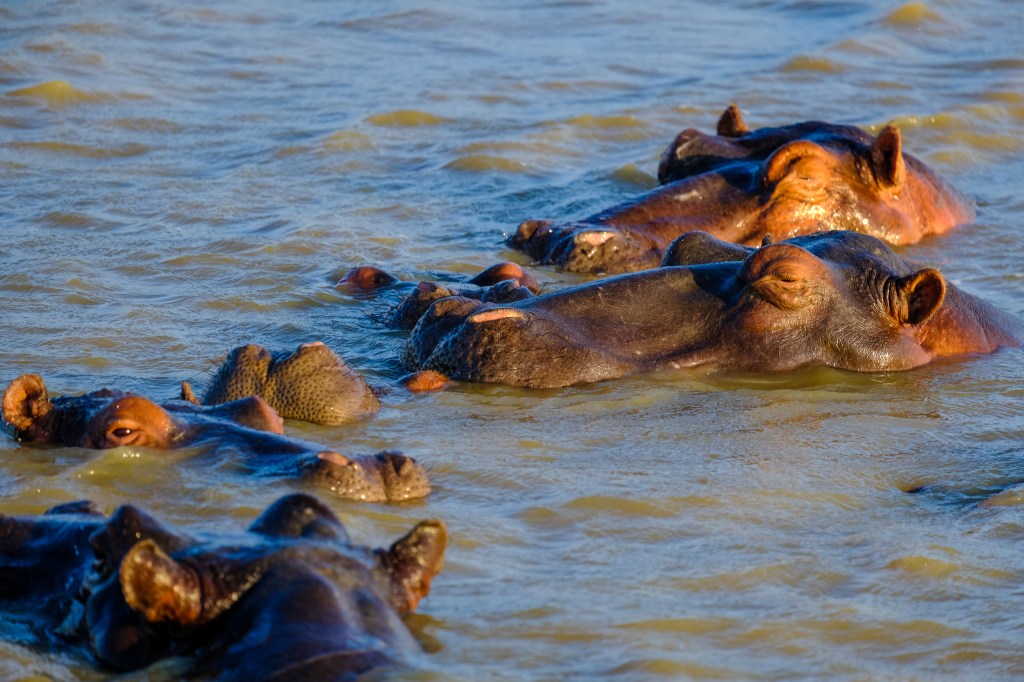
Undoubtedly the largest hippo population in South Africa occurs in the area of iSimangaliso Wetland Park, and St. Lucia is situated in the heart of hippo land. It is estimated that 800 Hippos roam the area and locals get to see them regularly. Not only in the Estuary, but in town on a regular basis.
If walking or driving after dark, there’s a strong chance that you might encounter one of the so-called “townies”. But as tour guides of the hippo-watching river cruises during the day warn, you don’t want to get too close to them.
It is a common occurrence to witness these giants at night as well as during the day as they wander the streets in search of green grass to feed on.
This incredible and magnificent sight is truly cherished by all who reside in this coastal village. Visitors are of course warned as to their presence albeit with a slight grin. They are warned not to approach the hippos, but rather keep their distance should they be walking to and from town during the evening. Or should they be driving to also keep their distance, take their pictures and then move on so someone else can take their turn in the queue for their photographs.
Hippos are dangerous and therefore care must be taken when one comes across these animals. The local residents have become accustomed to them, however caution is still practiced. Not only have the residents become used to the hippos, but the hippos have to become accustomed to the residents, vehicles, lights and the constant hippo paparazzi.
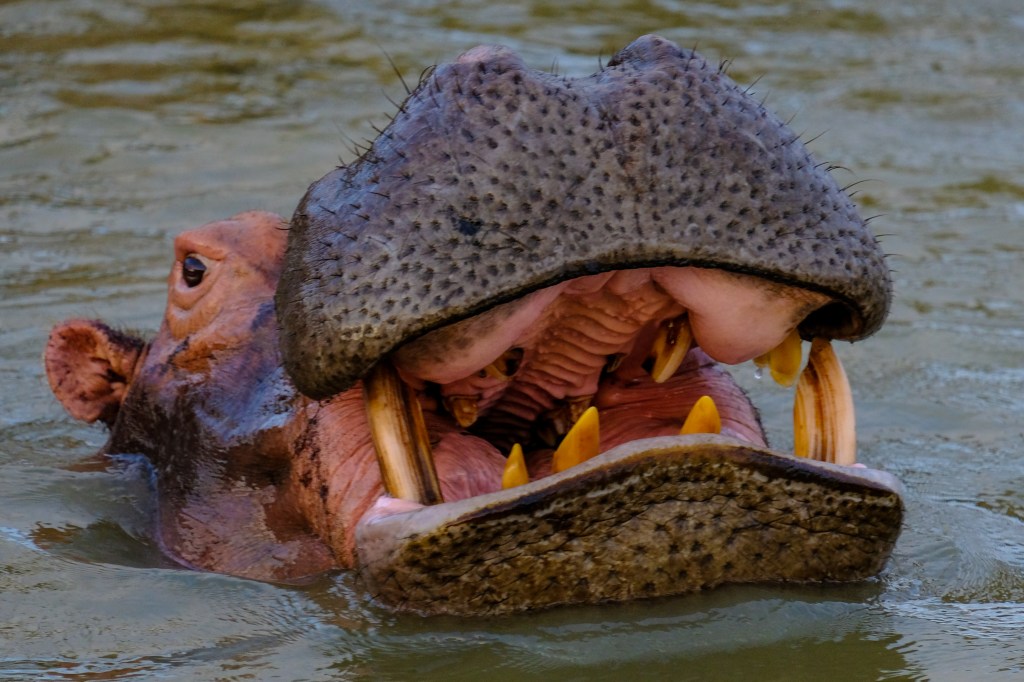
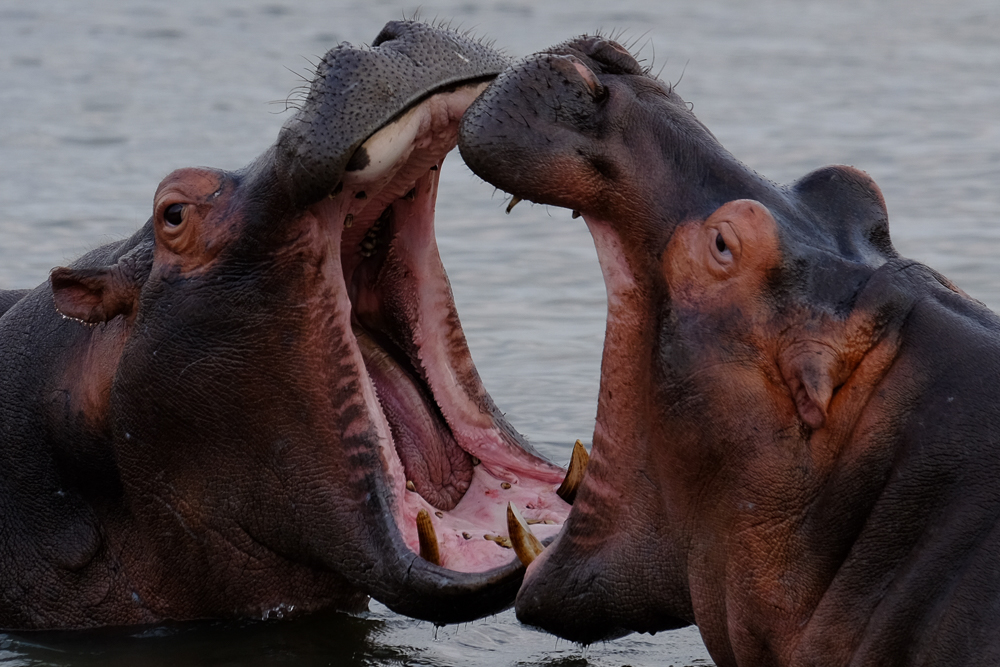
Hippos are responsible for more deaths in Africa every year than any other mammal, which is quite something considering they’re vegetarian. The hippo’s temperament is the problem.
St. Lucia is the best place to view hippos, so don’t miss your chance. Most importantly, always respect the wildlife while enjoying it safely from behind your camera. If you are interested in this not to be missed opportunity to see these incredible animals in their natural habitat contact info@shakabarker.co.za for a booking.
Kian Barker’s tour company ShakaBarker does a number of tours into the iSimangaliso Park, one of his most well-known is the Chameleon Night drive.
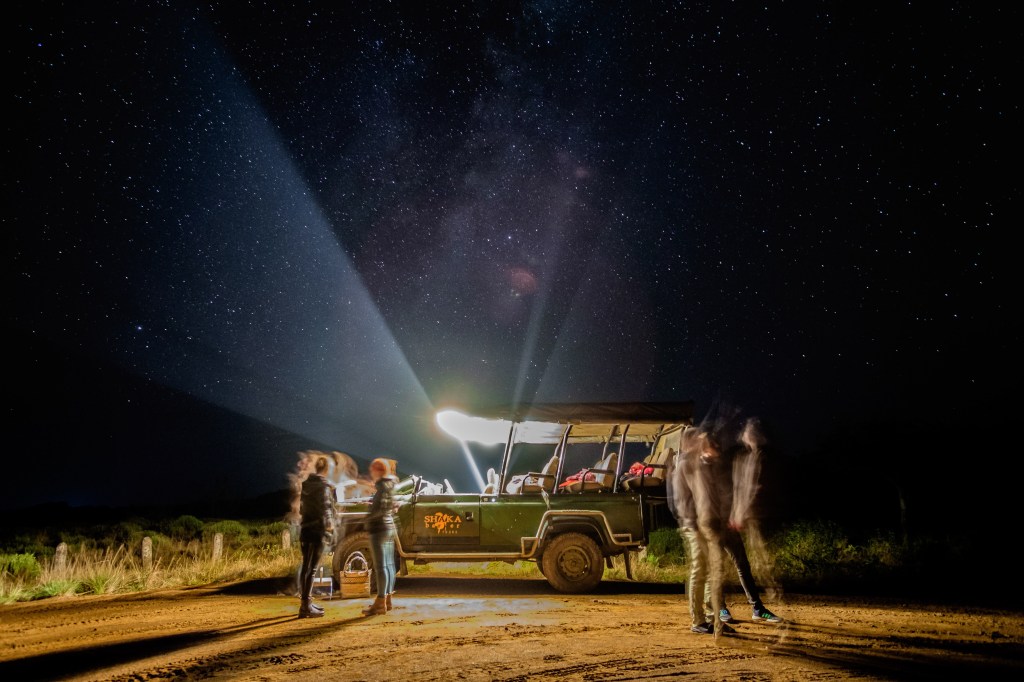
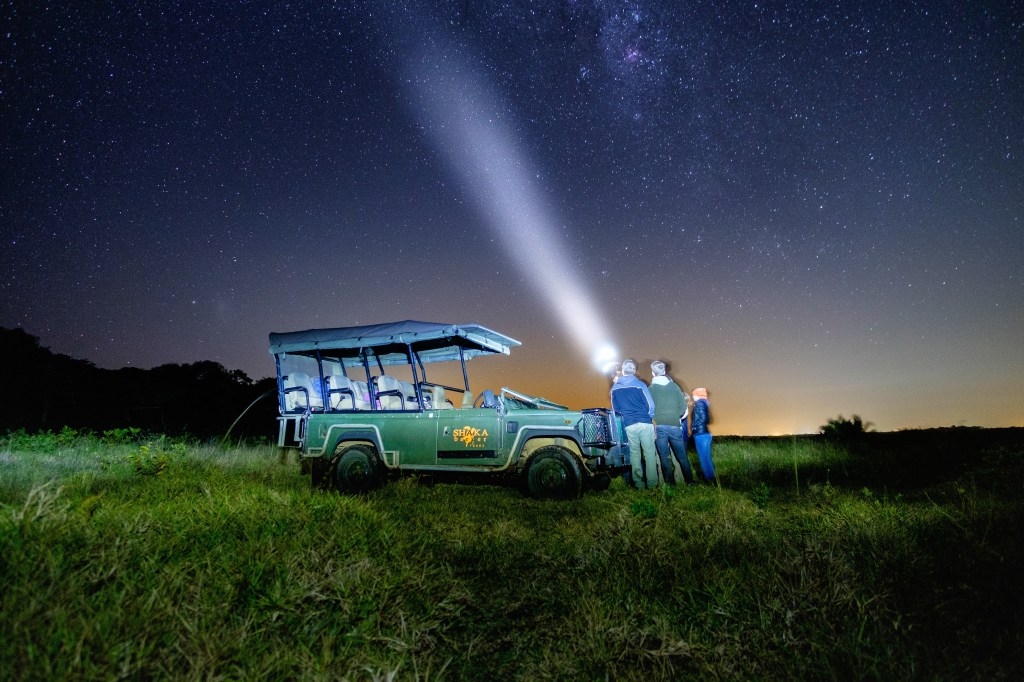
The night drive is approximately a 3 hour nocturnal safari, which takes you along the 4×4 tracks in the Eastern Shores Reserve in the iSimangaliso Wetland Park just outside the small tourism hamlet of St. Lucia in KwaZulu-Natal, South Africa.
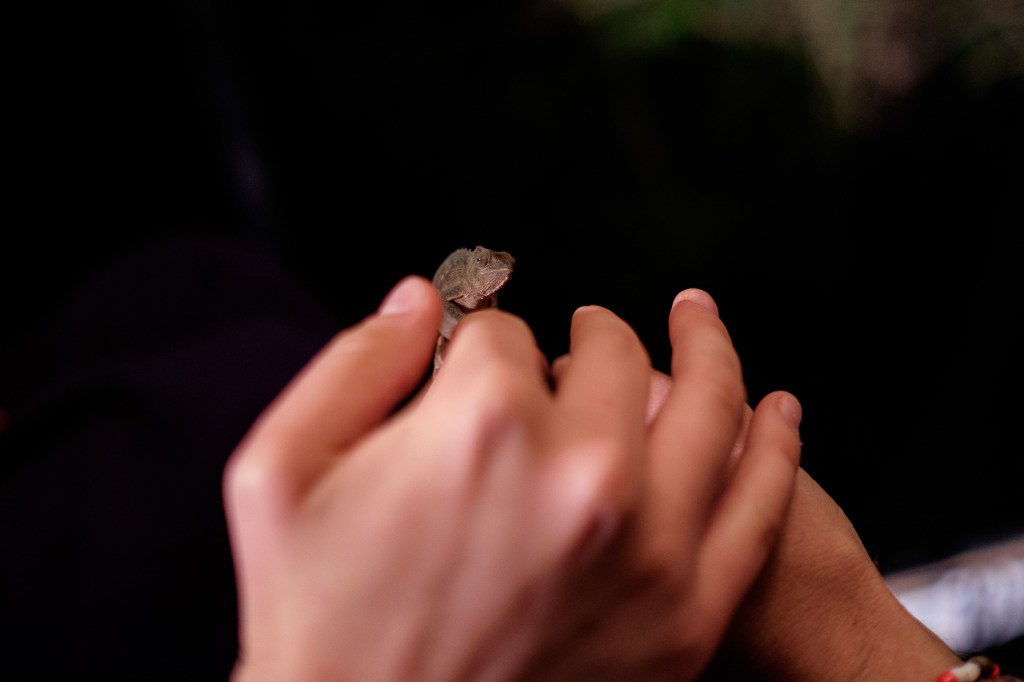
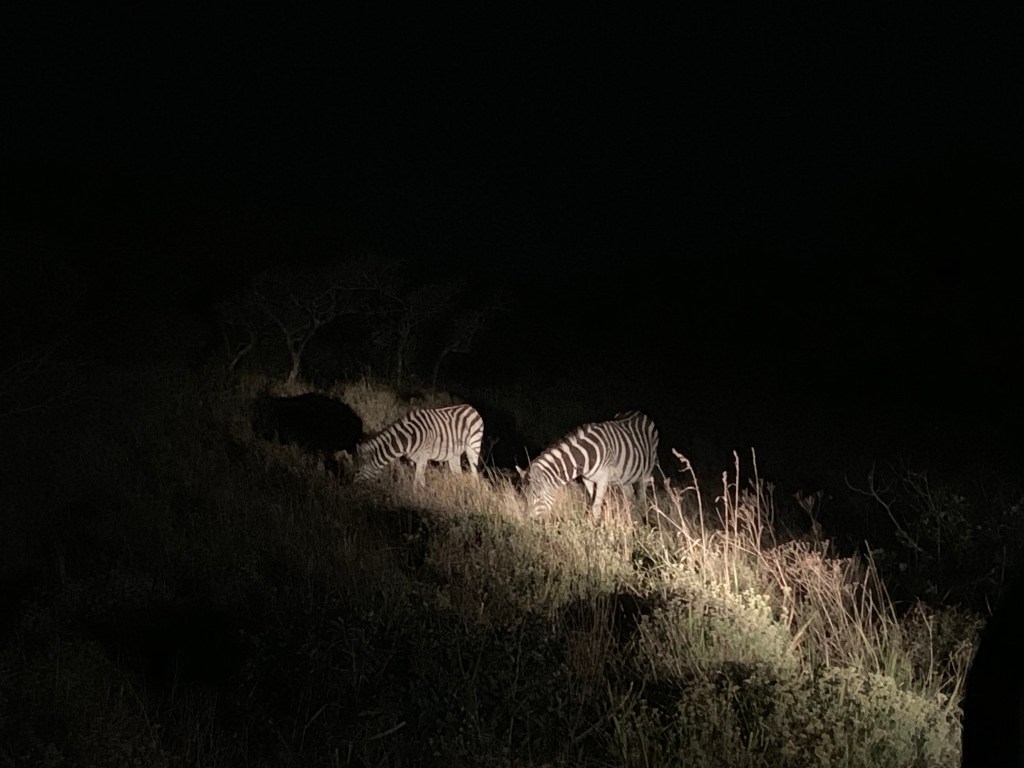
The advantage of these night drives are that they provide access to nocturnal species that are rarely seen during the day, such as Hippo, Bush Babies, Chameleons, Aardvarks. The ever illusive leopard are also more active after dark, so your chances of this rare sighting are much higher. You may also encounter other nocturnal residents, such as buffalo, spotted eagle, owls, nightjars, kudu, waterbuck, crocodile, side-striped jackal and sometimes even elephant. Chameleons abound on these night trips and the guides are wizards at seeing them at night under the spotlight. The endemic Sitara’s Dwarf Chameleon is a rare treat. The night drive safari is conducted in an open safari vehicle with spotlights and all ShakaBarkers guides are excellent with a deep knowledge of the bush and the animals that live in it.
Once you are all safely ensconced on the game vehicle the guide will give you a brief introduction to the Eastern Shores in the iSimangaliso Wetland Park and then they will drive to the Cape Vidal gates where you will enter into the park. In reality the night drive begins before you have even entered the park because sightings of bush babies, buck and hippos to name a few are a regular occurrence in the village on the way to the park to begin your night drive.
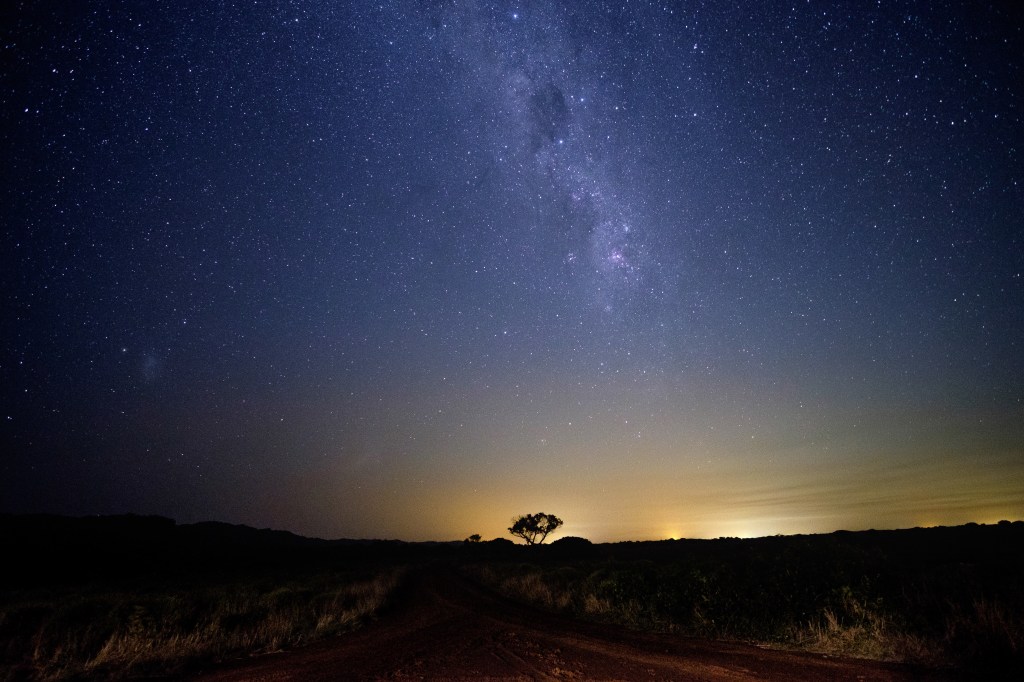
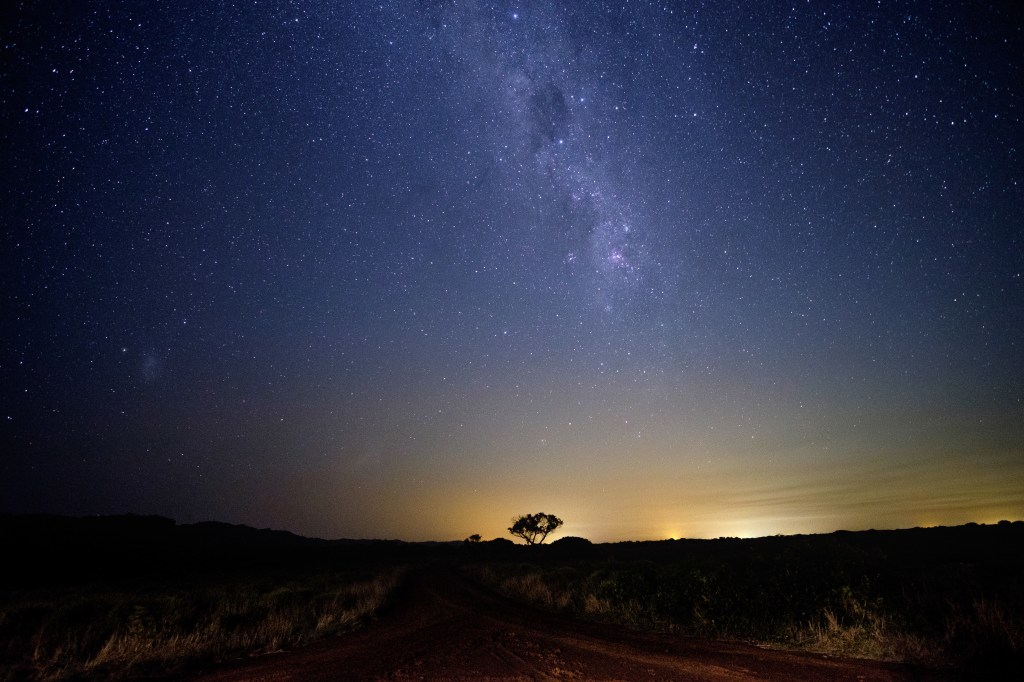
On entering the park, and if it’s one of those crystal clear nights, the tour guide will introduce you to the Milky Way, the Southern Hemisphere constellations, and if you’re lucky, you’ll see a shooting star.
The guides are very informative, knowledgeable and are passionate about what they do. Whenever they see an animal they will stop, explain what you are seeing and why, they keep everyone engaged, interested and entertained.
And one of the best parts of the night drive… Half way through the drive, the tour guide will stop somewhere in the park, under the African night skies to give you a deliciously welcome mug of hot chocolate, tea, or coffee, some very traditional South African rusks and you might even get a mint as a treat from the tour guide.
If you would like to make a booking for this highly recommend and very popular safari you can contact ShakaBarker directly: http://www.shakabarker.co.za info@shakabarker.co.za +27 (35) 590 1162
One of the best ways to “discover” a country is through its cuisine. Food is an entry point to a local culture. It is a both informative and delightful way to learn about the culture and the people. One of the benefits of travelling is it exposes us to different cultures and gives us the opportunity to explore the tastes of foreign lands and their people. Food and drink are as much representations of culture as are the arts, architecture, dress, or human behavior and vernacular. Most of us experience this for the first time when we travel: what people eat in foreign countries can be quite different and sometimes very strange in comparrison to food from our home menu.
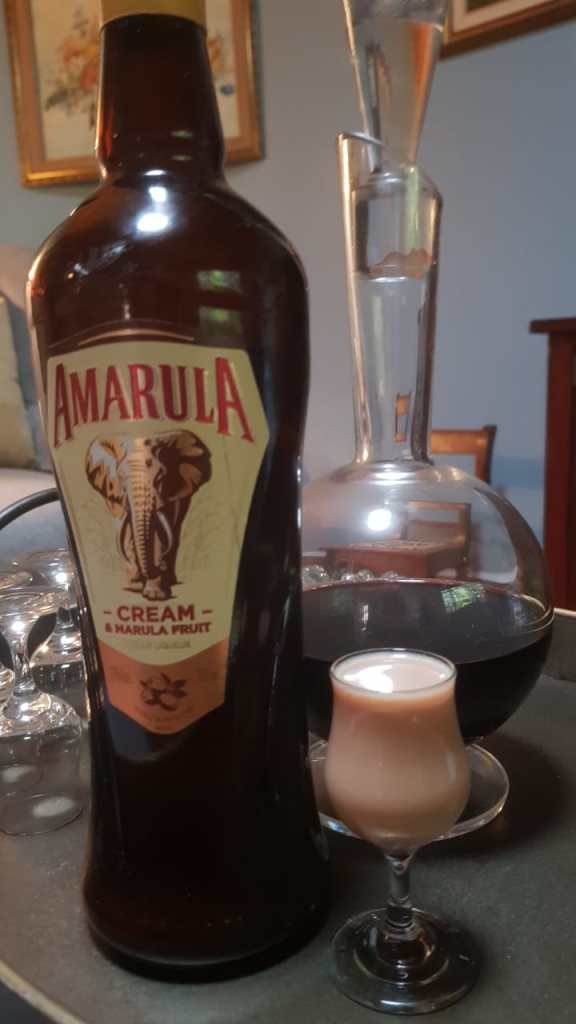
If you set foot on South African soil, don’t leave before you’ve enjoyed a traditional al fresco braai, as much for the barbecued food as for the cultural experience. Follow it up with a popular melktert (custard-filled pastry) and if you fancy a little snifter to finish then a sweet and creamy glass of Amarula (liqueur) will definitely do the trick.
Due in part to its history of settlement and colonization as well as its location on the coast, South-African cuisine has many influences including Dutch, French, Malaysian, and indigenous cultures. Here are some traditional South-African dishes that reflect the country’s diverse culture and palate.
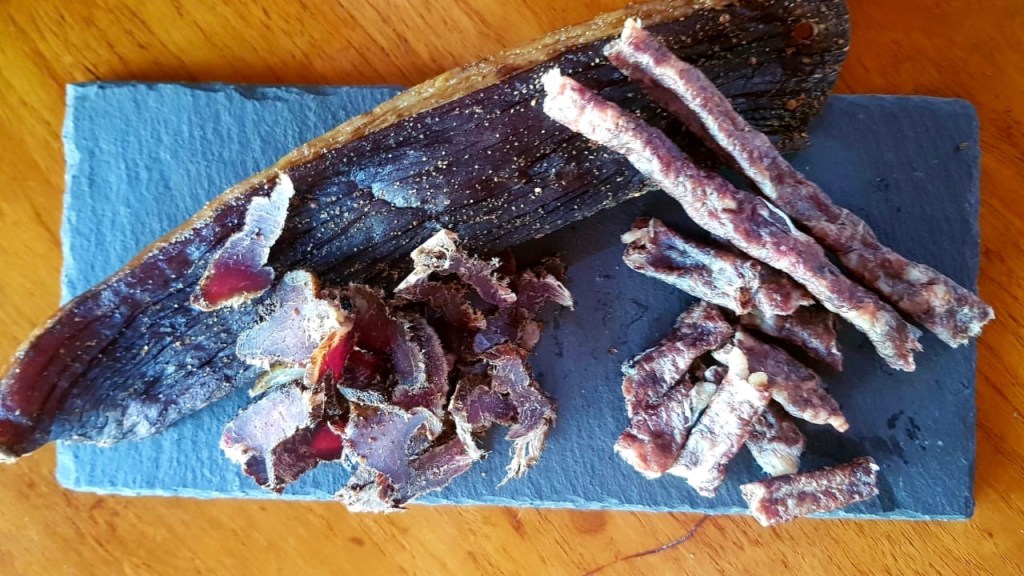
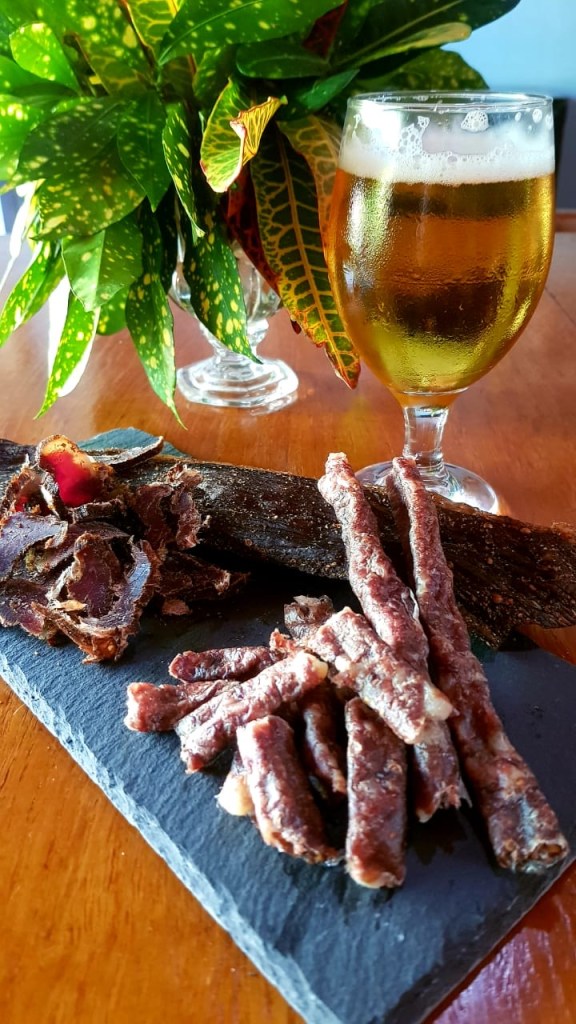
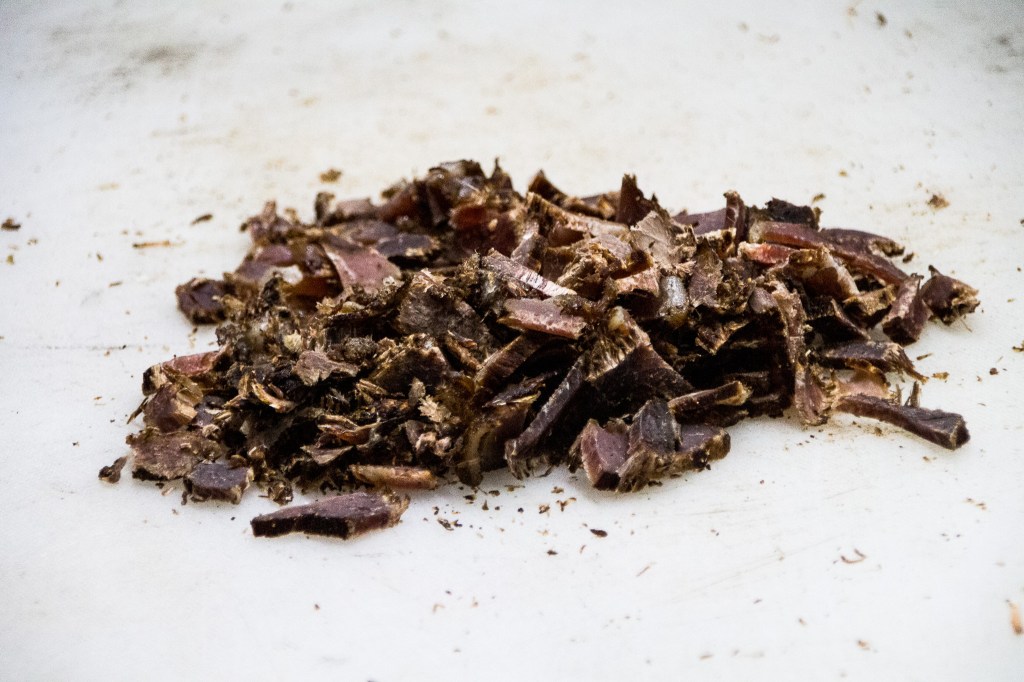
Biltong Probably the most-loved South-African snack, biltong is a dried, cured, and spiced meat. Beef biltong is a favourite, but venison biltong is also very popular. Served as a snack at just about any social gathering, many potjiekos and soup recipes also include it as an ingredient.
Droëwors Droëwors (literally meaning “dry sausage”) is a South African snack food, based on the traditional, coriander-seed spiced boerewors sausage. It is usually made from a thin sausage rather than a thick sausage, as the thinner sausage dries more quickly and is thus less likely to spoil before it can be preserved.
Boerewors Boerewors (translated as “farmer’s sausage”), is a type of sausage made from beef mince, (it must have at least 90% meat to qualify as boerewors). The mince mixture contains spices such as coriander, cloves, and nutmeg, and has a very distinct taste. It is guaranteed to be one of the meats served at a traditional South African braai.
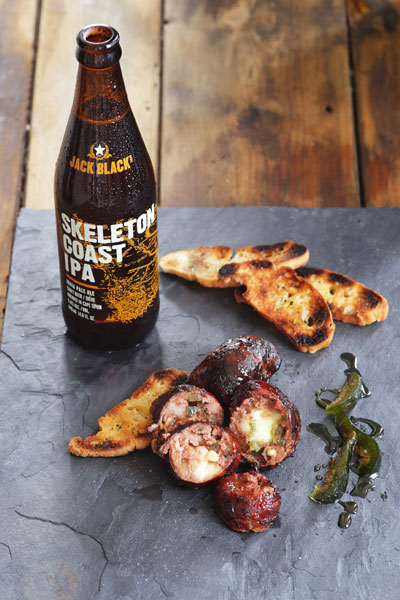
Skilpadjies Skilpadjies is a traditional South African food, also known by other names such as muise, vlermuise and pofadder. The dish consists of lamb’s liver wrapped in netvet, which is the fatty membrane that surrounds the kidneys. Most cooks mince the liver, add coriander, chopped onion, salt and Worcestershire sauce then wrap balls of this mixture with the netvet and secure it with a toothpick. The balls, approximately 8cm in diameter, are normally barbecued (grilled over an open fire) and are considered ready when the fat is crisp.
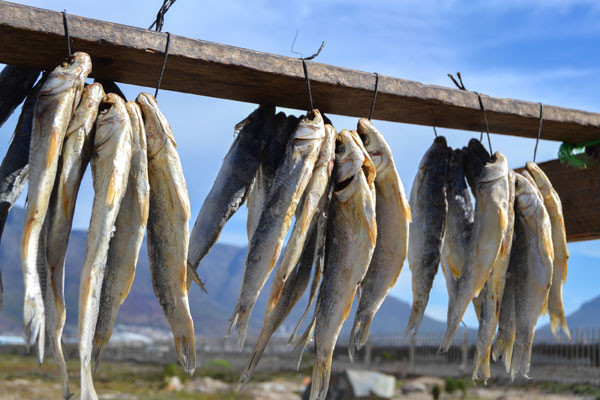
Bokkoms Although not everyone’s taste, bokkom hails from the West Coast region of South Africa. Dried in the sun and wind, the whole, small, mullet fish are then salted. Most eat the dried fish, often referred to as fish biltong, as a snack, but it can also be used in pastas, soups, and more. This particular dish is very localised and is eaten almost exclusively in the Western Cape.
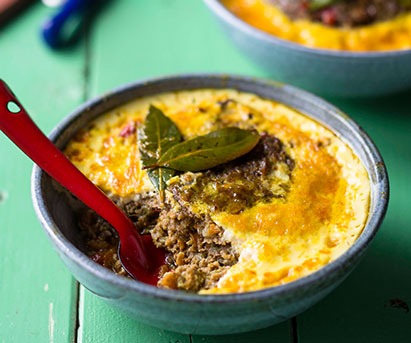
Bobotie Bobotie, a dinner-time favourite, consists of spiced mince, an egg-based custard topping, and traditionally raisins or sultanas are added to the mince mixture. The dish has a slightly sweet flavour, which is typical of the Cape Malay influence. The dish includes curry, and turmeric flavours and is served with yellow rice with almonds mixed into the rice, as well as a tomato and onion sambal and fruit chutney.
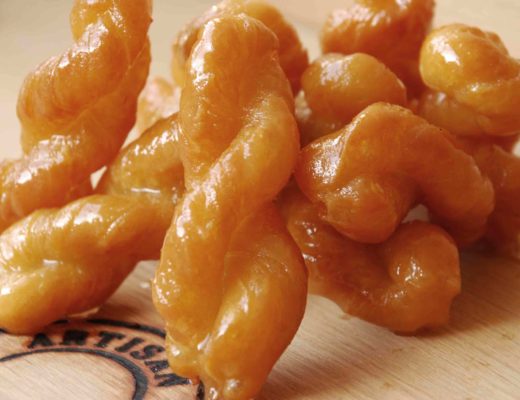
Koeksisters This is a tasty tea-time treat made by frying pleated-dough pieces, and then dipping them just out of the fryer into a thick syrup flavoured with ground ginger. They have a golden, crunchy crust, a soft, doughnut-like centre, and are super sticky.
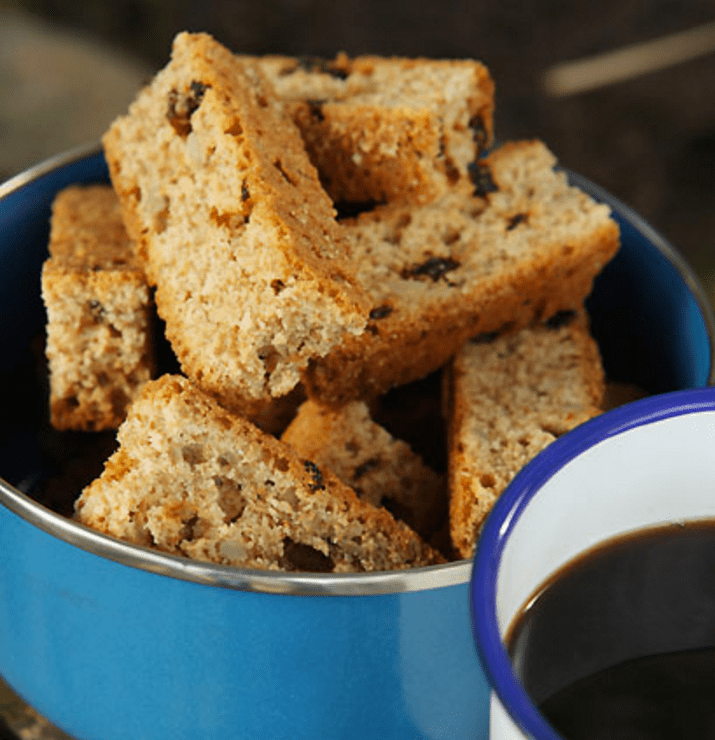
Rusks Rusks is the anglicized term for “beskuit” and is a traditional Afrikaner breakfast meal or snack. They have been dried in South Africa since the late 1690s as a way of preserving bread, especially when travelling long distances without refrigeration. Their use continued through the Great Trek and the Boer Wars through to the modern day. Rusks are typically dunked in coffee or tea before being eaten.
Rusks are essentially double-baked bread dough. Closely packed dough are baked in pans like bread, after which long chunks are cut or broken off and slowly rebaked to a dry consistency. Several modern-day, mass-produced versions are available, the most famous brand being Ouma Rusks.
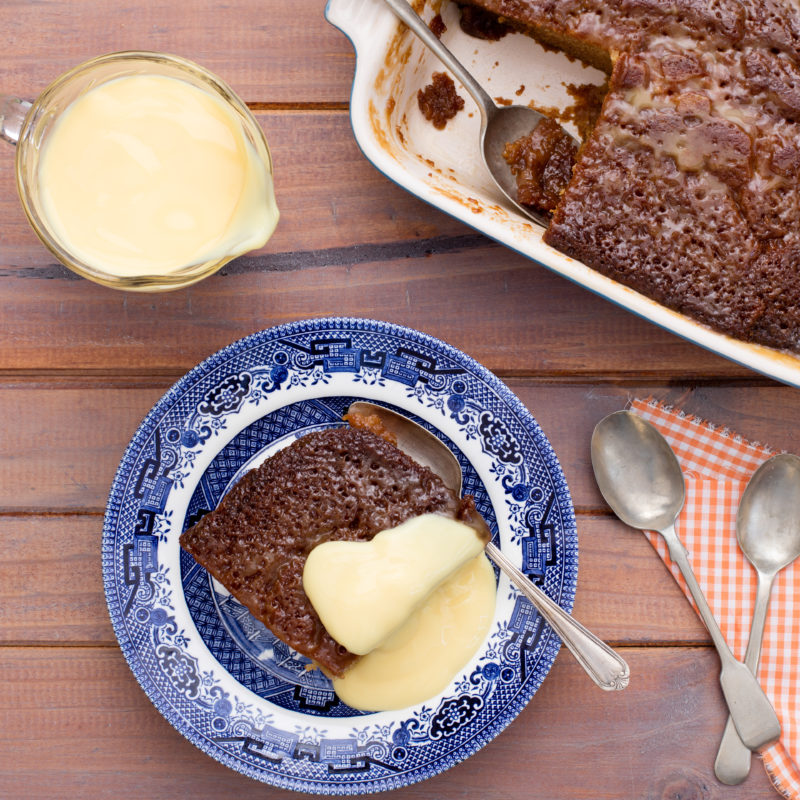
Malva pudding Malva pudding, is of Cape Dutch origin. It is made with delicious (home-made if you have) apricot jam. Once out of the oven the cake like pudding is pierced with a skewer and a thick, sweet, rich, creamy sauce is poured over the sponge and left to soak in. The result is a sticky pudding with a spongy texture and a divine caramel taste. Traditionally served with custard, or vanilla ice cream.
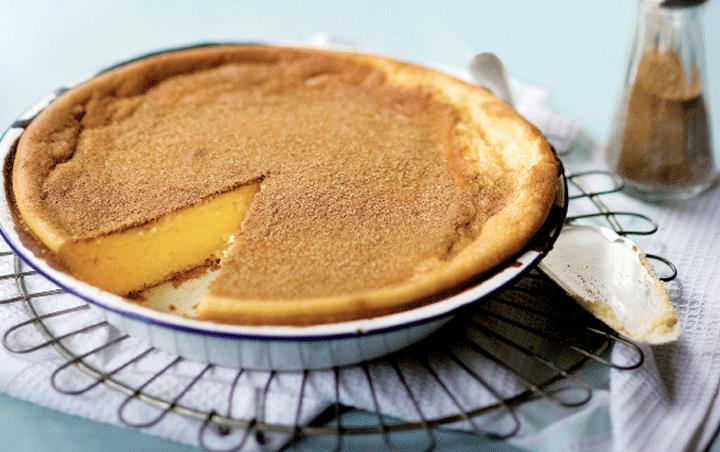
Milktart It’s a rare thing to meet a South African who says they don’t enjoy this traditional dish. Milktart (Afrikaans “melktert”) is a pie-like dessert consisting of a sweet pastry crust and a creamy filling made of milk, flour, sugar, and eggs. It can be bought whole at most supermarkets, and almost every family has their own secret recipe. Our family infuses the custard with a stick of cinamon and removes it before baking and once out of the oven gives the pie a fine dusting of cinamon powder before serving.
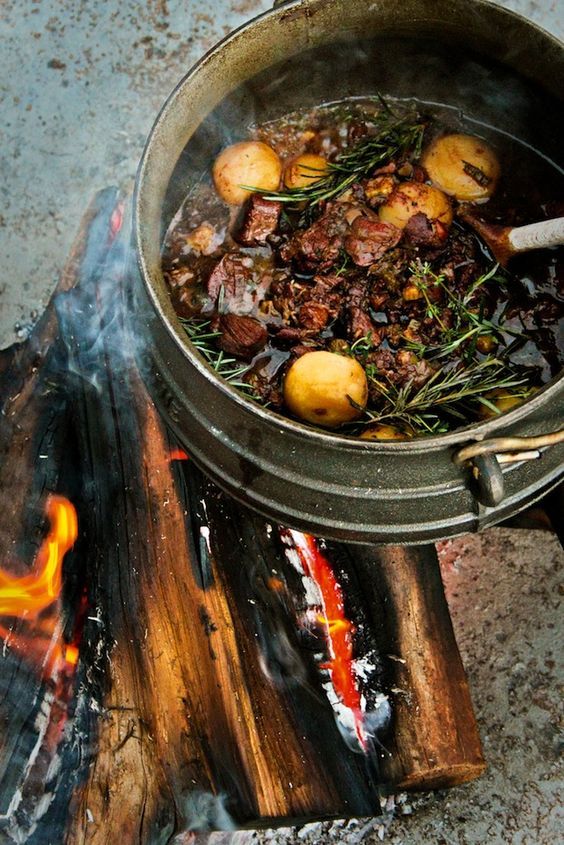
Potjiekos South Africans cook potjiekos (or pot food) in a round, cast-iron pot over an open fire. It is traditionally made using meat and vegetables, modern variations have also become popular. Venison, chicken, curry and seafood poitjies are also very popular. Making potjiekos is a sociable and simple way to cook for a large group of people. The food is cooked slowly for hours over the coals and served with rice, potbrood (pot bread) also prepared on the fire and salads.
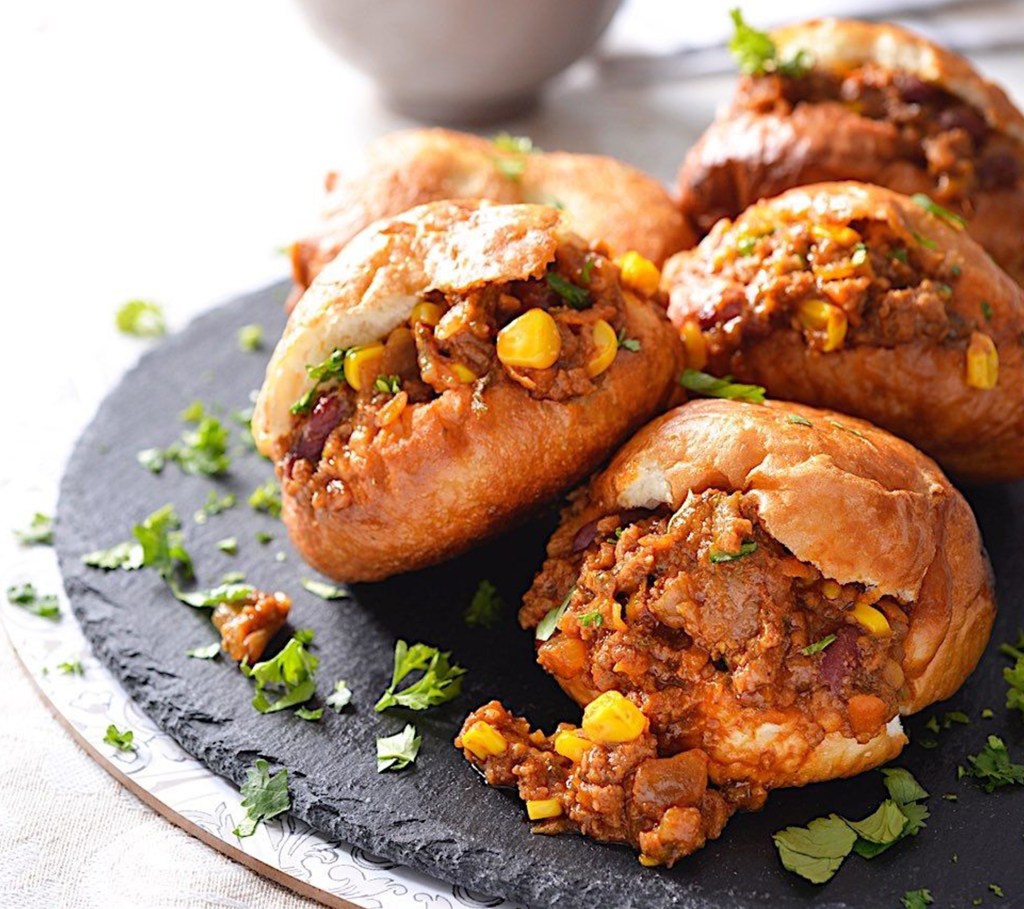
Vetkoek Popular in Afrikaner cooking, vetkoek is basically a fried bread dough. The word means “fat cake” and is similar to the Dutch oliebollen. It can be accompanied by sweet – Home made apricot jam or savoury toppings like minced curry and chutney or cheese.
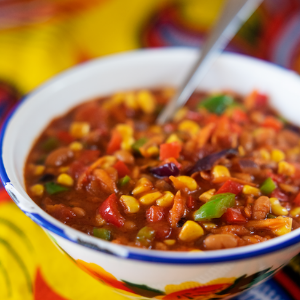
Chakalaka Chakalaka combines vegetables such as peppers, onions, carrots, and tomatoes into a delicious spicy relish. Often served at braais to accompany side dishes like pap (similar to a polenta but smoother), it also goes wonderfully with boerewors and other braai meats.
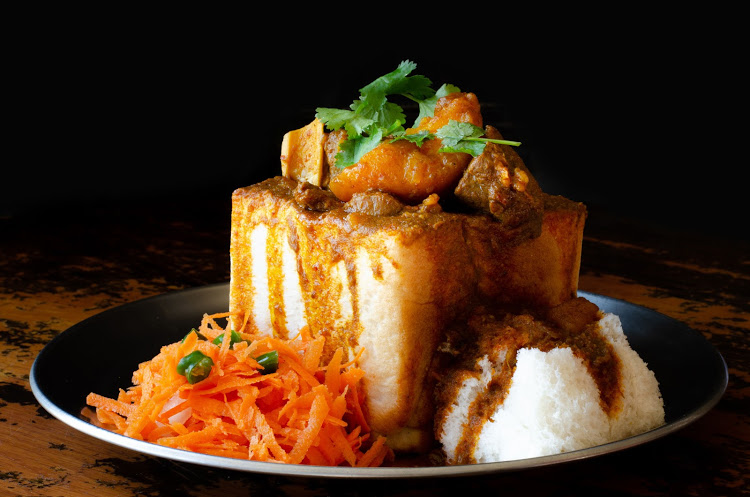
Bunny chow This is traditionally the street food of Durban, but has become popular across South Africa. It is made from hollowed out loaves of bread, stuffed with spicy curry. It was originally created by the immigrant Indian community in the Natal area of Durban and served to workers for lunch. Try chicken, pork or vegetarian varieties containing lentils and beans as a variation on the theme.
On many occasions biltong is often used in an ingredient in other dishes. Eco Lodge’s Hog and Hippo Bistro is famous for their cheese and biltong soup which the guests love. It is usually served at one of the Eco Lodge braai evenings as a starter. For those interested, here is one of the many versions of our famous soup.
CREAMY BILTONG & CHEESE SOUP
Ingredients 50g butter 1 large onion, finely chopped 5ml ground cumin 100g biltong powder 1 Vegetable Stock Pot 500ml boiling water 250ml flour 500ml milk 380g (1 can) Nestlé Ideal Unsweetened Evaporated Milk 5ml fresh nutmeg 200g mature Cheddar, grated 50ml sherry 50g blue cheese, crumbled (optional) salt and pepper to tasteextra biltong slices
Directions 1. Melt butter in a large pot until frothy and add onion. Fry until soft and translucent, then add cumin and biltong powder.
2. Dissolve Knorr Vegetable Stock Pot in 250ml of the boiling water and keep ready.
3. Add flour to the onion mixture and lower heat.
4. Slowly add water in measured quantities, stirring continuously and adding more water as the mixture thickens. Add the remaining 250ml boiling water and keep stirring.
5. Add milk in small quantities until it’s well incorporated and creamy. Grate nutmeg into the soup and add Nestlé Ideal Unsweetened Evaporated Milk.
6. Turn o the stove and add the cheese, stirring to melt. Once you’ve added the cheese, don’t boil the soup again, as it will split.
7. Add sherry and mix well before adding the crumbled blue cheese (optional), leaving some for serving.
8. Season to taste, remembering that the biltong powder is already seasoned and the additional biltong and blue cheese that you’ll serve the soup with will add some saltiness.
9. Purée soup using a stick (or jug) blender for a smoother consistency, if preferred.
10. Serve with sliced biltong These traditional dishes are only a small part of what is such a rich part of the South African culture and their warm hospitality. Don’t forget to end your meal with a glass of Amarula, a uniquely traditional South African liqueur made from the sun-ripened fruit of the African Marula tree.
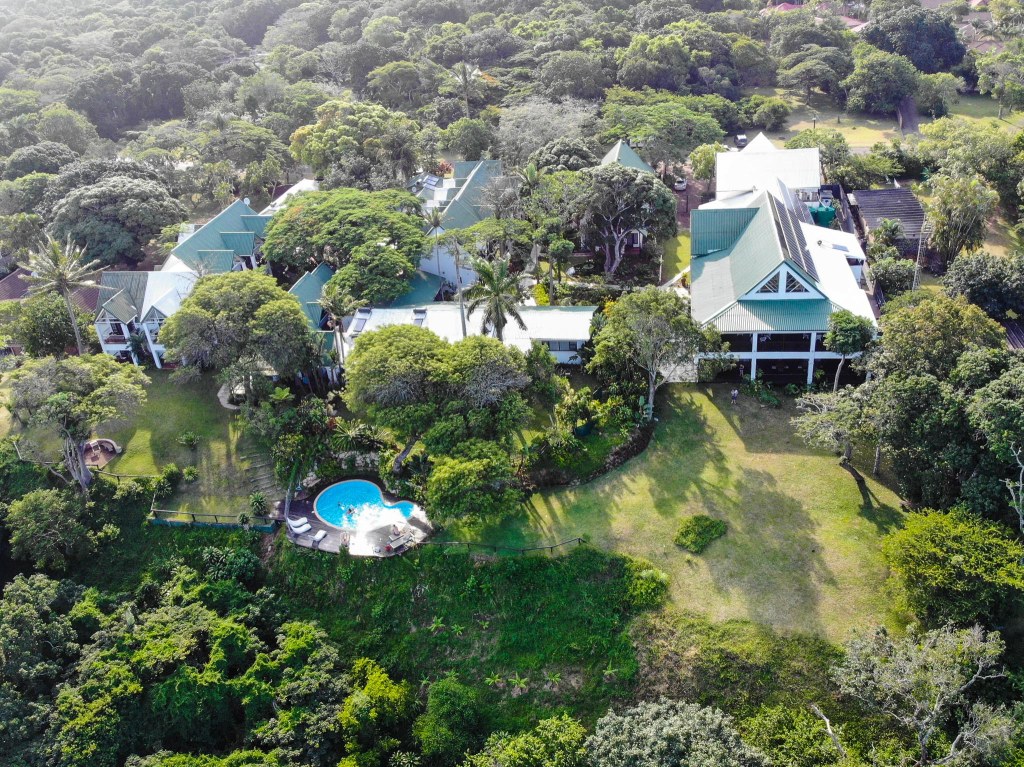
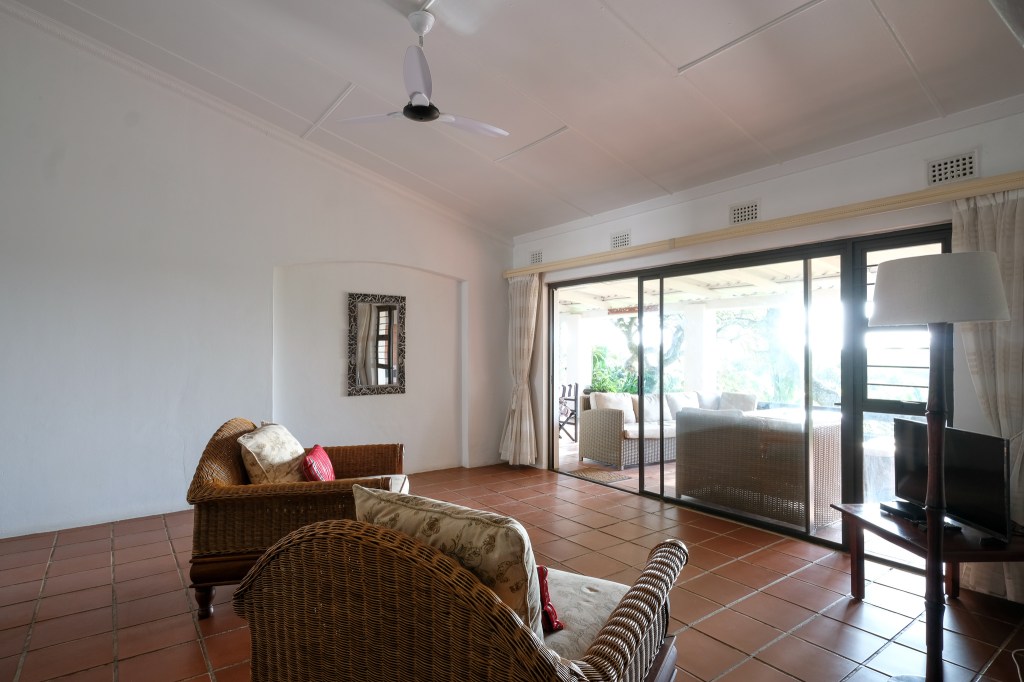
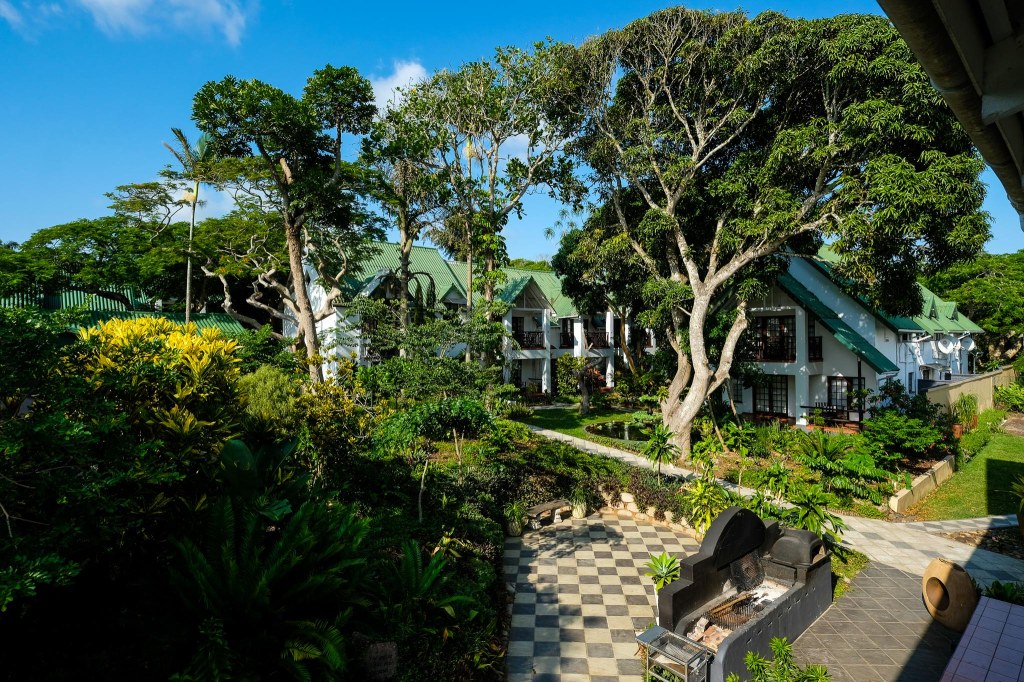
Booking green accommodation does not mean you have to forfeit comfort for an eco-friendly option. St Lucia Eco Lodge offers our visitors both comfort and eco-friendly options. As more and more travelers are becoming aware of how important it is to adopt eco-friendly principles, so too are we. Eco Lodge prides itself by adopting various green values in the form of sustainable and ecologically responsible tourism.
Eco Lodge and the Eco Lodge team care deeply about the environment and have begun implementing what we call our “50 Shades of Green” by installing solar panels on the roofs, planting trees to attract the wildlife and birds, and buying locally sourced fruits & vegetables for our meals and menus.
Kian Barker, owner of Eco Lodge, is passionate about securing his lodge as a leader in eco sustainability and is constantly looking for ways to reduce the environmental impact of his lodge. As part of this process he has crafted a list of things we can implement in order to reduce the impact we have on the planet we inhabit. Some of these tips you may have already mastered, but hopefully you’ll pick up a few new ones along the way too and implement them.
Electricity saving – Greens: 1) 30% of 3-phase power derived from solar. 2) All lighting is LED. 3) Migration to solar heated water. 4) Solar reflective roof paint, which reduces room temperature by 30%. 5) Electrical 3-phase balancing technology to rationalise electrical consumption. 6) Migration to induction cookers. 7) Ceiling fans to compliment air conditioners. 8) Regular defrosting of freezers. 9) Cover cooking pots to reduce electricity usage. 10) Kitchen cooks with gas. 11) Laundry uses A+ graded washing machines.
Water – Greens: 12) Drought resistant garden plants. 13) Rainwater tanks for rain capture & filtered water. 14) Less lawn and more trees for shade & better ground water conservation. 15) Water saving shower heads. 16) Duel flush system on toilets. 17) Indigenous lawn. 18) Indigenous shade plants. 19) Pest reduction with resident mongoose family – no poisons. 20) Drip dry wash lines. 21) Notice in Lodges to re-use towels. 22) Water garden on demand. 23) Showers instead of baths. 24) Insulated hot water pipes. 25) Use watering cans.
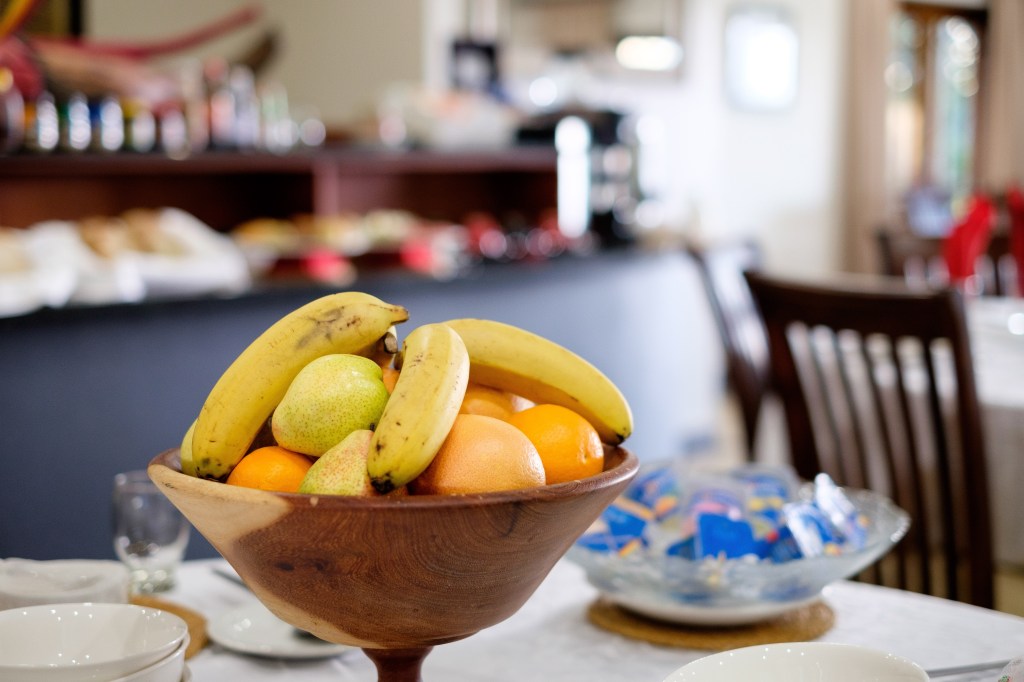
Food – Greens: 26) Locally sourced fruits & vegetables for our menus. 27) Herb garden for Kitchen. 28) Foil wrapped butter. 29) Cloth serviettes. 30) Grilled menu. 31) Locally produced honey. 32) Serve whole foods / barbecue.
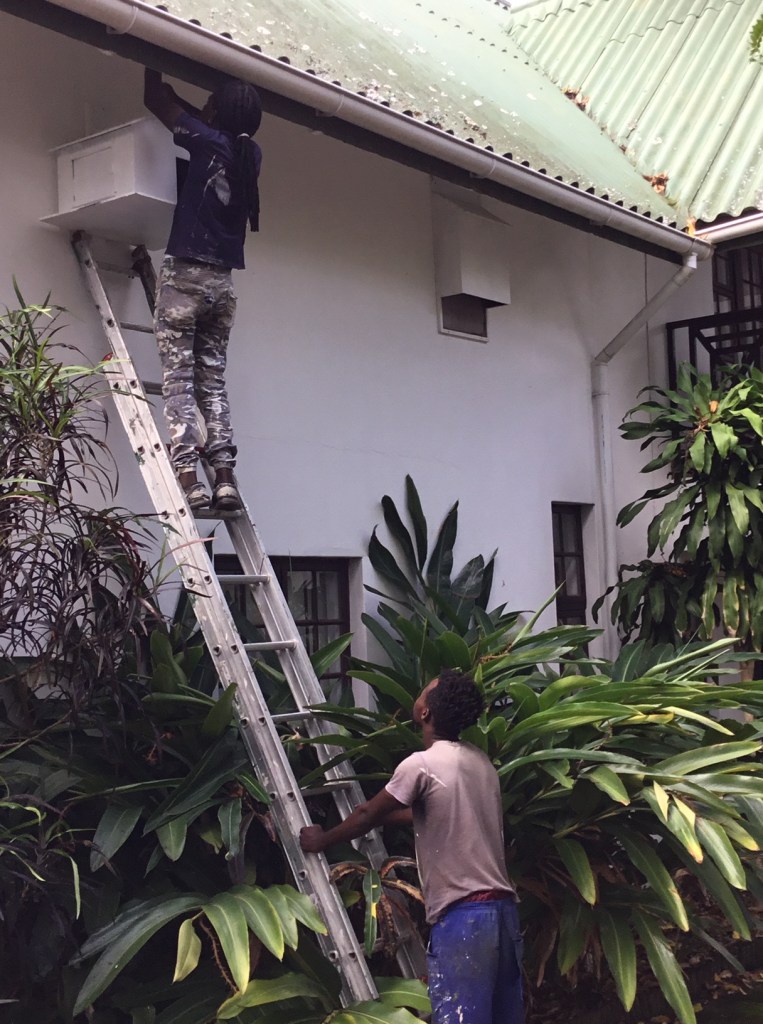
Nature – Greens: 40) Bat houses. 41) Owl Houses. 42) Member of Birdlife Association. 43) Encourage more birders, hikers and bikers. 44) Glass doors for more natural light. 45) Composting with tree leaves. 46) Worm farm. 47) All pets sterilised. 48) Resident Hippos cut our grass.
Eco events – Greens: 49) Celebrate & embrace all eco-days. 50) Whale watching from your ocean view veranda.
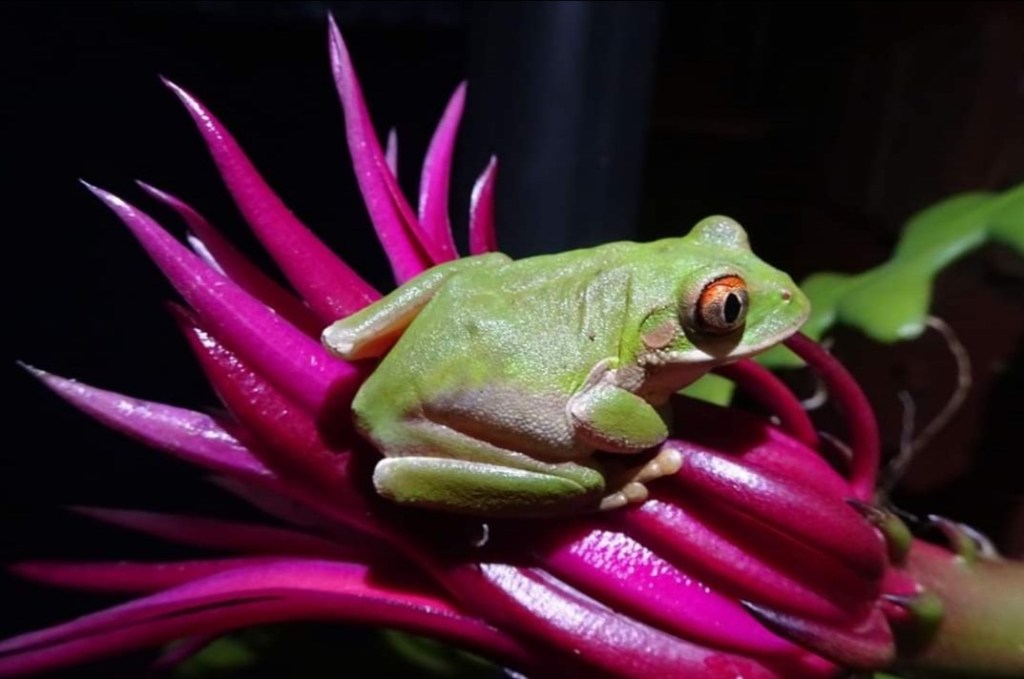
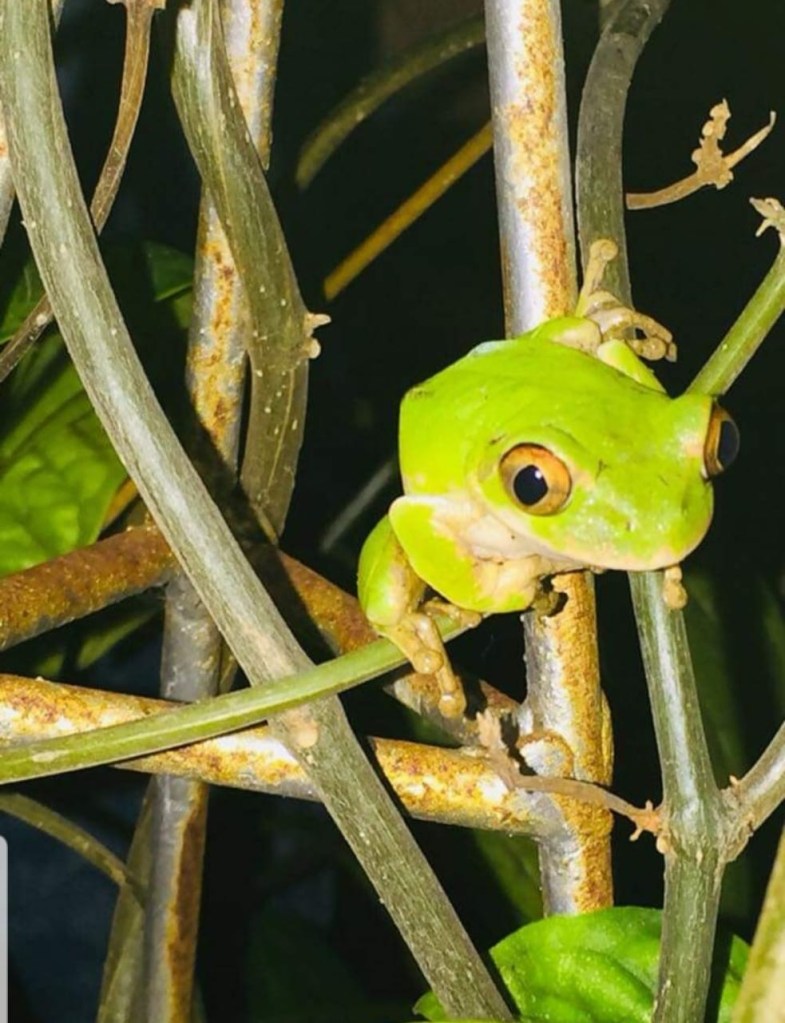
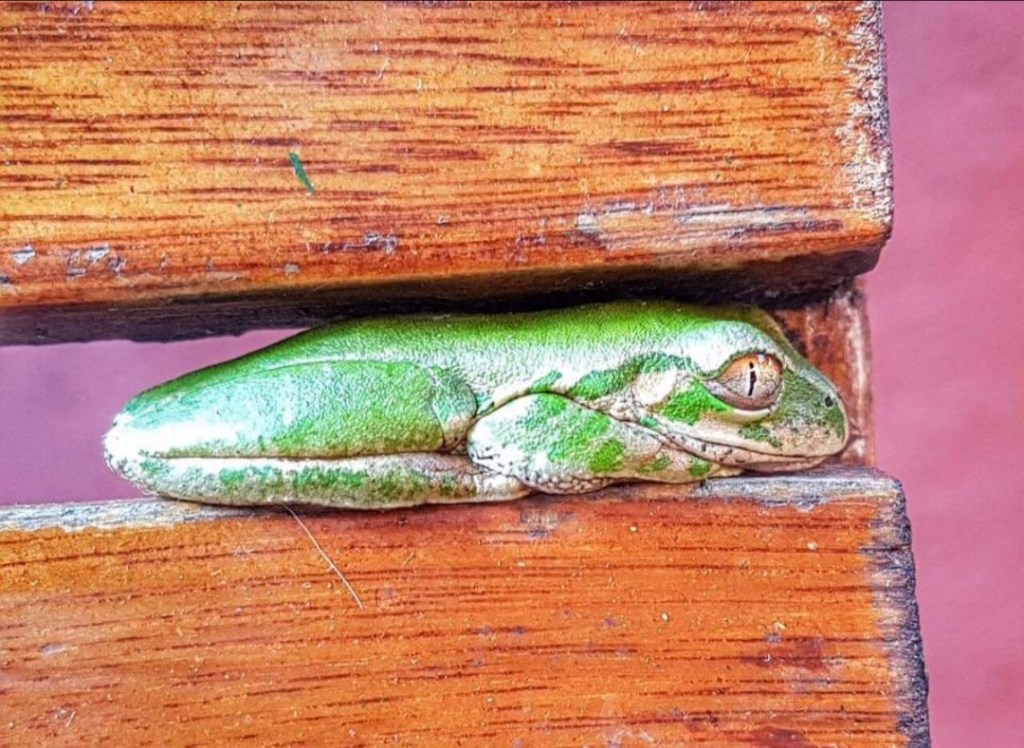
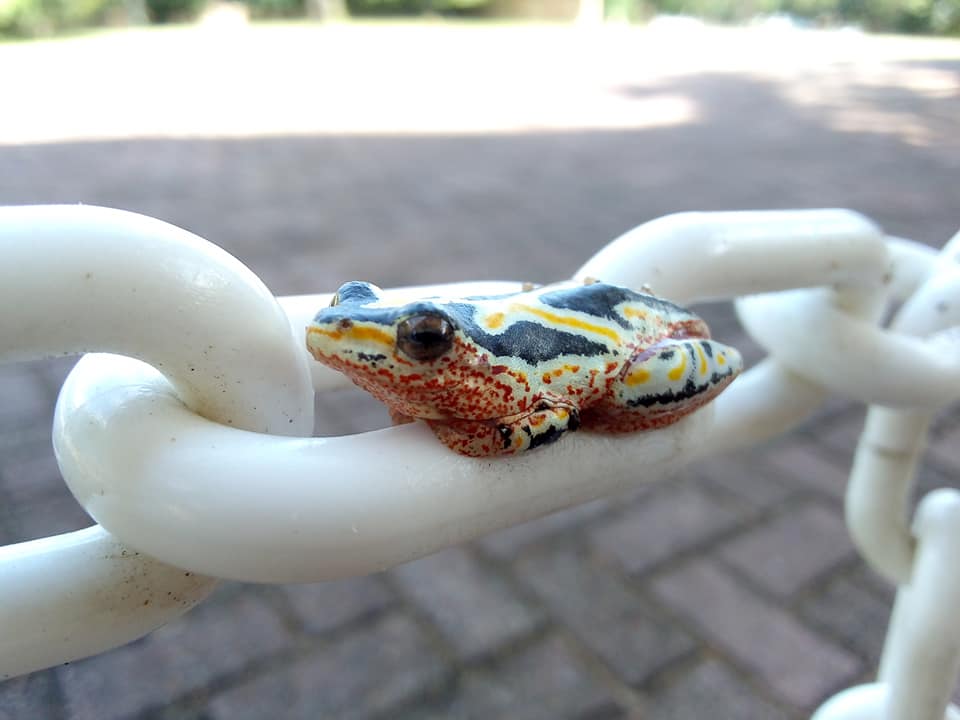
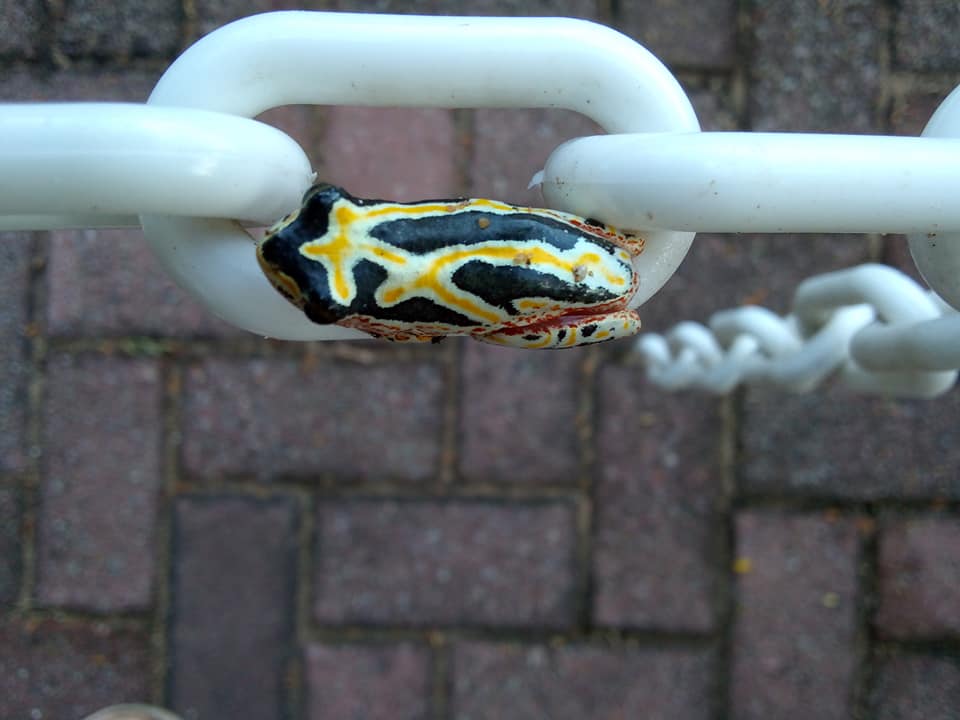
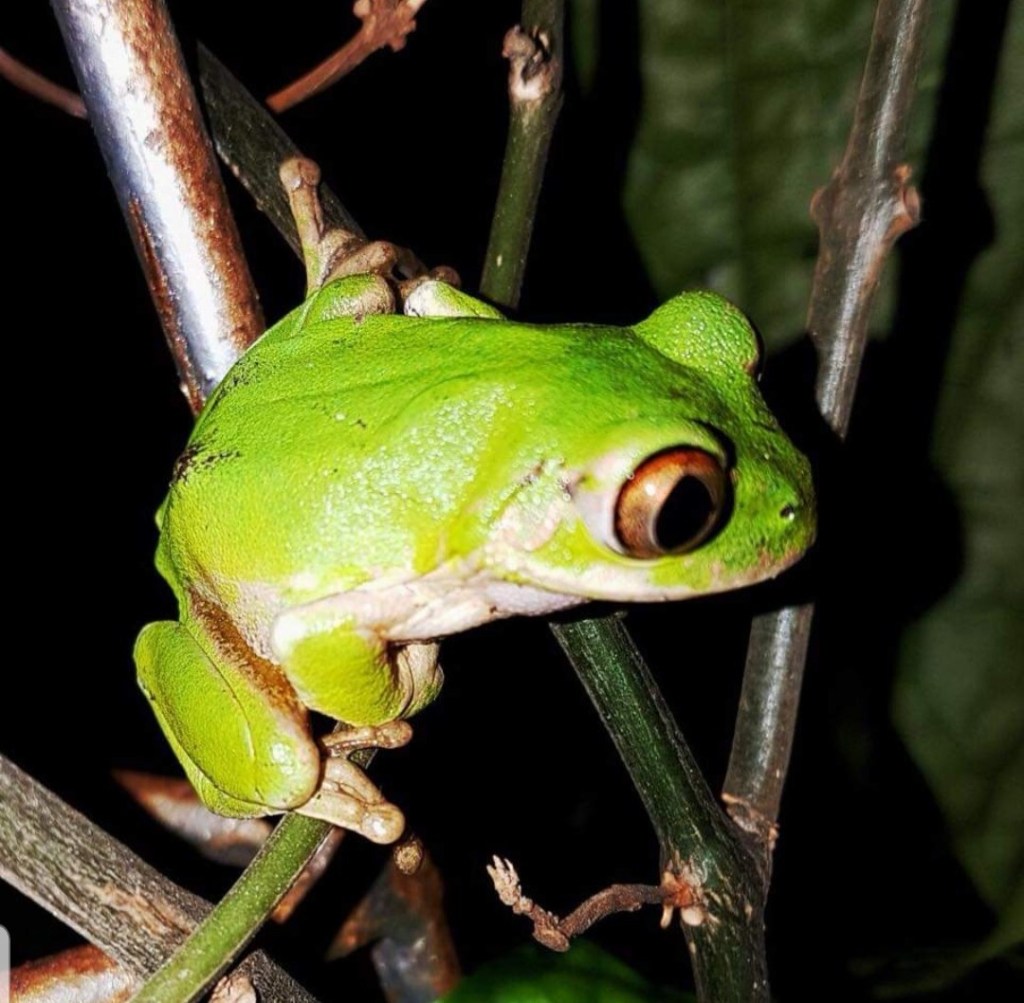
The idea of being wrapped in the enveloping nights silence is a misnomer in the village of St Lucia. With 36 different species of frogs the St Lucia nights are a cacophony of squawks, croaks, cheeps and barks to describe only a few of the sounds from our amphibious chorus line. Many visitors, and city dwellers are unaware of how raucous frogs can be, especially during mating season. It is always a special experience to be out in the bush in the iSimangaliso Wetland Park on one of ShakaBarker chameleon night drives, and arrive at a vlei filled with frogs. There is this momentary silence as the frogs adjust to the presence of the vehicle before they start up with their call and response discord. All this racket, and serenading as disconcerting as it can be, is in reality a wonderful sign of a very healthy frog population.
Frogs have hopped from the fairytales into the forefront of science and the fact that our area has a healthy frog population is wonderful news for the St. Lucia wetlands. Ecologists and environmental scientists use a wide range of plants and animals as “indicator species” to get an idea about the ecosystems health of streams and forests. Some of these species are tolerant of pollution, such as certain bacteria, or algae so their presence indicates the presence of pollutants like sewage. Other species are intolerant of pollution, or environmental disturbance so their absence can indicate problems. One group of organisms most sensitive to environmental change seems to be amphibians, which includes frogs, toads and salamanders.
One thing that makes frogs, toads and salamanders such sensitive environmental indicators is their skin. Amphibians are still partially tied to the water, spending at least part of their life cycle as eggs and juveniles in an aquatic environment. Not until they develop into adults do amphibians possess lungs allowing them to leave the water. Even as adults, most amphibians have to keep their skin moist by staying near water or damp areas, since they breathe partially, or entirely through their skin. Because their skin is so porous and absorbs gases, like oxygen, and liquids, like water, amphibians at all stages of life are sensitive to environmental changes, especially many types of pollution that may be in the atmosphere, water or soil.
What does all this have to do with the health of your garden? Whatever affects amphibians also may affect people. Because Amphibians are so sensitive to pollutants, and because they are so much smaller than humans, they will likely show signs of problems in your garden before it affects you. They can serve the same function that canaries used to serve for coal miners years ago: Being more sensitive to poisonous gases than the humans, when the canary became sick or died, the miners knew something was wrong.
If there is an abundant habitat for amphibians, and there is a healthy population of them in the ecosystem, it is a good indicator that you have a healthy environment. Frogs are in reality, a barometer for the health of our local ecosystem. iSimangaliso is considered one of the ultimate pollution free areas in South Africa, and our vigorous frog population is very outspoken about this fact.
The food chain would crumble without the presence of frogs in our ecosystem. They are not just good barometers, they also provide a valuable food source for birds, lizards, snakes, monkeys, and more. Frogs also help keep insects from spreading diseases, as well as assisting in keeping the insect population down under control. From their sticky toes to their eyes that seem to pop, frogs have hopped into a central place in fairytales and science alike. Children are perpetually delighted by Kermit the Frog and scientists are still unlocking the secrets of these mysterious green amphibians. If you have ever caught a frog, you have probably been mesmerised by their almost otherworldly appearance.
These amazing frog photos were taken in the gardens in and around the village of St. Lucia. So when you visit us at the St. Lucia Eco Lodge, and hear the frogs calling in our water feature, or on a night drive with one of our guides into the iSimangaliso Park, remember they are extraordinary animals that add not only diversity, but also beauty to our Earth, and are a vital part of a healthy, and functioning ecosystem.
It is one time mosquitoes get put to good use. Frogs eat mozzies and make music.
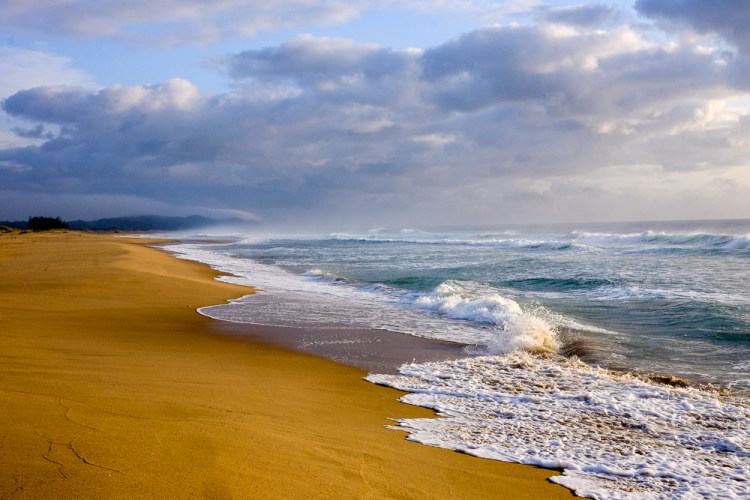
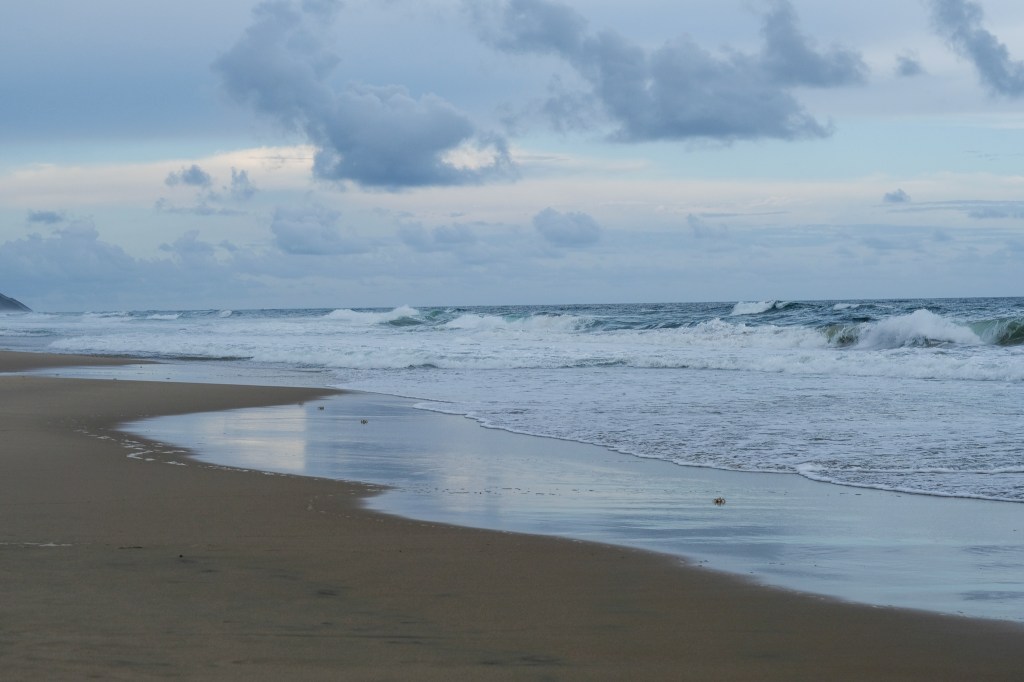
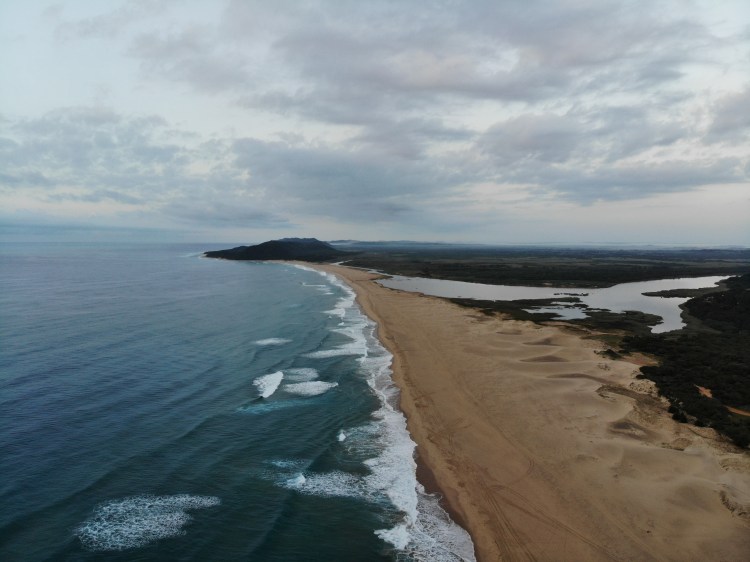
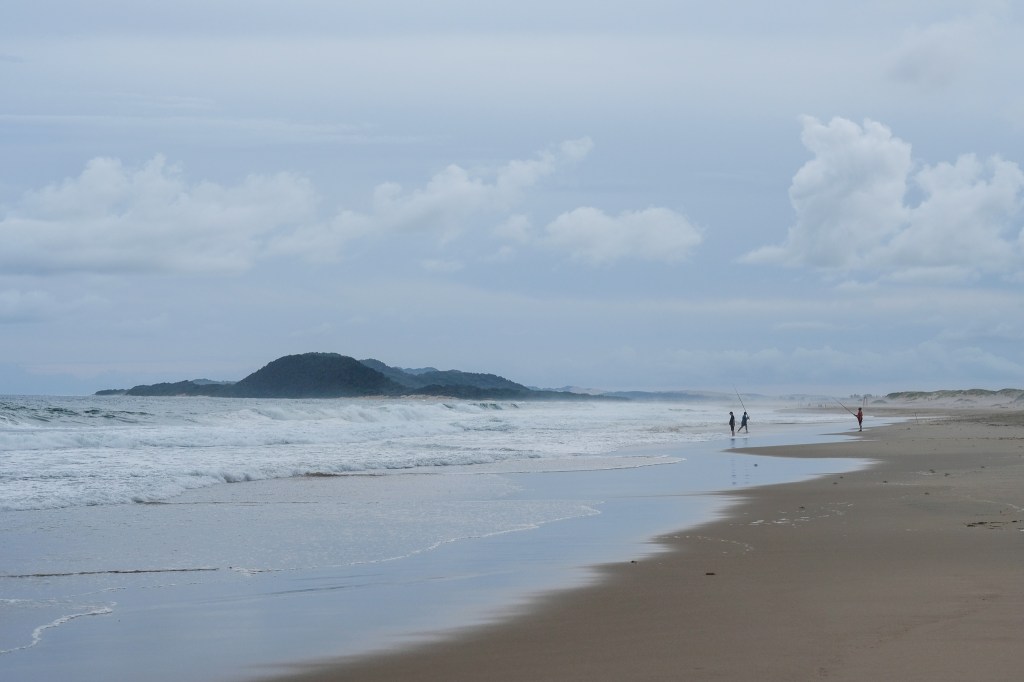
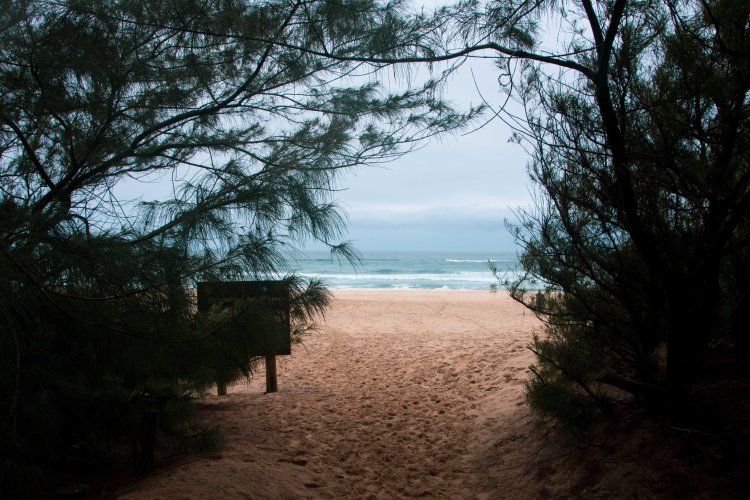
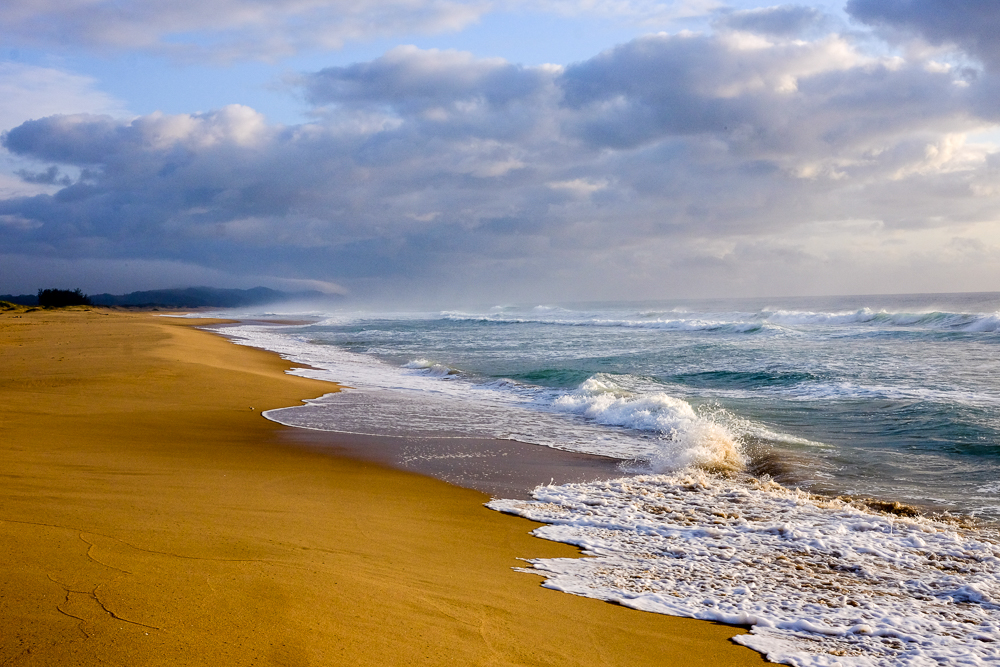
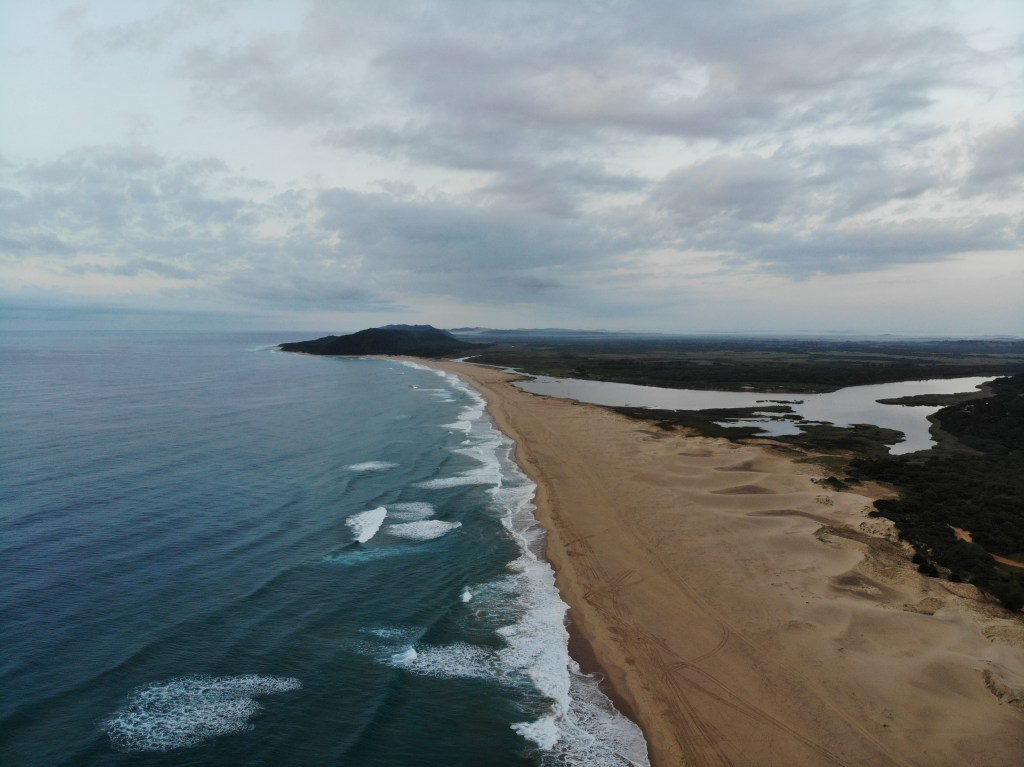
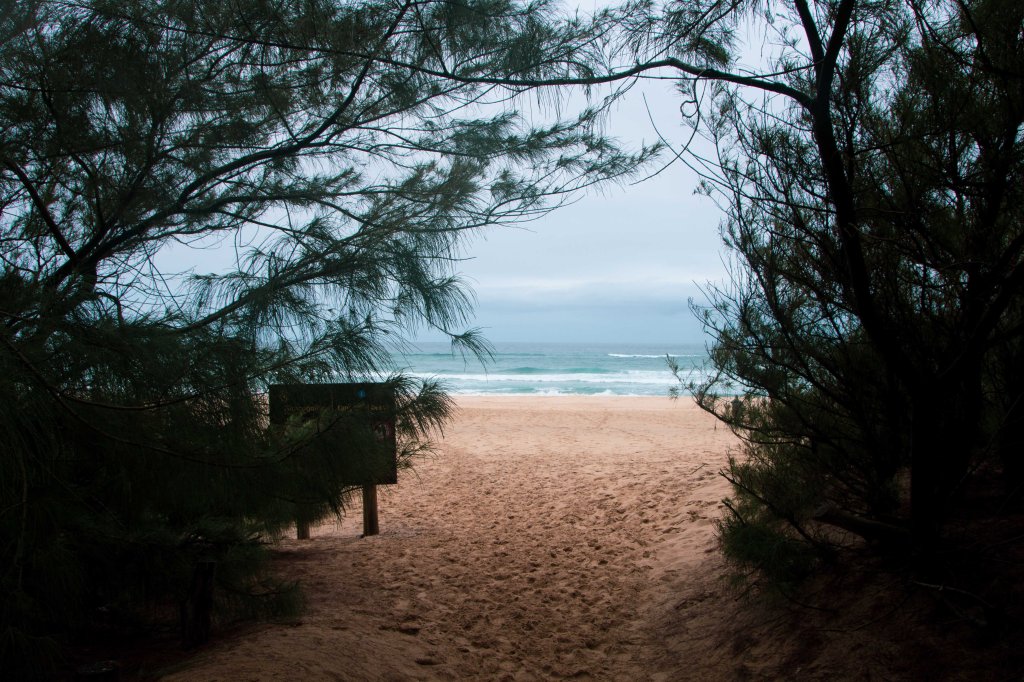
Walking is one of the easiest human activities; in St. Lucia there is a whole choice of walking options. A treat for me is heading down to the St. Lucia beach for a walk. The beach is a mere kilometer from our quaint hamlet of St. Lucia. I love going for long walks in the evening after a days work. The beach in St Lucia is exquisite and stretches on for miles in the direction of Mozambique. Early evening there are not many people on the beach, just the ever optimistic angler chancing his beach fishing luck hoping to catch his last fish before the sun goes down, a few locals walking their dogs, and me. The visitors and tourists have already left, seeking sustenance and some refreshing aperitif for their dinner. This leaves me with the beach pretty much to myself.
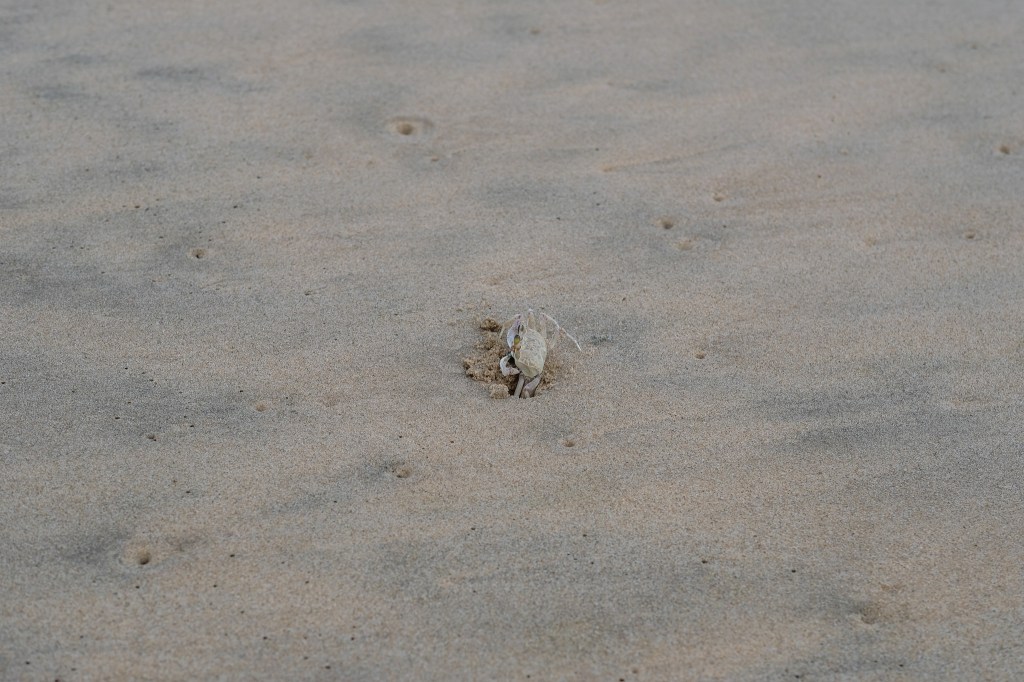
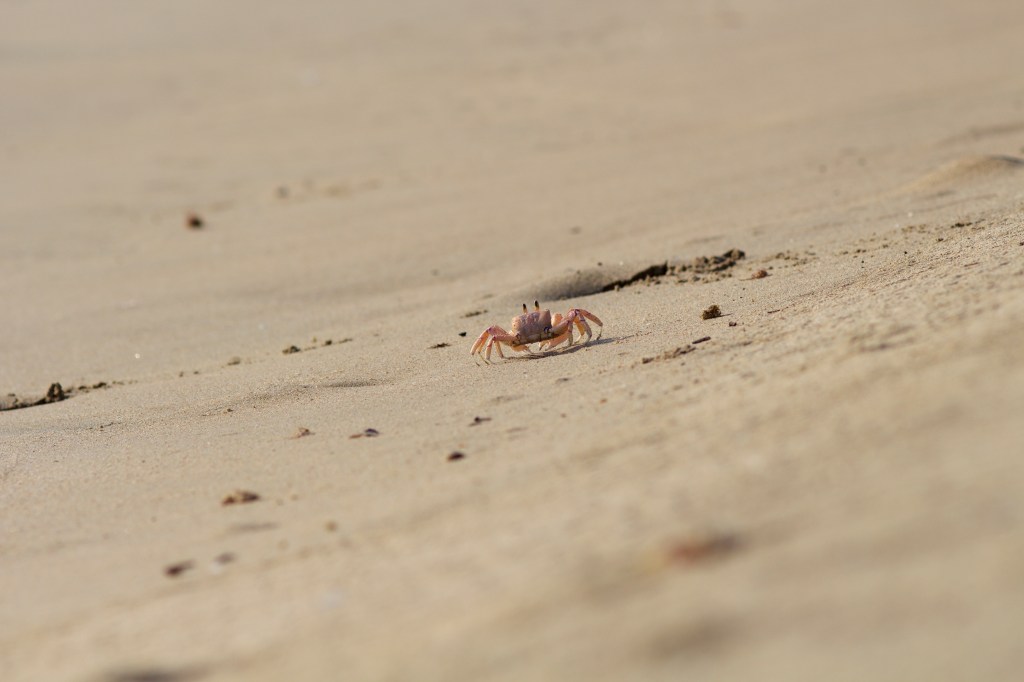
Instead of doing mindless miles on the treadmill I am out walking in the soft sand as the water laps at my feet, my mind drifts with the rhythmical motion of the waves. The best way to end the day. As I stroll along the water line kicking sand and allowing the water to tease my feet with its lovely cool caress little crabs scuttle to hide from my approach. They rush to dive down their little holes before making their appearance again once the immanent danger of my passing has vanished. They are such brave little things putting up their front claws if I get too close for comfort in their best threatening performance, trying to warn me to stay away from them, because they are enormous, tough and very dangerous little crabs! These little ghost crabs are very common along our shores living in tropical and subtropical regions throughout the world. They inhabit deep burrows in the intertidal zone, always scuttling to their burrows for safety when they feel threatened. I love watching them scramble around in the receding waters of the tide till they notice me and run for the cover of their little lair.
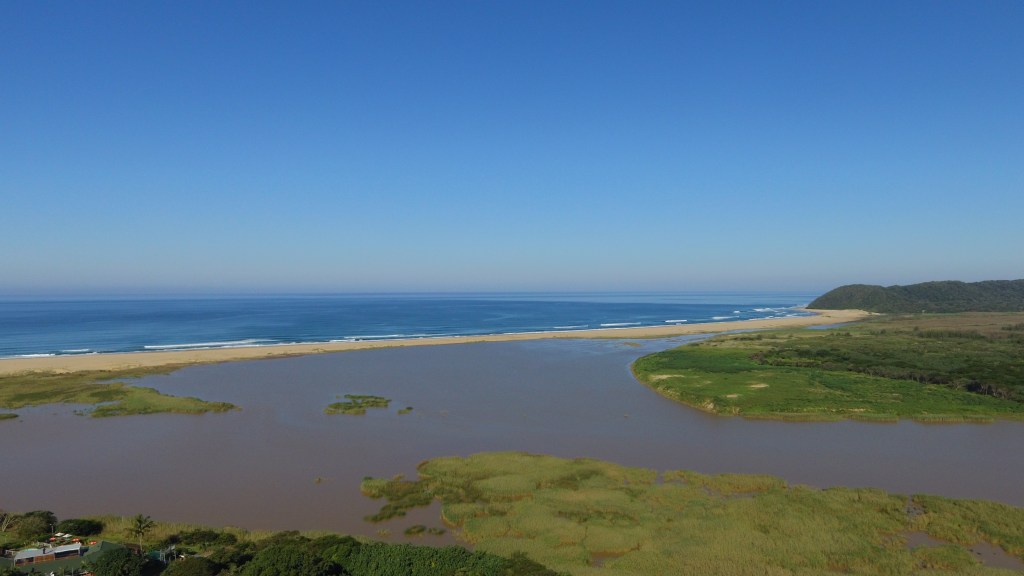
If I walk towards Maphelane I can see the tallest vegetated dune in Africa rise from the shore. This dune is situated on the south bank of the iMfolozi River mouth. At its base of the dune is a bay, and sheltered by this immensely tall, forested sand dune is a low reef, which is largely exposed at low tides. This provides a sheltered place for swimming and snorkeling. You can easily walk there from St Lucia beach; it is only a 3km from the boardwalk. Worth doing early in the morning as the sun starts coming up, a climb to the top of the dune for some magnificent views, and a quick swim before walking back to St Lucia to begin your day. The fishing is also known to be pretty good in the area, and the bay is shallow so you often find the boats launching through the surf from there too.
created by dji camera
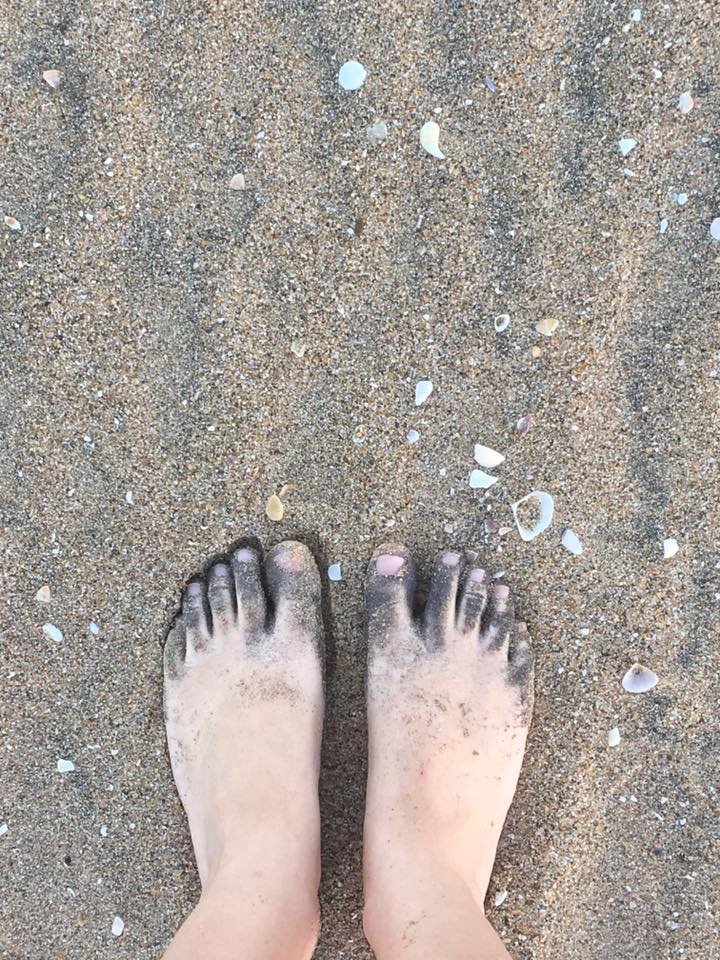
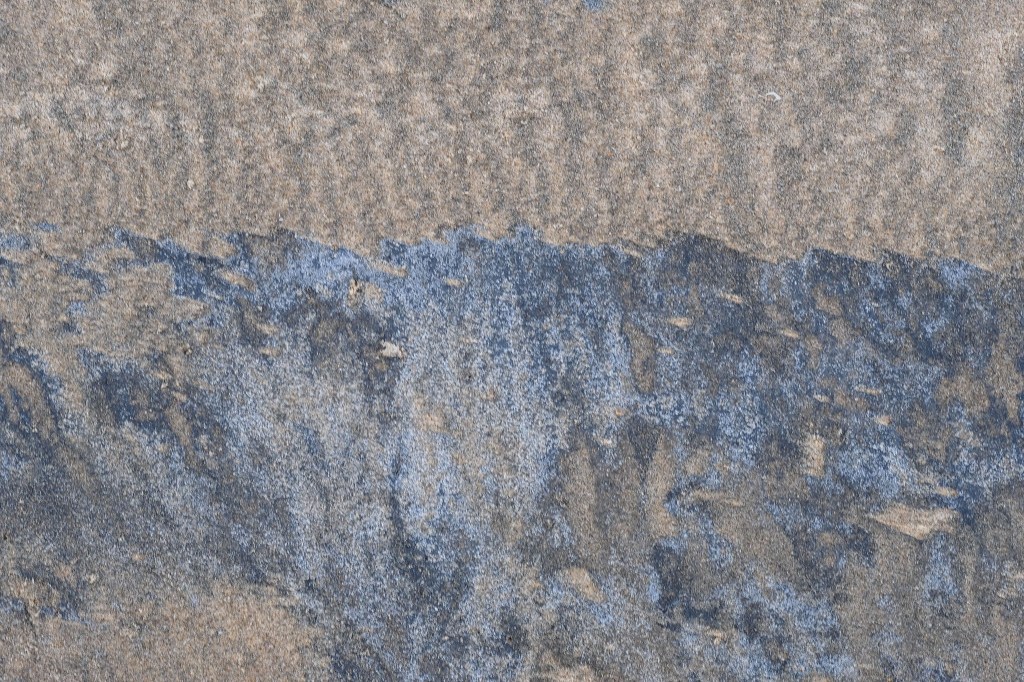
As you walk along the beach you will notice patches of dark sand, almost black in places. It looks dirty, as though oil has been deposited on the sand and stained it. Your feet go a dark grey where the sand has stuck to you. Most beach sand on this beach consists of grains of the mineral quartz. The black is not oil, but rather heavy minerals like Rutile, Ilmenite, Zircon, Garnet, Magnetite, and Monazite which are all hard minerals that are resistant to weathering. Richards Bay Minerals mines 22 of these heavy minerals and rare earths. They are dense, which is why the lighter sand blows away leaving the dark blackish sands exposed. The heavy mineral sands that contain concentrations of these important minerals are old beach, river or dune sands that solidified, and then wore down again. They all originally grew as crystals in igneous rocks such as granite, or basalt and some metamorphic rocks. Over millions of years, these rocks were weathered and eroded. The harder minerals including quartz were washed down to the sea by heavy rainfall, and fast flowing streams and was deposited in the beach sand. Just south of Maphelane they mine the dunes extensively for these heavy minerals and some rare earths, which are used in paint, electronics, alloys and specialized steel alloys.
Thankfully the World Heritage site protects our shores – All 280km of coastline from the Mozambique border in the north to Maphelane in the south. If you want to experience the beauty of this magnificent coastline yourself, book your stay with Eco Lodge, and come and wet your feet in the balmy waters of this pristine part of the Zululand coastline.
A visit to St Lucia is an unforgettable experience. It is one of Zululand’s hidden gems nestled in a World Heritage site on the Elephant Coast.
St. Lucia has an incredible amount of varied activities and things to do in the area, and if you are a nature lover then this is the place for you.
Here is a list for your itinerary that the first time visitor to St Lucia needs to keep in mind when planning their visit.
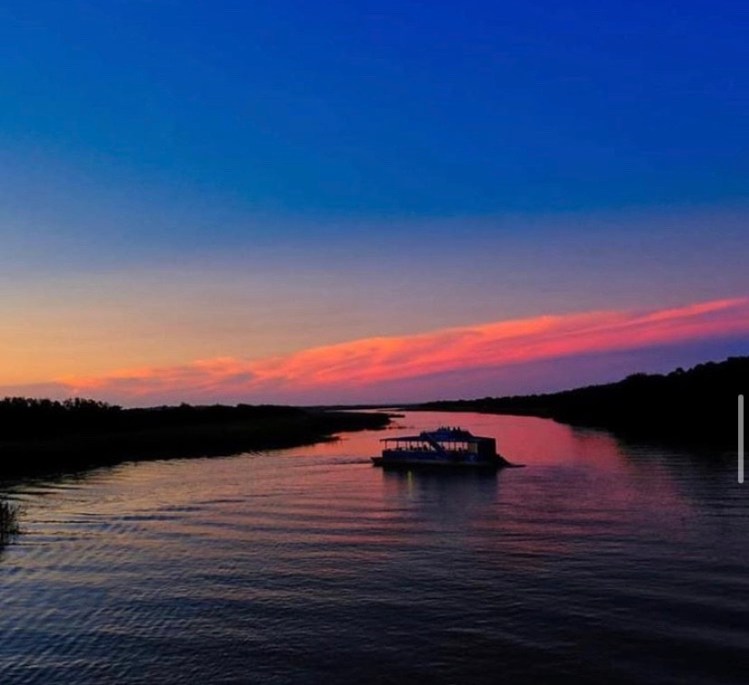
Cruise on the St. Lucia Estuary
This is probably one of the main reasons why most foreign visitors to South Africa come to St. Lucia – an opportunity to view the hippos and crocs up close from the safety of a boat. Highly recommended by locals and visitors alike!
Cape Vidal
Situated at the very end of the iSimangaliso Park is a piece of paradise, Cape Vidal, a magnificent beach stretching to the North. A haven to soak up the unique bush and beach experience in a sheltered bay under the African sun.
Hluhluwe-iMfolozi Game Park
The name pronounced shla-shloo-wee-om-fa-low-zee is a mouthful, but you get used to it once you understand how to pronounce the sounds. This park forms the 5th part of the iSimangaliso coastal ecosystem. Its savannah grassland is ideal for spotting the Big 5 and only an hours drive from St. Lucia.
iSimangaliso Wetland Park
The Zulu word iSimangaliso means miracle, or wonder, which aptly describes this beautiful wetland park. The park has 4 of the Big 5, and rather than dinosaurs you will find rhinos, buffalo, elephant and leopard (the most elusive of our Big 5). A self drive through the park, or a guided Safari will introduce you to tidal pools at Mission Rock, glorious expanses of deserted beach at Cape Vidal, Bhangazi lake, and a myriad of bird species, insects, buck, zebra, wildebeest, and hippos to name a few.
Meeting the ocean giants – Whale watching excursions
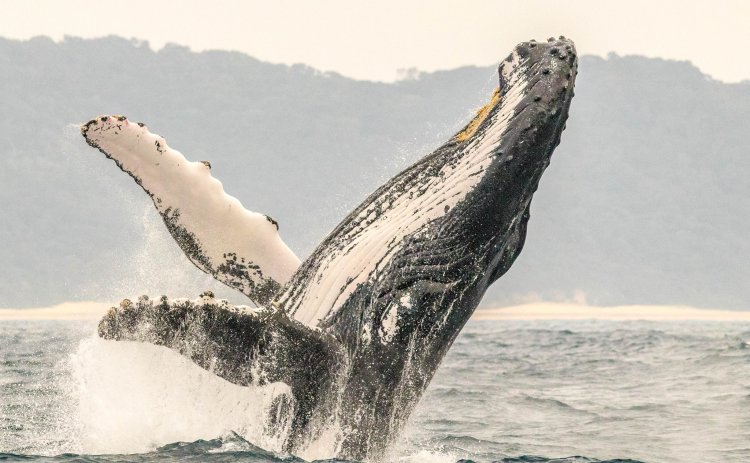
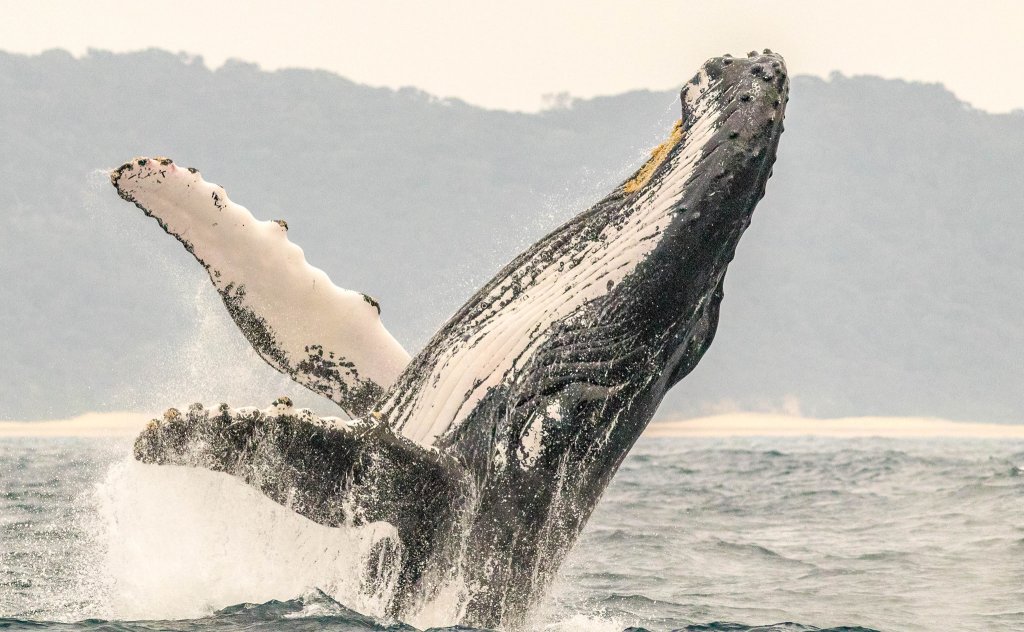
Experience the thrill of a surf launch off St Lucia beach to view the awe-inspiring sight of the Humpback Whales as they migrate down from Madagascar to the Antarctic from June to November.
Credit: Berno Phillipson
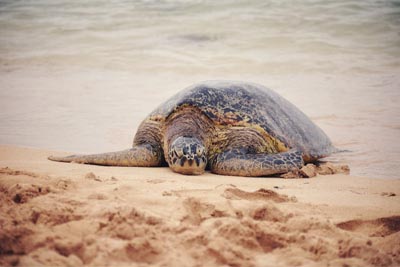
Excursions to observe the turtles nesting on sandy beaches
The expansive beaches of the iSimangaliso Wetland Park, North of Cape Vidal are one of the few remaining nesting sites for Leatherback and Loggerhead turtles.
St. Lucia Beach
This glorious subtropical beach experiences around 300 days of sunshine a year. Whether it is walking, swimming on Main Beach, fishing or just soaking up the sun, St Lucia beach is idyllic. A walk to Maphelane from St Lucia beach (the highest vegetated dune in Africa) and a climb to the top of the dune will reward you with the most incredible views over the Indian Ocean and frolicking whales in season.
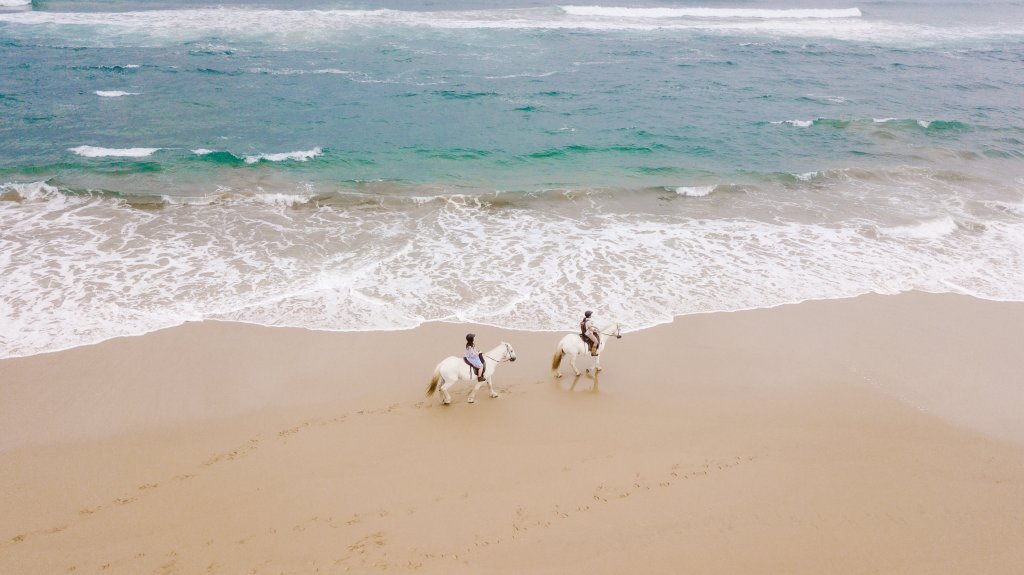
Horse riding with Bhangazi Horse Safaris
Bhangazi Horse Safaris offers a unique horse riding experience in the iSimangaliso Wetland Park. It is a great way to explore the wildlife in the area, as a rider on horseback does not threaten the game. This enables you to get a lot closer to the animals than you normally would in a vehicle or on foot. Glorious Beach rides can also be arranged along the breathtaking pristine, and unspoiled beaches of St Lucia, as can combinations of beach and bush rides.
Credit: Bhangazi Horse Safaris
Walking trails
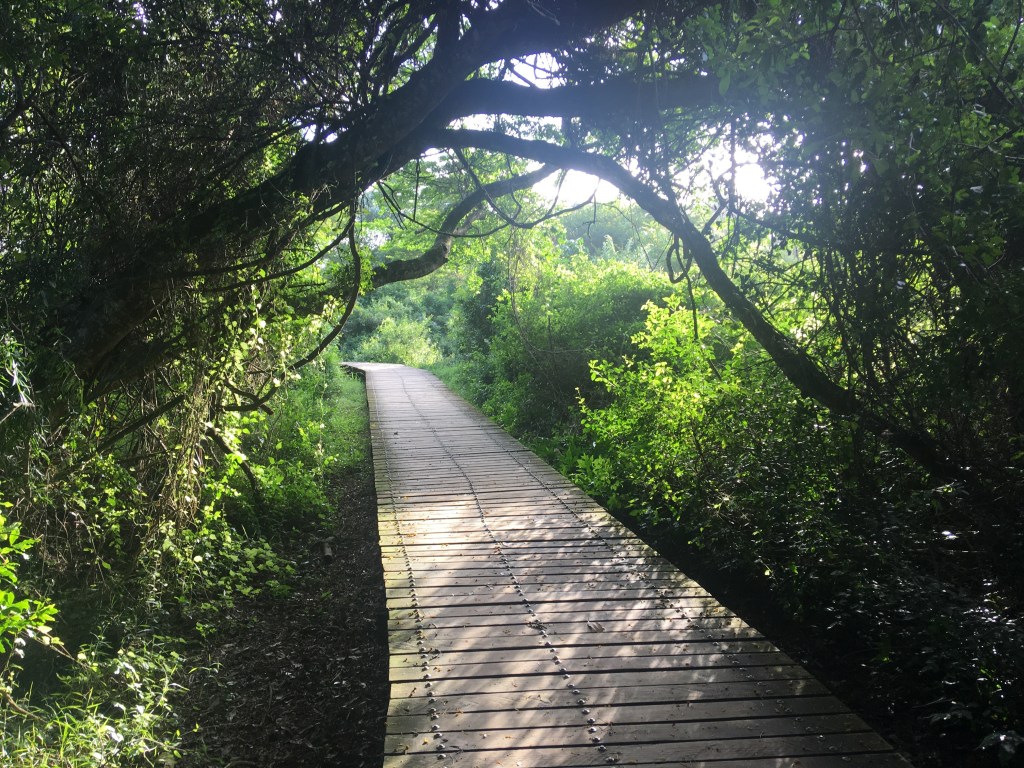
iGwalagwala Trail, close to the Estuary banks is a leisurely 1.5 kilometre stroll and is suitable for all ages. Iphiva walking trail is a 3-hour walk, which starts near to the Crocodile Centre and continues along the St. Lucia Estuary. It leads on through open grassland and floodplains into the dense coastal dune forest. The Boardwalk at the Estuary mouth starts at the end of the road going down to the Ski-boat Club. This unique boardwalk trail meanders through the mangrove swamp area down to the beach.
St. Lucia crocodile centre
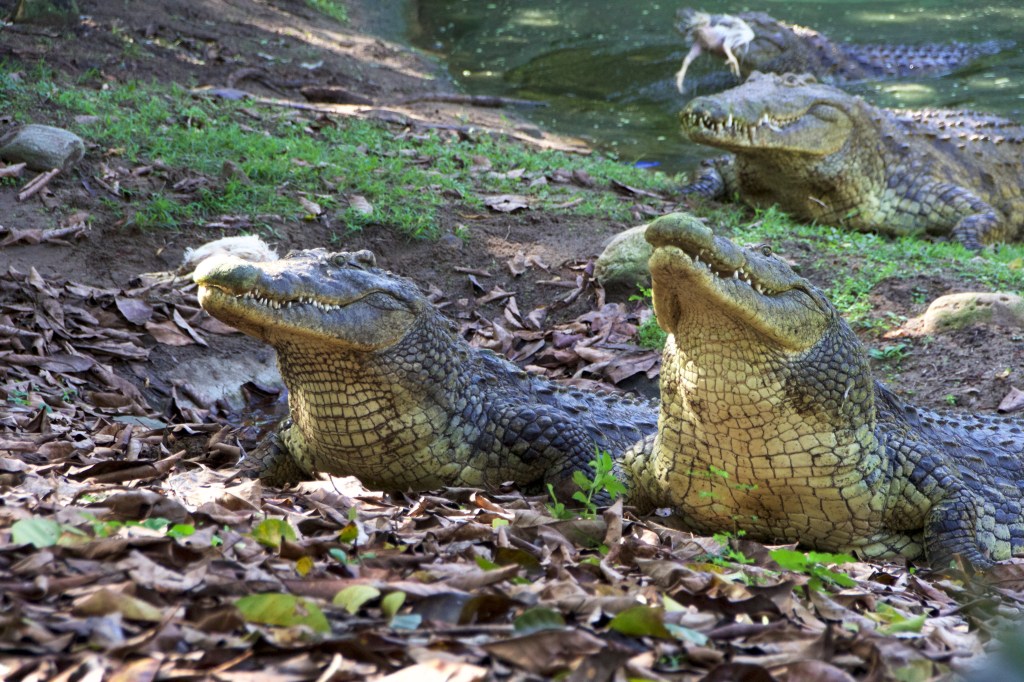
A visit to the St. Lucia Crocodile Centre on the Eastern shores, to the left of the entrance to the iSimangaliso Park is both amusing and informative. Our very own Crocodile Dundee will introduce you to the crocodiles living in the centre and regale you with all sorts of croc adventures.
The legends you hear about the village hippos locally known as, “The Townies” wandering the streets at night (and sometimes in the day) are true! They really do graze on our lawns at night; you may well see them while walking (or driving) to dinner. Most of all, be sensible when you encounter our less friendly local residents – no hugs, or selfies. That viral social media post, or that perfect Instagram shot just isn’t worth it, they BITE!
Please contact us on info@shakabarker.co.za for arranging any of the tours, or rides on this list you may be interested in. You can also book to stay with us at Eco Lodge info@stlucia-ecolodge.co.za. We would love to create a customised your itinerary for you.
The iSimangaliso Wetland Park is South Africa’s very first natural World Heritage site, listed on the 1 December 1999. The park was previously known as the Greater St. Lucia Wetland Park, but was renamed on 1 November 2007. The word iSimangaliso means “a miracle” or “something wondrous” in Zulu. The park is situated on the east coast of KwaZulu-Natal, South Africa, about 275 kilometres north of Durban. It is South Africa’s third-largest protected area, spanning 280 km of coastline. from the Mozambican border in the north to Mapelane (the 2nd largest vegetated dune in the world) south of the Lake St. Lucia estuary. Saved from mining operations which threatened the ecology, the iSimangaliso Wetland Park was listed for its outstanding natural values as a UNESCO World Heritage Site in December 1999. The park is made up of around 3,280 km2 of natural ecosystems, managed by the iSimangaliso Authority and this month it commemorate 20 years as a World heritage site. On the 1st of August 2019 almost one million hectares of MPA (Marine Protected Area) was added. This world heritage site is now the largest in South Africa. A whopping 1.3 million hectares! Compare this with the Hluhluwe-iMfolozi Park complex, which has only 99,000 hectares. This massive addition will help protect the marine area from oil and gas prospecting and mining.
Credit: Berno Phillipson
The iSimangaliso Wetland Park covers 10 unique destinations – Kosi Bay, Coastal Forest, Lake Sibaya, Sodwana, Mkuze Game Reserve, False Bay, Western Shores & Charters Creek, Lake St. Lucia, Eastern Shores & Cape Vidal and Maphelane. It is without a doubt a wildlife paradise. To quote Nelson Mandela “iSimangaliso must be the only place on the globe where the oldest land mammal (the rhinoceros) and the world’s biggest terrestrial mammal (the elephant) share an ecosystem with the world’s oldest fish (the coelacanth) and the world’s biggest marine mammal (the whale)”
There are 5 ecosystems found in the iSimangaliso Wetland Park with a species list among one of the longest in the region, with over 6500 plant and animal species, including 521 bird species. The diversity of habitats supports an extraordinary range of animal species. It consists of 13 separate, but adjoining conservation units totaling 2,400 square km and almost 11,000 square km’s of marine reserves.
To give you an idea of the sheer diversity and scale of the park:
ï530 Bird species 530 – highest in South Africa.
ïHighest vegetated sand dune in Africa
ïSt. Lucia estuary is largest estuarine lake system in Africa
ïHas the largest predator in the world, the sperm whale.
ïAnd the largest mushroom.
The iSimangaliso Wetland Park, is a World Heritage Site not only because of its vital turtle-nesting beaches, but due to its exceptional biodiversity, its natural beauty, and because of the estuary and the lake’s unique ecological processes. The constant wave processes and windblown sand has resulted in the creation of a variety of landforms, icluding coral reefs, extended sandy beaches, coastal dunes, lake systems, swamps and extensive reed and papyrus wetlands. What makes this park unique is its biodiversity, which is a direct result of 5 very different ecosystems in close proximity to each other. This park contains critical habitats for a variety of species from Africa’s marine, wetland and savannah environments.
The park is made up of five distinct ecosystems (providing habitats for an enormous diversity of species): the coastal and marine system, the eastern-shore dune forests, the estuary and lake systems, the Mkhuze River papyrus swamps and the drier acacia savanna of the western shore. In turn, these ecosystems have tremendously rich micro-habitats such as mangroves, coral reefs and raffia-palm forests. Aside from the lake and dune ecosystems, the iSimangaliso Wetland Park protects a marine zone of warm tropical seas, coral reefs and endless sandy beaches.
In the early ’90s, environmentalists and conservationists fought a hard battle to save Lake St Lucia’s shores from dune mining. More recently, the iSimangaliso Authority has embarked on the hydrological restoration of the wetland, removing 100,000 cubic metres of dredge spoil (sand, silt and vegetation) that was placed in the natural course of the iMfolozi River to impede its flow into the Lake.
Why was the iSimangaliso Wetland Park chosen? Ten natural and cultural values have been identified which are used as criteria for selecting World Heritage Sites. A site has to fulfil only one criterion to be selected as a World Heritage Site. iSimangaliso was listed on the World Heritage List for three of the ten values recognised by the Convention.
These are: 1. Outstanding examples of ecological processes. 2. Superlative natural phenomena and scenic beauty. 3. Exceptional biodiversity and threatened species.
After 20 years there are long term plans to expand the park even farther, with teamwork and support from the local communities.
Living where I do, I have access to the most beautiful parks set in a World Heritage site very few are fortunate enough to be able to call their own personal playground! My job also affords me access to incredible tour operators who kindly invite me along on various Safaris.
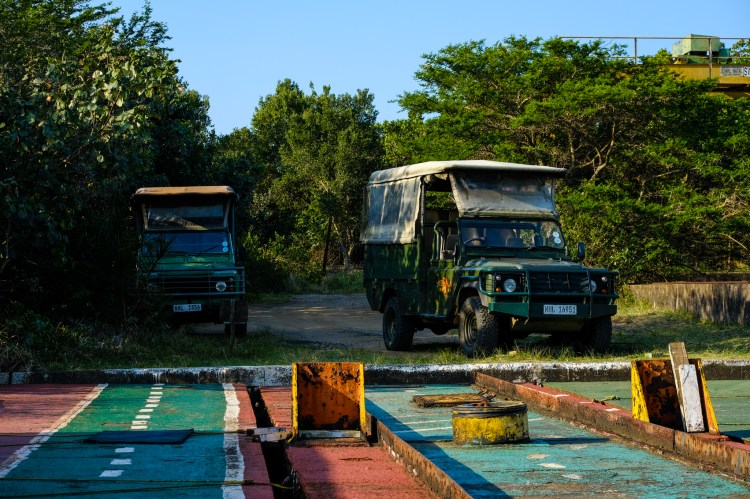
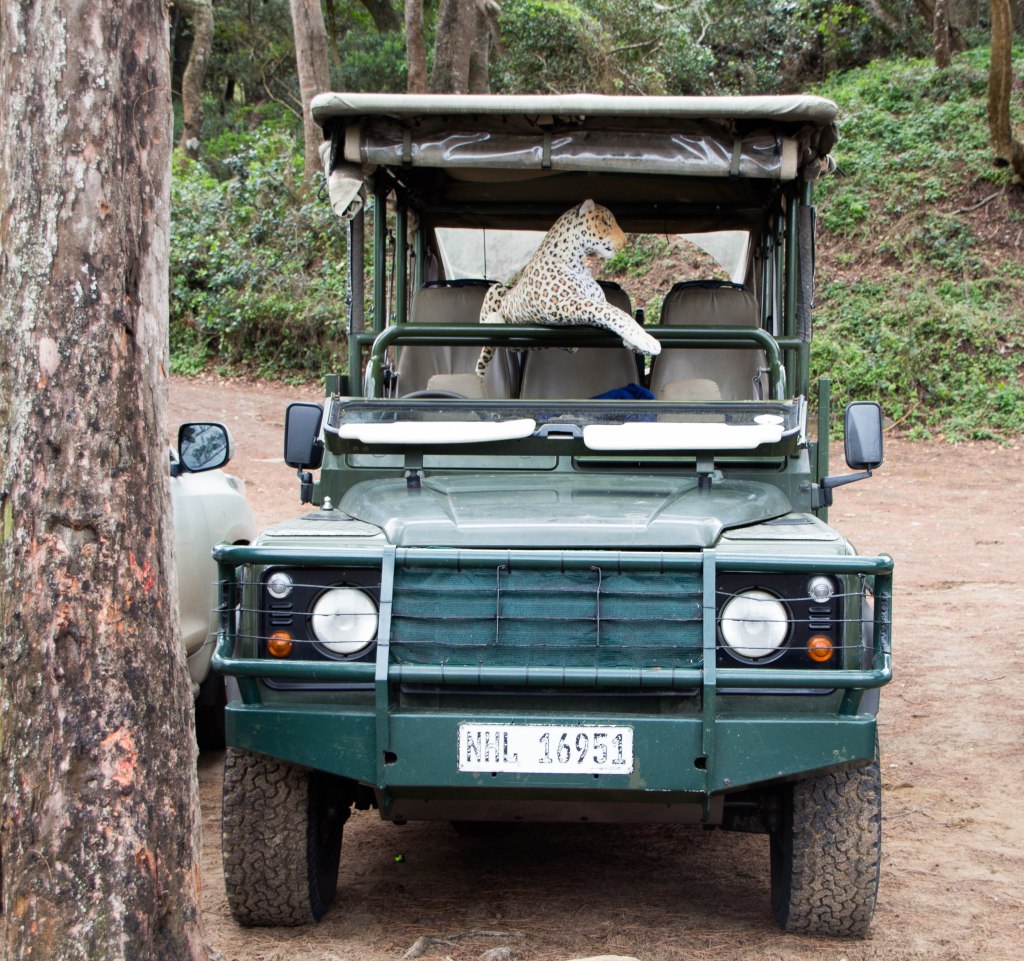
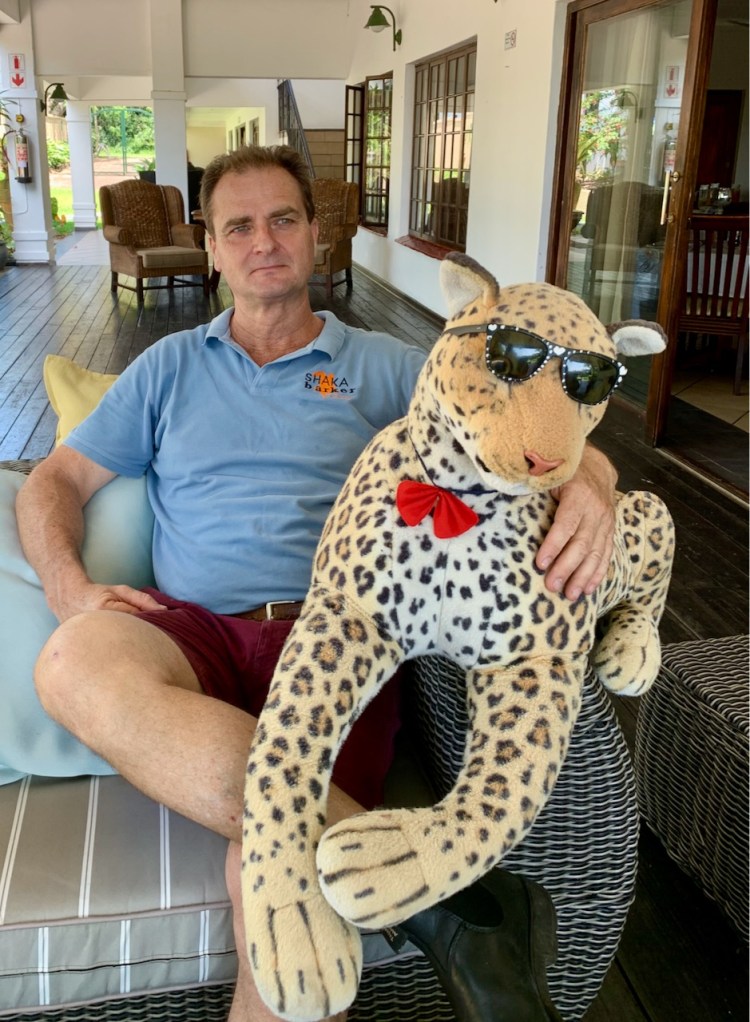
This morning’s excursion was one of those wonderful job-related opportunities. I was collected at 8am by my guide, a stuffed toy leopard, and some German tourists who I would be joining for the day. This particular Safari offered by ShakaBarker is called the St. Lucia World Heritage Tour. This particular tour takes you into the Eastern Shores of the iSimangaliso Wetland Park. It is a full day safari, taking you off-road and affording you opportunities to explore pristine areas of the park normal visitors in their own vehicles cannot access. This includes an ecological overview of the area and the 5 ecosystems that make up this unique park, wonderful game viewing, bird watching, short walks and a visit to Cape Vidal. You get to experience the bush, forest and beach all in one day. You will also be extremely well fed at lunchtime with a full braai and drinks (BBQ for those not familiar with the South African vernacular), snorkelling gear to use at Cape Vidal is also available for those wishing to explore the tidal pools at low tide.
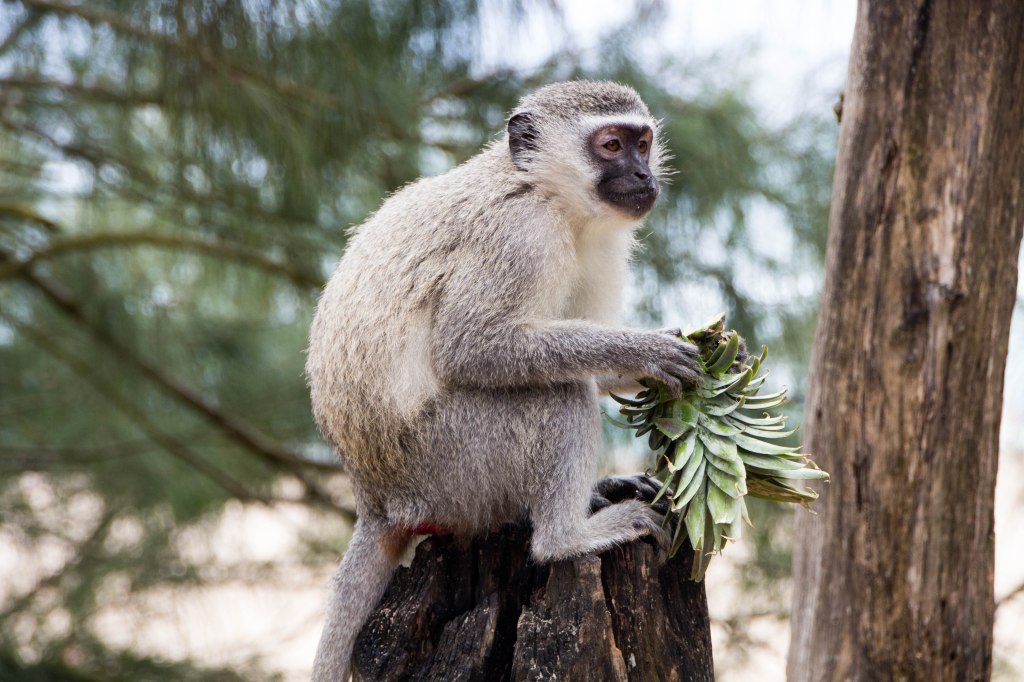
When the game vehicle arrived, the guide jumped out of the car and warmly introduced himself to me as Tony and shook my hand. The presence of a stuffed leopard at the back of the vehicle was rather incongruous considering I was hoping to see the real thing in the park later on. Tony took my rather bemused glance in his stride and informed me it was a stuffed toy leopard that accompanies their tours to scare away the monkeys and prevent them from stealing our lunch. Only in Africa…
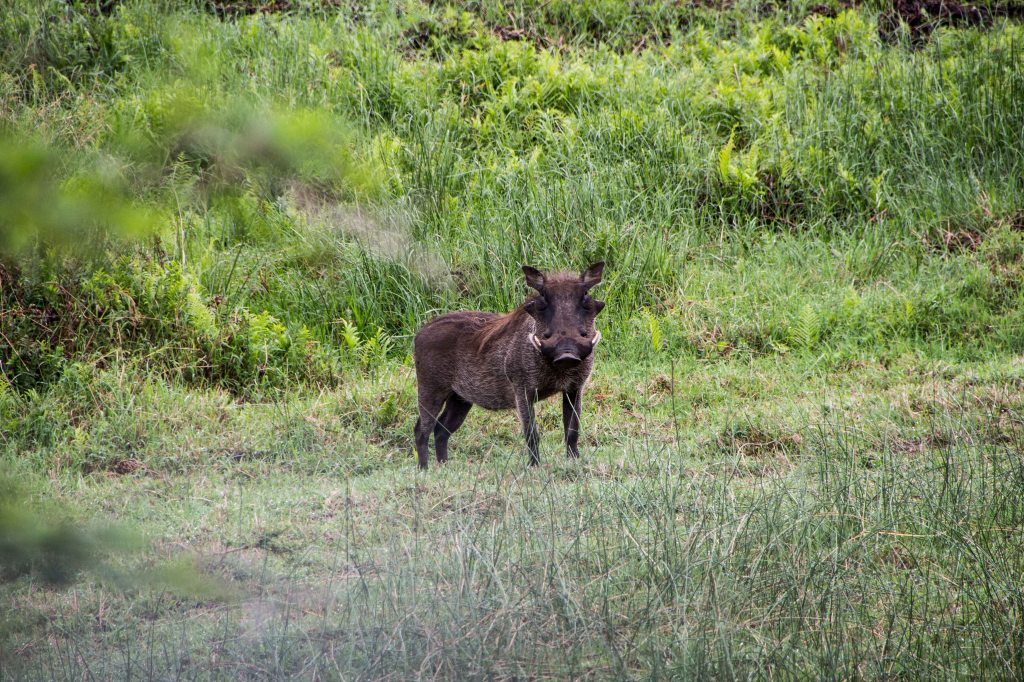
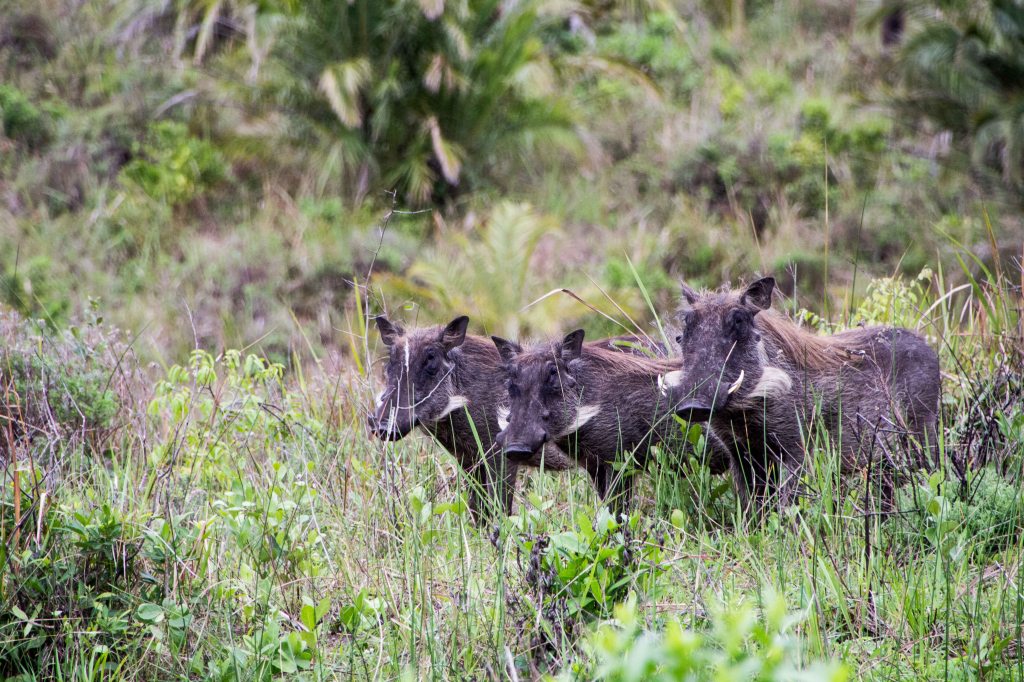
When we arrived at the Cape Vidal gate, we were met by a warthog foraging in the grass on the side of the road. A good omen for what proved to be an incredible day. Initially we didn’t see a lot of animals, but this gave Tony time to explain in more detail about what was around us. Ones experience of the bush is always better when you can understand what you see, and Tony’s knowledge gave us wonderful insight into what was growing around us, the smells, the different plants and who eats them. The curry bush – a hardy, evergreen perennial shrub with branched woody stems with aromatic, narrow silver-grey leaves, particularly fascinated me. It bears clusters of small rich yellow button-like flowers in summer and autumn, and after rain, the whole plant smells strongly of curry. It was a rather damp wet morning so the smell of the bush was rather pungent. The leaves are a little bitter, so probably not great for a salad, but the buck like it.
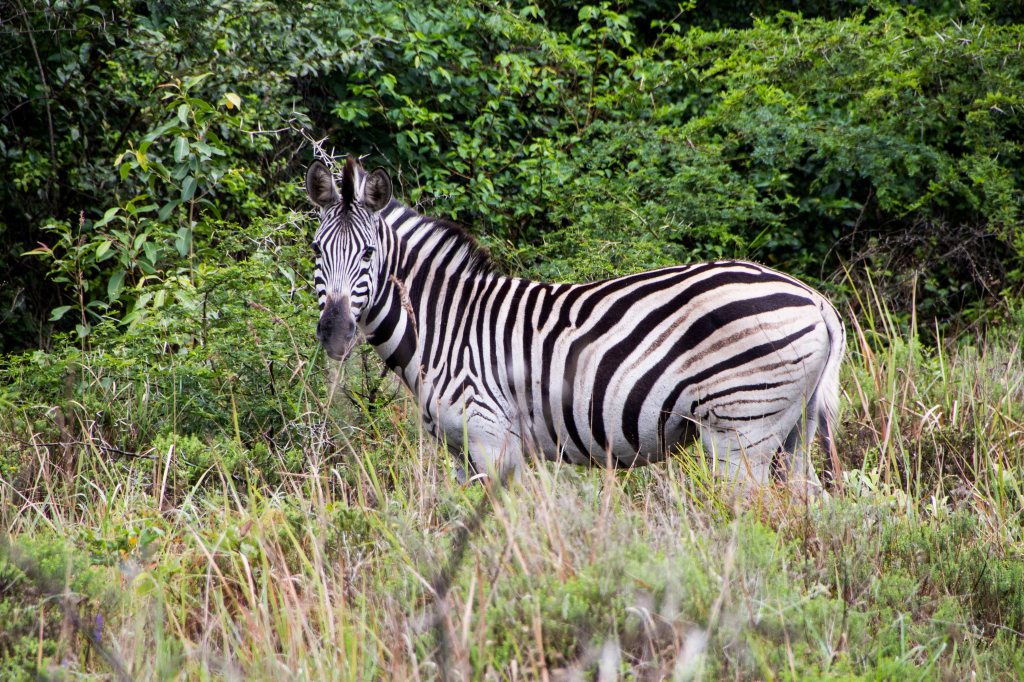
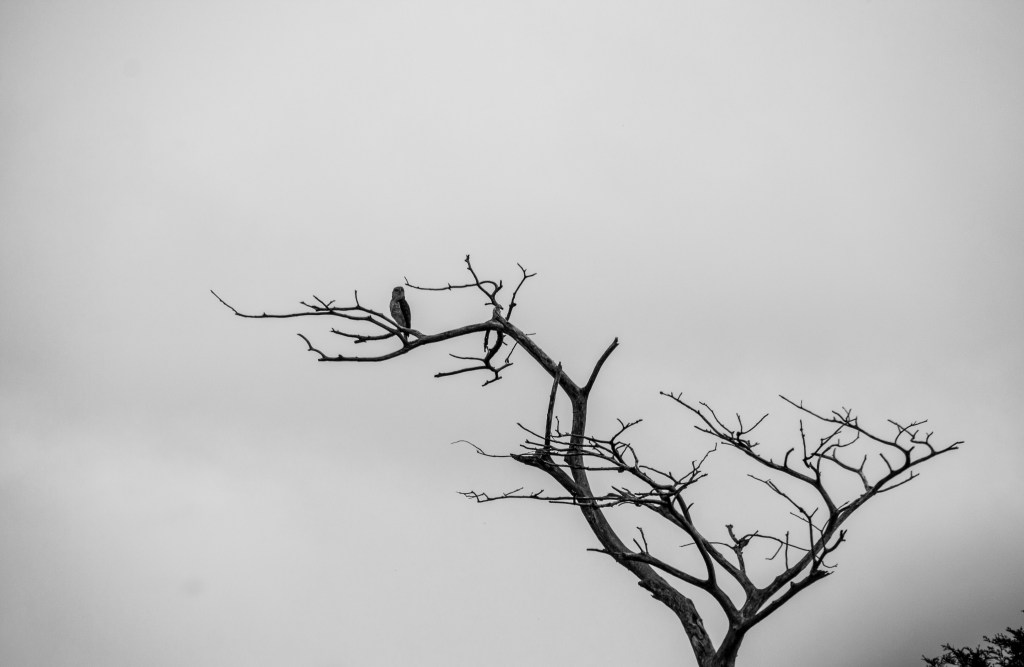
We were rewarded with plenty of zebra, buck and dung beetles. Tony picked up a dung beetle for us to touch. I find it hard to believe that a little beetle this size is the strongest insect. It can pull 1,141 times its own body weight, which is the equivalent of a 70-kilogram person lifting six full double-decker buses. For the birders out there, there is an incredible variety of birds. I was thrilled to be able to see a southern white-faced scope-owl, a fish eagle, and a yellow-billed kite to name only a few of my most exciting sightings.
This park always reminds me of Jurassic Park with its wetland areas, lush green vegetated sand dunes, and plains of lime green grassland dotted with tropical palms. A more grizzly stop among all this verdant green was to look at a skull of a hippo, which Tony explained had died in a fight. I was told it took about 7 hyenas to devour the hippo carcass.
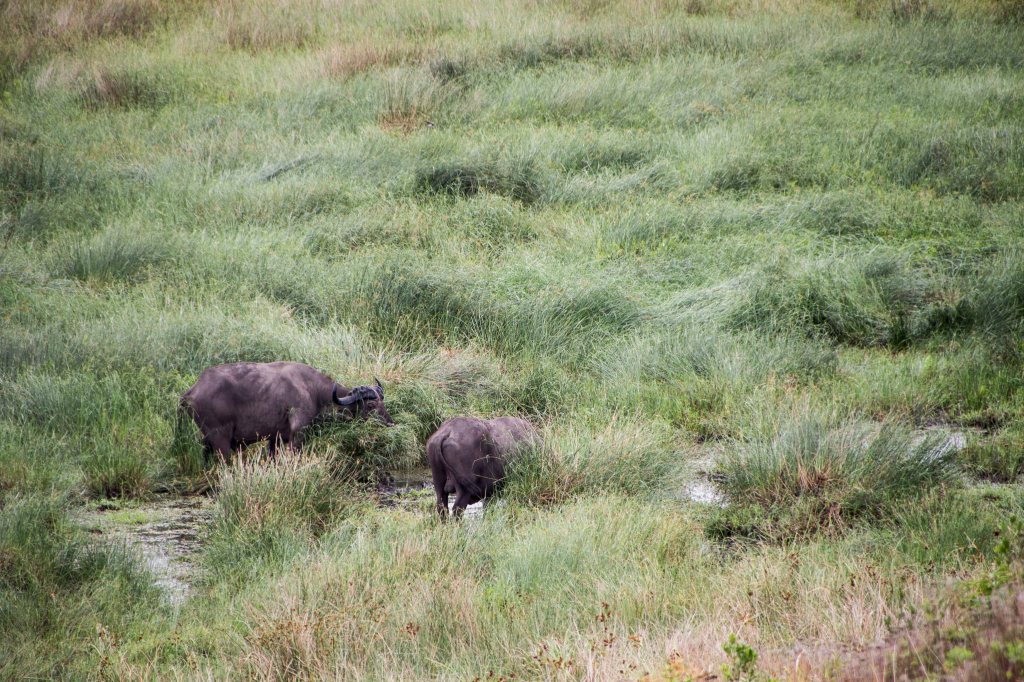
We were fortunate enough to see 2 out of the Big 5 – buffalo as well as black and white rhino. Abundant signs of fresh elephant dropping, but sadly no elephant were sighted on this trip. Tony explained to us the reasoning behind the Big 5 title. These animals were named the Big 5 because they are not only among the most poached animals, most difficult to hunt on foot, but are also the most dangerous.
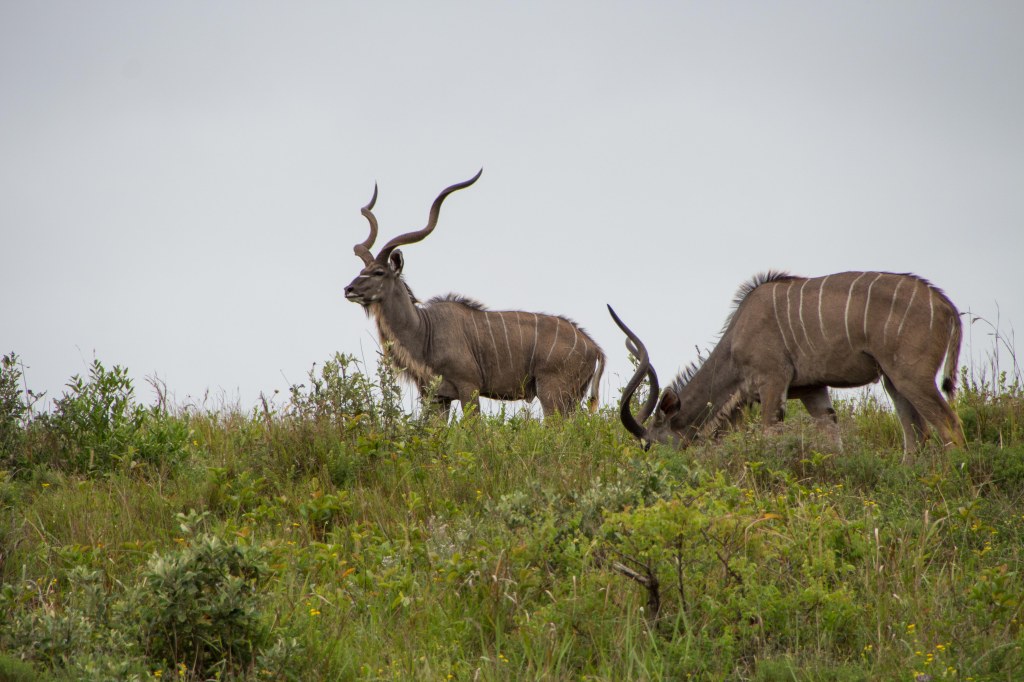
We then made a pit stop at Mission Rocks for some hot chocolate, and to stretch our legs, enjoy breathtaking views of the Indian Ocean and breaching whales. From there we took a slow drive to Cape Vidal. The trip to Vidal was jam packed with animal and bird sightings, most impressive of which was a herd of kudu, one of the males had a magnificent set of spiraled horns and a Samango monkey. These monkeys are not widespread in South Africa and are our only forest dwelling monkey found mainly in the forests of the St Lucia Estuary.
We arrived at Cape Vidal looking forward to a walk on the beach and a delicious lunch. We must have spent about an hour walking along the pristine beach, which stretches all the way up to Mozambique. While we were enjoying our meander, Tony was hard at work preparing our lunch with lots of naughty monkeys in close attendance hoping to snatch up our meal. This is where Marmalade the Leopard proves her worth, and stands guard saving our meal, and us from greedy monkeys. I find it hard to believe the monkeys are unable to see the leopard as a stuffed toy. It’s unbelievable to see how wary they are of her, and how we were spared the monkey invasion, and the visitors in the surrounding picnic spots were not so lucky! Lunch was a delicious full braai consisting of chicken kebabs, sausage, salad and cooked banana with chocolate for dessert. What more could you ask for!
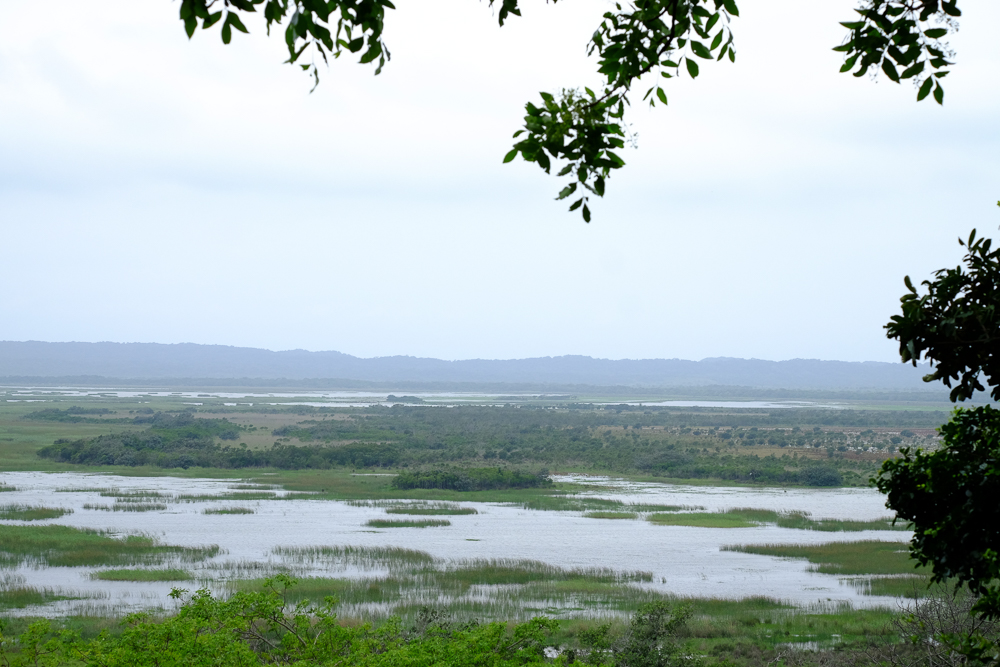
We then took a slow drive back to St. Lucia via a viewpoint at Catalina Bay, so named after the Catalina RAF sea-plane base, which was created during WWII to patrol for U-boats along the East Coast of South Africa. Here we saw plenty of hippos in the lake. This viewpoint affords you a beautiful view of the Eastern shore of the lake looking across onto the western shores
The St. Lucia World Heritage Tour with ShakaBarker in the iSimangaliso Wetland Park was an incredible experience, and one I would recommend any visitor making the time for. We had a lot of great sightings; our guide was informative, friendly and interested in his subject, which added to the overall great experience. I learned a lot of knew and fascinating information on my safari. As great as a self-drive in the park is, this offers the visitor a much richer, more diverse experience of the park. If you would like to make a booking for this highly recommend safari you can contact ShakaBarker directly at: http://www.shakabarker.co.za info@shakabarker.co.za +27 (35) 590 1162
Kian Barker, owner of Eco Lodge and ShakaBarker Tours has a B. SC. in Botany and Zoology, as well as a B. SC. Honours in Ichthyology and Fisheries Science. He has published numerous articles in a variety of publications on estuarine management, tourism and related ecological aspects, as well as appearing in a number of television documentaries concerning the iSimangaliso Wetland Park. Kian believes passionately in repurposing for an even more sustainable eco friendly future. He has established an eco friendly 50 Shades of Green benchmark, that will hopefully be accepted into the tourism industry as a standard to aspire to. He has adapted Eco Lodge to embrace these green living practices, that also help conserve our natural environment, animals, and resources like water and energy. He also specialises in offering a variety of eco-tourism services in the iSimangaliso Wetland Park and surrounds.




 Tourism Tails