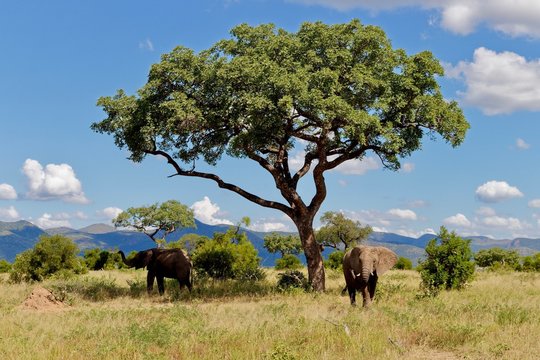
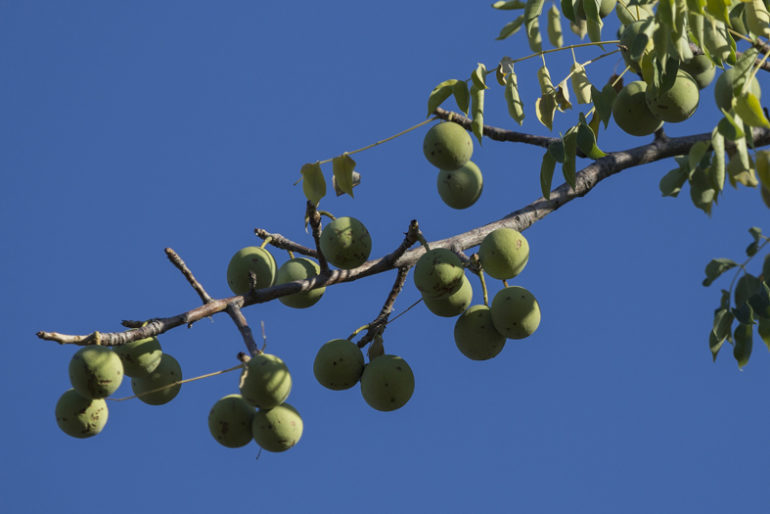
The marula tree (Sclerocarya birrea) is a vital component of African culture and ecosystems. The marula is widespread in Africa from Ethiopia in the north to KwaZulu-Natal in the south. In South Africa it is more dominant in the Baphalaborwa area in Limpopo. The tree is a single stemmed tree with a wide spreading crown. It is characterised by a grey mottled bark. The tree grows up to 18 m tall mostly in low altitudes and open woodlands
The marula tree is a source of food, medicine, and income for local communities. The fruit juice and pulp are mixed with water and stored in a container over 1–3 days of fermentation to make marula beer, a traditional alcoholic beverage. Marula oil is used topically to moisturise the skin, and as an edible oil in the diet of San people in Southern Africa. A decoction of the bark treats dysentery, diarrhoea, rheumatism and has a prophylactic effect against malaria. The bark is an excellent remedy for haemorrhoids. Roots and bark are also used as laxatives.
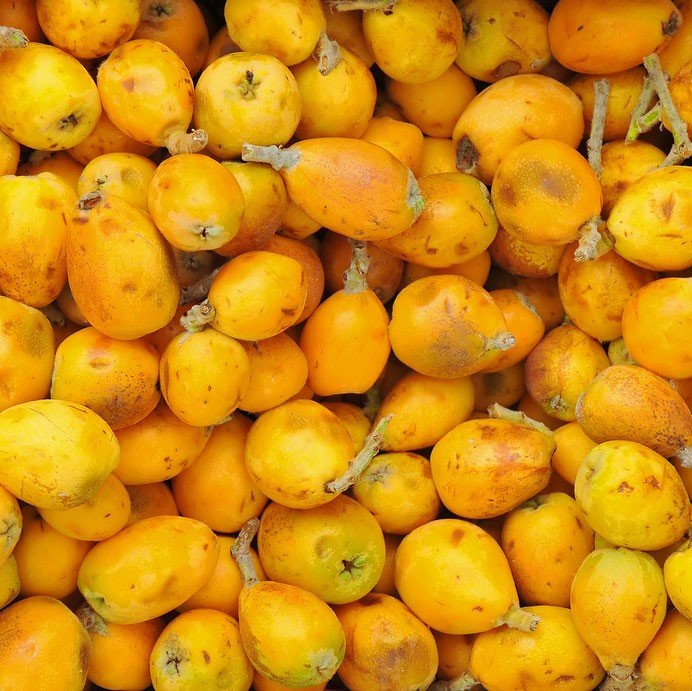
The marula tree also holds significant cultural importance for many African communities. In some cultures, the tree is considered sacred and is used in traditional rituals and ceremonies.
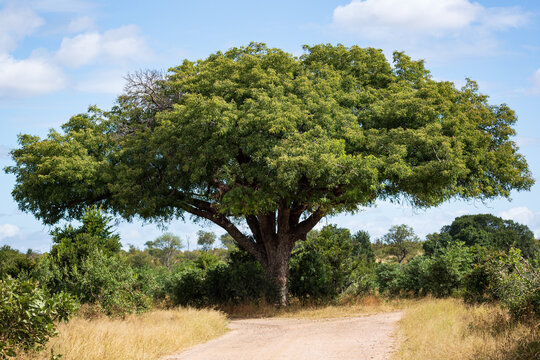
Beyond its cultural significance, the marula tree also plays a critical role in the ecology of the African savannah. The tree provides shade and shelter for animals and helps to prevent soil erosion and desertification. Its fruit is a vital food source for many species, and its leaves are an essential source of nutrition for herbivores such as giraffes and impalas.
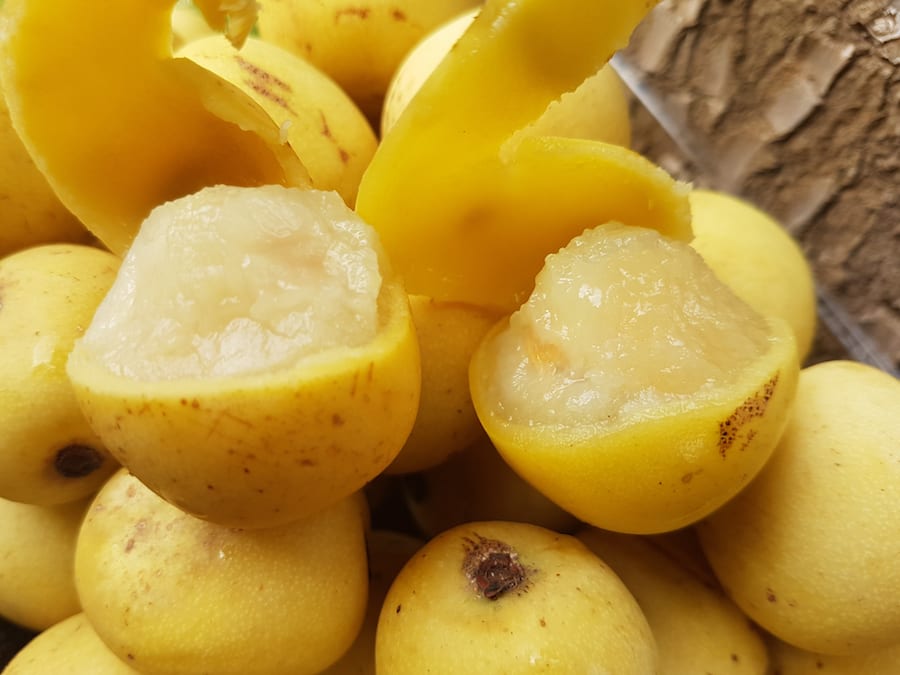
However, the marula tree is also facing various threats, including deforestation, habitat loss, and climate change. As human populations continue to grow and expand into previously undeveloped areas, the marula tree and other native species are being threatened by land clearance for agriculture and infrastructure development.
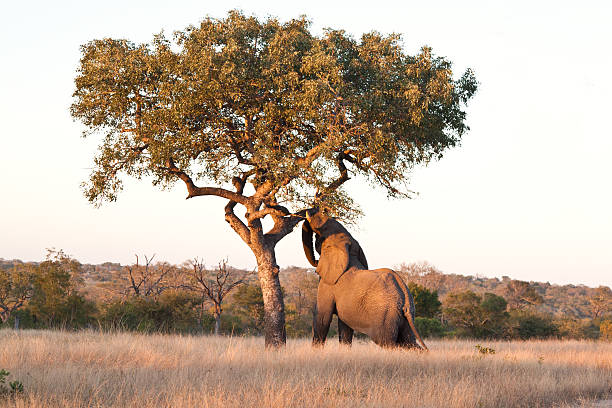
Efforts are being made to protect the marula tree and its ecosystems through various conservation initiatives, including the establishment of protected areas and sustainable land use practices. By preserving this essential component of African culture and ecology, we can help to ensure a sustainable future for both local communities and the natural world.














 Tourism Tails